
Nam Giao Esplanade Introduction
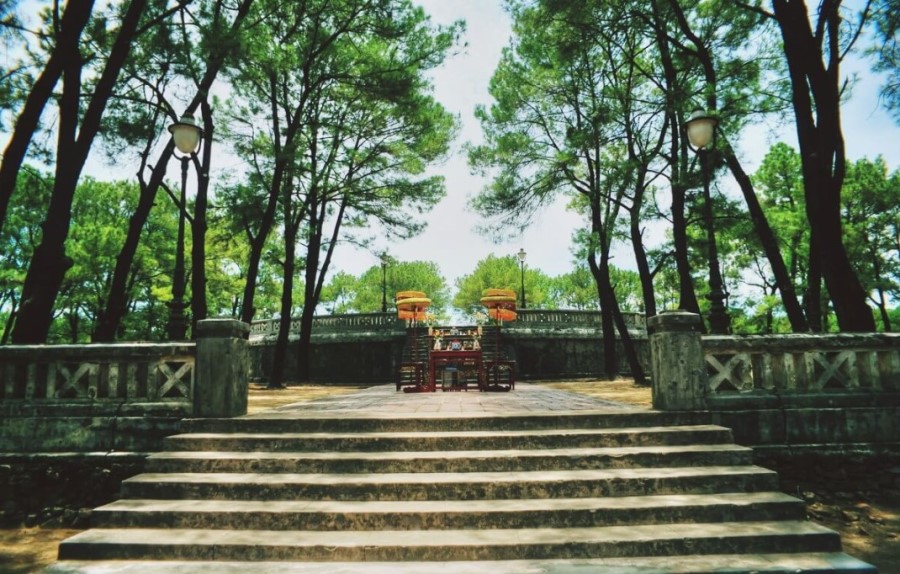
Nam Giao Esplanade is one of the most important spiritual and historical landmarks of the Nguyen Dynasty in Hue. In contrast to the elaborate palaces and royal tombs of the former imperial capital, the site is defined by its simplicity and profound symbolic meaning. It once served as the most sacred setting where emperors conducted solemn rituals to pray for peace, prosperity, and harmony between heaven, earth, and humanity.
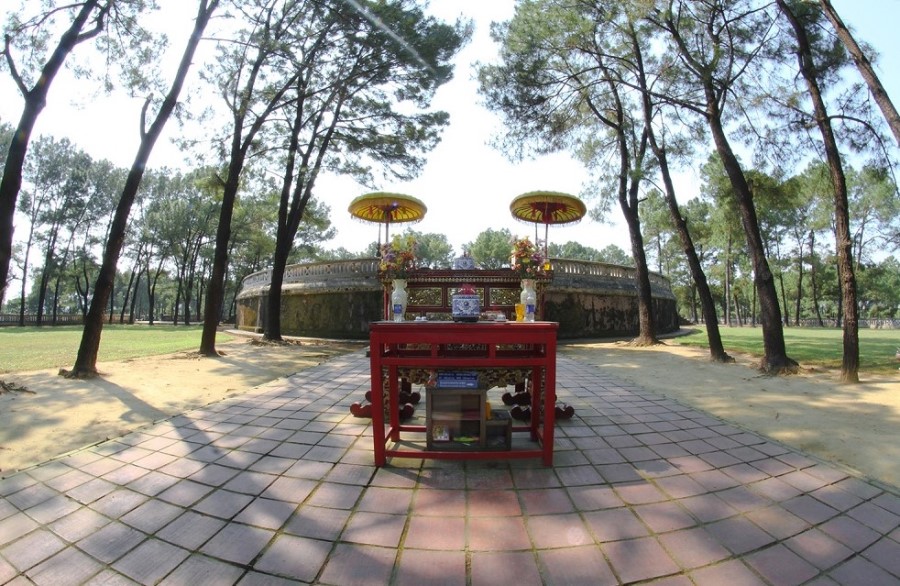
Today, it remains the only surviving sacrificial altar in Hue, preserved as part of the Complex of Hue Monuments. Beyond its architectural value rooted in the feudal era, the esplanade also offers a serene and contemplative space, inviting visitors to reflect on the spiritual traditions and worldview of Vietnam’s imperial past.
Where is it?
Nam Giao Esplanade is located in Thuan Hoa Ward, Hue City, to the south of the Hue Imperial Citadel. This historic site was established by the Gia Long emperor, the founder of the Nguyen Dynasty, as the official altar for annual spring ceremonies dedicated to Heaven and Earth, one of the most important royal rituals of the time.
These days, it is the only surviving sacrificial esplanade of its kind in Vietnam. Although parts of the structure have been affected by time, it remains the sole preserved example among many similar ceremonial altars that once existed in Hue.
The esplanade lies approximately 3 kilometers in a straight line fromHue Flag Tower. Its northern entrance is located at the intersection of Phan Boi Chau, Dien Bien Phu, Ngu Binh, and Le Ngo Cat streets. The site borders Tam Thai Street to the east and Minh Mang Street to the west, making it relatively easy to access from the city center.
Nam Giao Esplanade History
Nam Giao Esplanade is the result of a long process of construction, use, and preservation spanning several centuries, beginning under the reign of Gia Long, the founding emperor of the Nguyen Dynasty. Despite many historical upheavals, the site has been restored and preserved, allowing it to retain its cultural and spiritual significance to this day.
Period from 1806 to 1945
Several important historical milestones shaped the development and role of the esplanade during this period:
- In 1801, Gia Long defeated the Tay Son Dynasty and ascended the throne, marking the beginning of a new unified dynasty. The construction of an altar dedicated to Heaven and Earth, along with the Nam Giao ritual, helped affirm the legitimacy of his rule.
- In 1803, Gia Long initially ordered the construction of a sacrificial altar at An Ninh village, located to the west of the Hue Imperial City.
- By 1806, a new and more permanent altar was commissioned in Duong Xuan village, south of the capital. This structure was completed in 1807 and became the official Nam Giao Esplanade, known today.
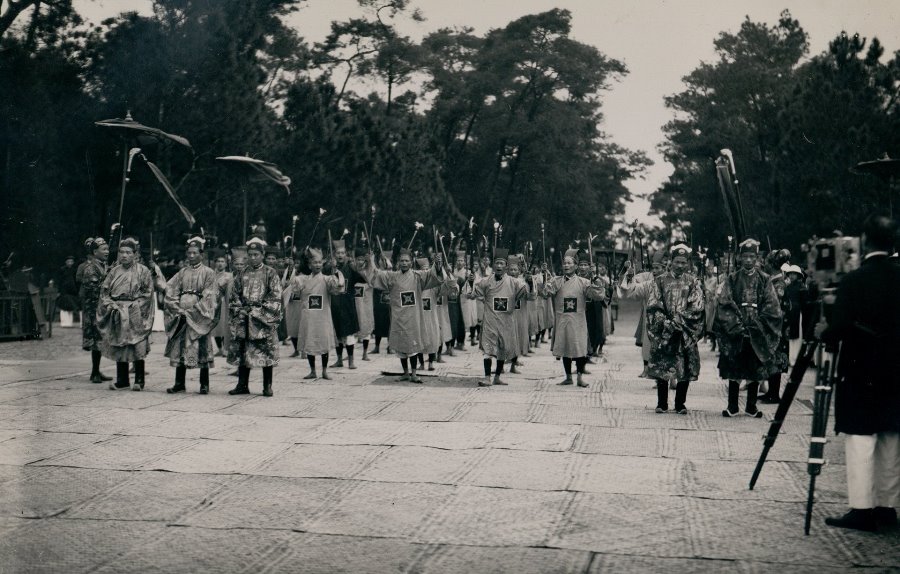
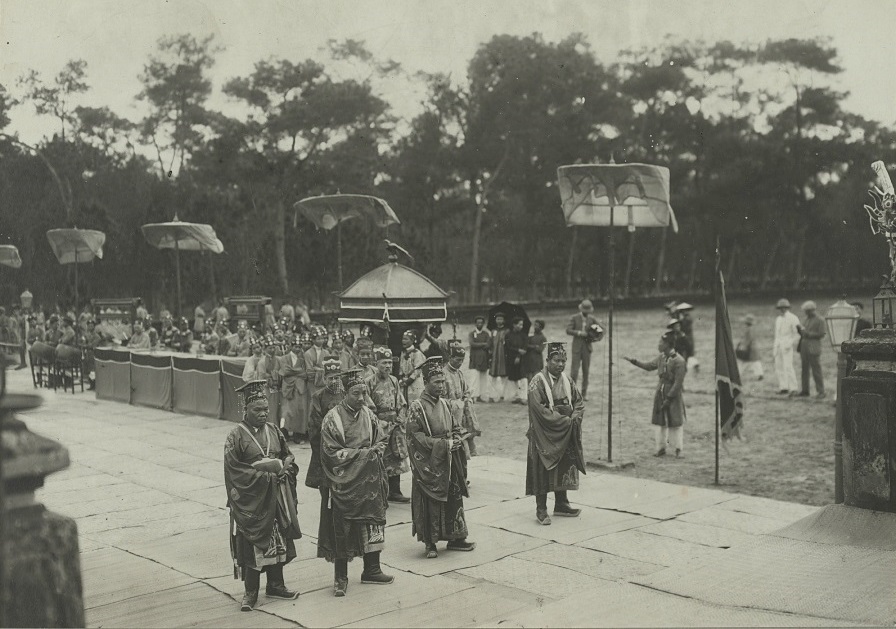
- From 1807 to 1945, the Nam Giao ceremony was held regularly at this site under the Nguyen Dynasty. These grand rituals were either personally conducted by the emperor or delegated to appointed royal representatives.
- The ceremony continued to be organized annually, reflecting its importance as the most sacred state ritual, until 1945. That year, the August Revolution brought an end to the monarchy in Vietnam, marking the conclusion of the Nguyen Dynasty and the cessation of the Nam Giao rites.
Period from 1945 to 1993
From 1945 to 1993, Nam Giao Esplanade went through a difficult period marked by war, neglect, and gradual restoration:
- In 1945, following the establishment of the Democratic Republic of Vietnam, the site began to fall into decline. The impacts of the First Indochina War and the “scorched earth” resistance strategy led to widespread destruction of historical structures, leaving the esplanade in ruins.
- In 1975, after the end of the Vietnam War, the Complex of Hue Monuments—including Nam Giao Esplanade—did not receive adequate attention. Some areas were repurposed, and preservation efforts remained limited.
- In 1977, a landmine explosion occurred within the site, destroying a war memorial that had been built there. A new memorial was later constructed at a different location within the esplanade grounds.
- In 1992, the authorities of Thua Thien Hue Province decided to relocate the memorial and restore the site closer to its original form after a period of modification and alteration.
- On December 11, 1993, UNESCO recognized the Complex of Hue Monuments as a World Cultural Heritage Site. This milestone marked a turning point, opening a new chapter for the preservation and restoration of Nam Giao Esplanade.
Period from 1993 to the Present
Since being recognized as part of a World Heritage Site, Nam Giao Esplanade has undergone continuous preservation and restoration efforts to recover its historical and cultural value:
- In 1994, the Hue Monuments Conservation Centre carried out archaeological surveys and test excavations at the site to better understand its original structure.
- In 1997, the esplanade was officially classified as a National Historical and Cultural Relic, reinforcing its importance within Vietnam’s heritage system.
- In 2003, restoration work began on the Trai Cung (Fasting Palace), an essential structure associated with the royal rituals.
- In 2005, the Ministry of Culture and Information of Vietnam approved a restoration project for Nam Giao Esplanade with a budget of nearly 3 billion VND.
- In 2006, the northern gate of the esplanade was carefully restored, improving both the structure and access to the site.
- In 2018, a major project titled “Preservation and Restoration of Nam Giao Esplanade” (Phase 1) was approved, with a total investment of 24 billion VND, marking a significant step in large-scale conservation efforts.
- Phase 1 of the restoration was expected to be completed around 2023, with the goal of transforming the esplanade into a more attractive and meaningful cultural destination for visitors to Hue.
Nam Giao Esplanade Architecture
Nam Giao Esplanade is set on a large rectangular site covering approximately 103,350 square meters, measuring about 265 meters from north to south and 390 meters from east to west. The complex is designed with four gates facing the cardinal directions: east, west, south, and north, with the southern gate serving as the main entrance. In front of each gate once stood a large stone screen wall, about 3.2 meters high, 12.5 meters wide, and 0.8 meters thick. These days, only three of these screens remain, located on the east, south, and west sides.
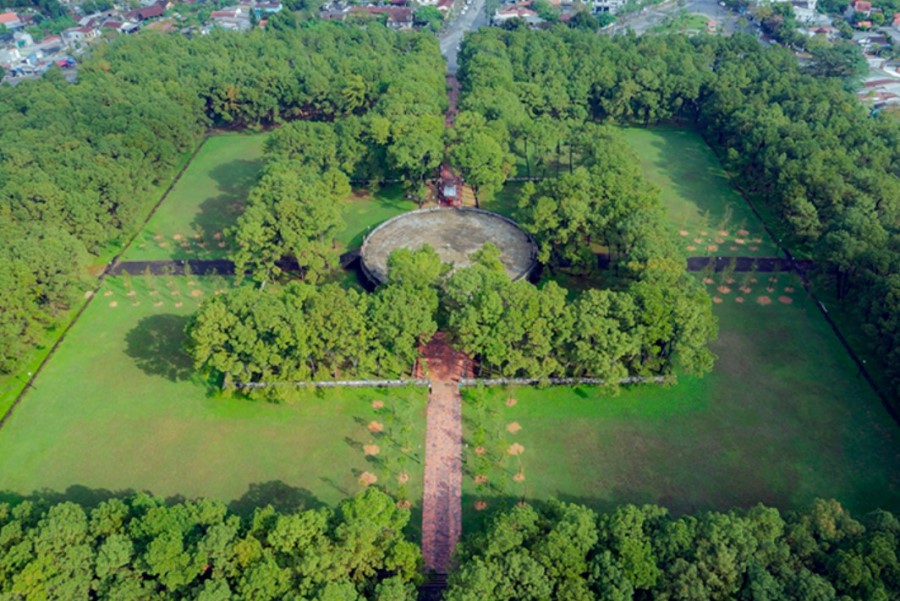
The entire complex was originally enclosed by a 1.6-meter-high basalt stone wall, although much of it has been lost over time. As the most important ceremonial ground of the Nguyen Dynasty, the esplanade hosted the grand Nam Giao ritual, considered the largest state ceremony in Vietnamese history.
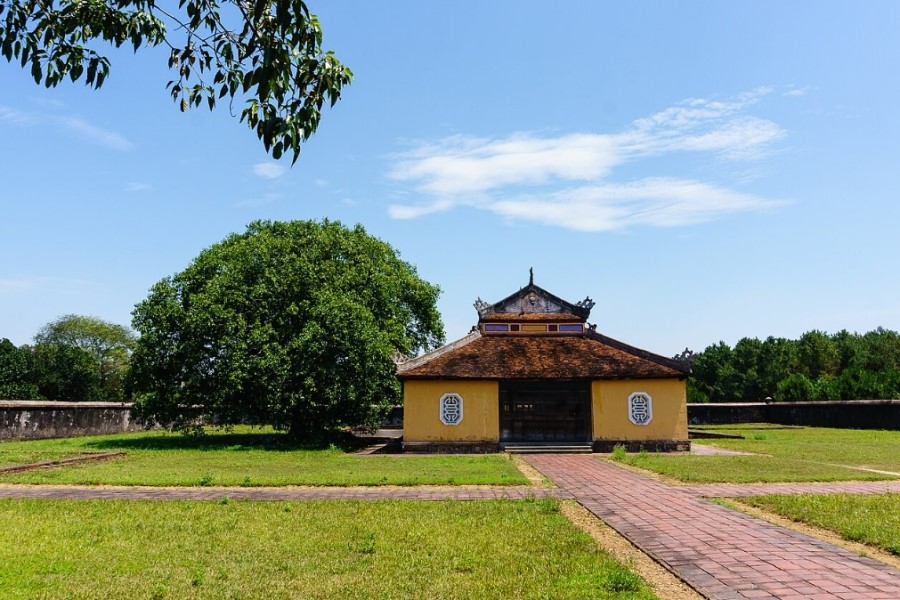
Within the grounds, several auxiliary structures once supported these rituals, including the Trai Cung (Fasting Palace), Than Tru (kitchen for offerings), Than Kho (storage house), and other functional buildings such as reception and accommodation areas for officials. Although some of these structures no longer remain intact, their layout still reflects the scale, organization, and ceremonial importance of the site.
At the heart of Nam Giao Esplanade lies a unique three-tiered architectural system, each level carefully designed with symbolic meaning rooted in Eastern philosophy:
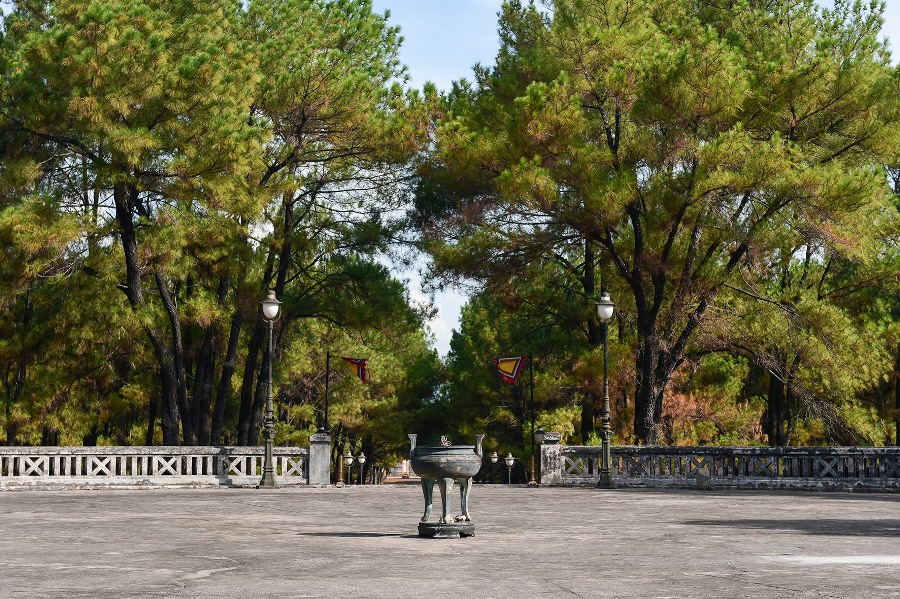
✓ Upper Terrace (Vien Dan): The top tier is circular in shape, with a diameter of approximately 40 meters and a height of 3.29 meters. Stairways are built on all four sides, with 15 steps on the southern side and 9 steps on the remaining three sides (north, east, and west). Surrounding this level is a blue-painted balustrade, symbolizing Heaven (Thiên), with a height of about 0,94 meter.
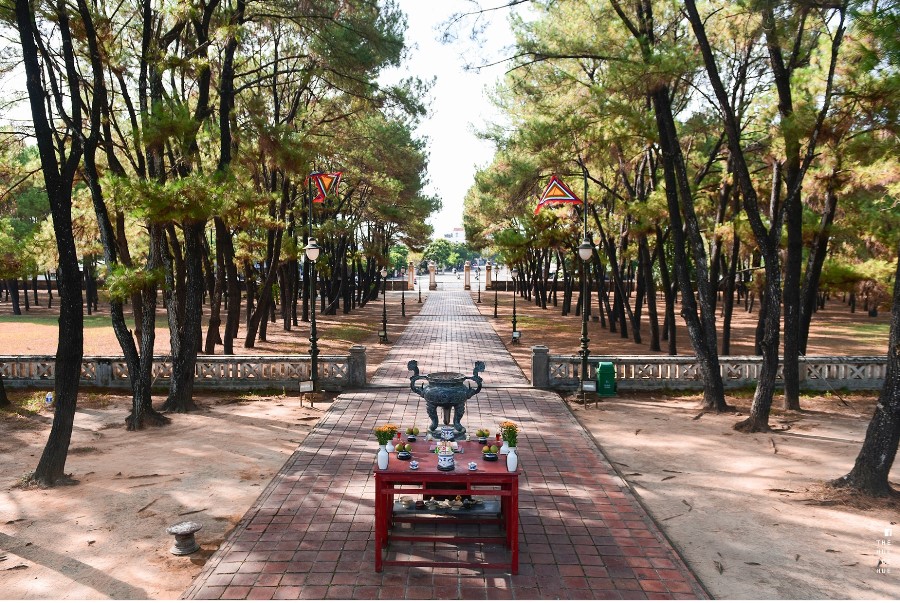
✓ Middle Terrace (Phuong Dan): The second tier is square in shape and enclosed by a yellow balustrade, representing Earth (Địa).
✓ Lower Terrace (Ha Dan): The bottom tier is also square and is bordered by a red balustrade, symbolizing Humanity (Nhân).
Together, this architectural composition reflects the ancient philosophical concept of the “Three Powers” (Tam Tai): Heaven, Earth, and Human. This worldview emphasizes the harmonious relationship between the universe, nature, and mankind, which was central to royal ideology during the Nguyen Dynasty.
In this symbolic system:
- Heaven is represented by the circular upper terrace with its blue (azure) color
- Earth is expressed through the square middle terrace in yellow
- Humanity is embodied in the lower terrace with its red tone
Through this design, Nam Giao Esplanade becomes more than a ceremonial site. It serves as a powerful architectural expression of the connection between humans, the natural world, and the divine.
What Makes the Nam Giao Ritual Unique?
Traditionally, the Nam Giao ceremony was held at this esplanade, usually in early spring. It was the most important state ritual of the Nguyen Dynasty, carrying deep historical, cultural, and spiritual significance.
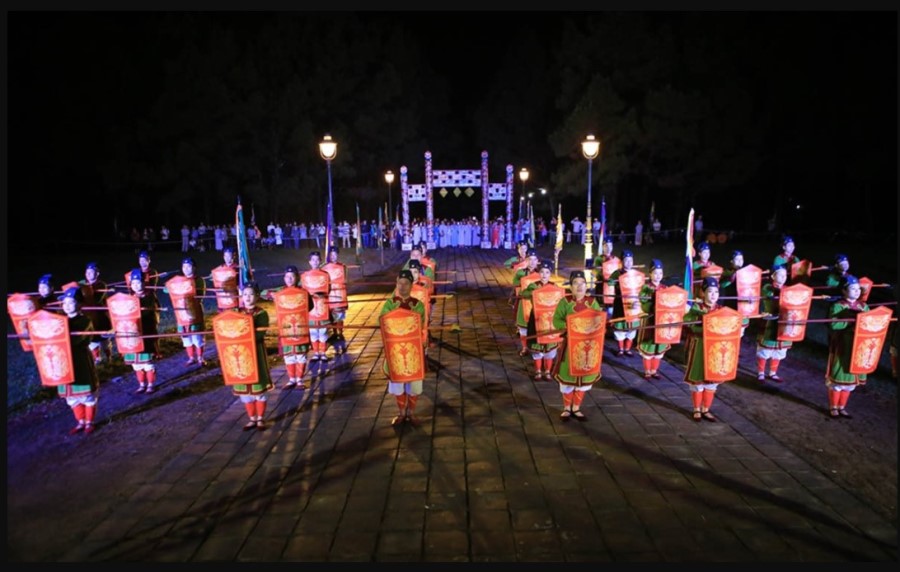
During the ceremony, the emperor, regarded as the “Son of Heaven”, performed a series of highly elaborate and strictly regulated rites to pray for peace, prosperity, and favorable conditions for the nation. In preparation, he had to undergo a period of ritual purification, following strict rules and disciplines. The ceremony itself lasted for many hours and followed a carefully structured sequence of formal procedures.
Beyond its historical importance, the Nam Giao ritual also serves today as a powerful cultural symbol. Its revival during major cultural events allows Hue to showcase the richness of its imperial heritage, offering both local and international visitors a deeper understanding of the spiritual life and royal traditions of the Nguyen Dynasty.
What to see and do at Nam Giao Esplanade?
Visiting Nam Giao Esplanade offers a different experience compared to other attractions in Hue. Instead of crowded landmarks, you’ll find a calm and reflective space.
Explore the Altar
Walk around the three-tiered structure and observe its symbolic design. The simplicity of the architecture highlights its spiritual significance.
Enjoy the Pine Forest
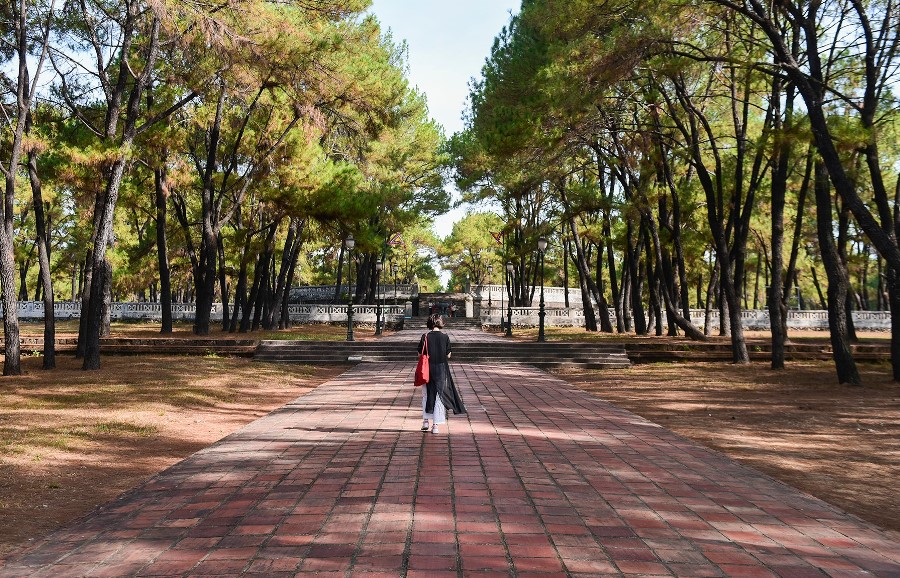
The surrounding pine trees create a peaceful environment, ideal for quiet walks and relaxation.
Learn About Royal Rituals
Although signage is limited, understanding the history beforehand will help you appreciate the cultural meaning of the site.
Photography and Reflection
The open space, long stone pathways, and natural setting make it a beautiful place for photography or simply enjoying a quiet moment.
Useful Travel Tips
Nam Giao Esplande Entrance Fee & Opening Hours
When planning your visit to Nam Giao Esplanade, it’s helpful to know the general opening times and ticket information to make the most of your experience.
Opening Hours (reference):
✓ Summer (typically March to August): 6:30 AM – 5:30 PM
✓ Winter (typically September to February): 7:00 AM – 5:00 PM
The site opens relatively early, making it an ideal place for a morning visit when the weather is cooler and the atmosphere is especially peaceful. Early mornings and late afternoons are also the best times for photography, as the soft natural light enhances the tranquil beauty of the pine forest and the open ceremonial space.
Entrance Fee (reference):
- Adults: 50,000 VND per person
- Children: Free of charge
The ticket price is quite reasonable compared to other major attractions in Hue, making it an accessible destination for both domestic and international travelers. Tickets are typically purchased at the entrance gate, and visitors can explore the grounds at their own pace without time restrictions during opening hours.
As part of the wider heritage system of Hue, Nam Giao Esplanade is sometimes included in combined ticket packages with other monuments, which can be a convenient option if you plan to visit multiple sites in one day.
Note: Opening hours and ticket prices may vary depending on the season, holidays, or special events. It’s always a good idea to check the latest information before your visit to ensure a smooth and enjoyable experience.
Visitor Guidelines
To ensure a respectful and enjoyable experience at Nam Giao Esplanade, visitors are encouraged to follow these important rules and recommendations:
Purchase and present your ticket: All visitors are required to buy an entrance ticket. Each person should keep their ticket or pass for inspection at the entrance gate.
Respect cleanliness and safety regulations: Help preserve the site by maintaining cleanliness, following security guidelines, and complying with fire prevention rules.
Do not bring hazardous items: Flammable materials, explosives, toxic substances, weapons, or any dangerous objects are strictly prohibited داخل the site.
Dress appropriately and behave respectfully: As a sacred historical site, visitors should wear modest clothing (avoid sleeveless tops and shorts). Maintain silence in ceremonial areas, and note that filming and photography may be restricted in certain zones.
No smoking: Smoking is strictly forbidden in all areas, especially within temple structures, the pine forest, and other fire-prone locations.
Protect the natural and cultural environment: Do not pick flowers, break branches, hunt animals, or write/draw on architectural structures.
Do not touch or misuse artifacts: Sitting, lying down, or touching historical objects and structures is not allowed.
Follow traffic and parking instructions: Visitors using vehicles should follow the guidance of security staff, turn off engines when required, and comply with inspection procedures.
By following these guidelines, you help preserve the cultural, historical, and spiritual value of Nam Giao Esplanade for future generations while ensuring a safe and meaningful visit.
Nearby Attractions
When visiting Nam Giao Esplanade, you can easily combine your trip with several nearby attractions to create a richer and more diverse Hue experience. The surrounding area is filled with historical, spiritual, and scenic sites that reflect the unique charm of the former imperial capital.
Tu Hieu Pagoda
Located less than 1 km from Nam Giao Esplanade, this peaceful pagoda is nestled in a quiet pine forest. It is closely associated with Zen master Thich Nhat Hanh and features a serene atmosphere, traditional architecture, and a unique eunuch cemetery. The setting makes it an ideal place for meditation and cultural exploration.
Tu Duc Tomb
One of the most beautiful royal tombs in Hue, Tu Duc Tomb is known for its poetic landscape of lakes, pavilions, and gardens. Built during the reign of Emperor Tu Duc, it reflects a harmonious blend of architecture and nature, offering insight into royal life and philosophy.
Vong Canh Hill
A short drive away, Vong Canh Hill provides panoramic views of the Perfume River and the surrounding countryside. This scenic viewpoint was once favored by Nguyen emperors for relaxation and sightseeing, and today it remains a popular spot for sunset views and photography.
Thien Mu Pagoda
One of the oldest and most iconic religious sites in Hue, Thien Mu Pagoda sits on a hill overlooking the Perfume River. Its seven-story Phuoc Duyen Tower has become a symbol of the city, attracting visitors interested in history, architecture, and spiritual culture.
Hue Imperial City
Located about 4–5 km from Nam Giao Esplanade, the Imperial City is the political and cultural center of the Nguyen Dynasty. This vast complex of palaces, gates, and temples offers a deeper understanding of Vietnam’s royal heritage and complements your visit to the esplanade perfectly.