

Sinh Folk Painting Village Overview
Nestled in the peaceful countryside of Hue by the riverbank of Perfume River, Sinh Folk Painting Village is a lesser-known cultural destination that preserves one of Vietnam’s most unique traditional art forms. Unlike the more famous Dong Ho paintings in the north, Sinh paintings carry a distinctive spiritual meaning closely tied to the beliefs and daily life of local people in Central Vietnam.

These vibrant woodblock prints are not only artistic creations but also hold symbolic value, often used in rituals, worship, and traditional ceremonies. Visiting Sinh Village offers travelers a rare opportunity to explore an authentic craft village that remains largely untouched by mass tourism.
Where is the Sinh Folk Painting Village?
Sinh Folk Painting Village is located in Lai An Village, Phu Mau Commune, Hue City, about 8 kilometers east of Hue city center. The journey takes around 15–20 minutes by car or motorbike, making it an easy half-day trip for visitors staying in Hue.
The route to the village is simple and scenic, passing through quiet rural roads, rice paddies, and local garden houses. Travelers can reach the village by renting a motorbike, booking a Hue private car, or joining a guided tour for a more insightful experience.
History and Origins of Sinh Folk Paintings
Lai An Village is one of the earliest settlements formed in Dang Trong (Inner Vietnam). It is located along the Perfume River, facing Thanh Ha on the opposite bank, a once-famous river port during the time of the Nguyen Lords, also known as Pho Lo. Later, Bao Vinh emerged nearby as a bustling commercial hub close to Hue City.

The village is also considered a cultural center of the former imperial capital, home to Sung Hoa Pagoda, which was once among the largest pagodas in the historic Hoa Chau region.
Today, Lai An Village, commonly known by its vernacular name Sinh, is recognized as a culturally rich village of the former imperial capital. It continues to preserve traditional folk painting as well as a famous wrestling festival held annually on the 10th day of the first lunar month: “Wherever you may go, remember to return to Sinh for the wrestling festival.”
In addition, the village is known for its incense-making and the production of popped rice grains used for offerings. Perhaps because of these enduring traditions, woodblock printing in Sinh Village was never purely an art form for aesthetic enjoyment; instead, it primarily served spiritual purposes, with paintings used for worship and burned during rituals for peace, protection, and the removal of misfortune.
Born from folk life, Sinh folk paintings reflect the unique beliefs of local communities, expressed through their materials, colors, themes, lines, and composition. Each element carries the imprint of a distinct spiritual culture, giving the paintings their recognizable identity.
According to legend, during the Trinh- Nguyen period, among the migrants who came to settle in Thuan Hoa, a man named Ky Huu Hoa brought with him the craft of woodblock printing from his hometown to make a living, thus marking the birth of Sinh paintings. Hue, a land rich in folk beliefs and rituals such as ancestor worship, death anniversaries, offerings for wandering souls, tomb-visiting ceremonies, regular family rites, spiritual ceremonies, and the worship of guardian spirits, provided fertile ground for this art form to flourish over time.
The craft of Sinh paintings began when Hue’s administrative center was still located in Hoa Thanh, and soon developed into a thriving traditional occupation not long after.
Unique Features of Sinh Folk Paintings
Sinh paintings, also known as Lai An village paintings, are single-sheet prints created using carved woodblocks made from jackfruit, fig, or other local woods to form the outlines. After printing, the images are hand-colored using natural pigments derived from materials such as seashell powder, leaves, ash, and brick, giving each piece its distinctive rustic charm and traditional character.

Sinh folk paintings embody “the typical characteristics of a region’s folk visual art.” As such, they carry within them undeniable cultural and artistic values.
Sinh folk paintings are entirely handmade. To complete a single artwork, artisans must go through seven meticulous steps: trimming the paper, coating it with shell powder, printing from woodblocks, drying, mixing colors, hand-coloring, and finally adding the finishing touch, “dotting the eyes.”

“Do” paper is coated with a layer of powdered seashell (diep) to increase durability and help the colors last longer. The shells, sourced from the Tam Giang Lagoon, are carefully ground into a fine powder and mixed with rice paste to create a smooth coating applied evenly onto the paper. According to Mr. Phuoc, Sinh Village was once called Ho Diep Village, a name derived from this very process.
Researchers have noted that the color palette used in Sinh paintings closely resembles that of phap lam enamel art found in Hue’s imperial architecture, featuring harmonious combinations such as yellow with indigo, red with jade green, blue with golden tones, and turquoise with amber. When completed, each painting subtly shimmers from the shell coating, carries a rustic elegance through its natural pigments, and, most importantly, holds a sacred spiritual essence once it reaches the hands of its user.
Sinh folk paintings feature a rich palette of colors such as green, red, purple, yellow, orange, and black, all derived from natural plants and materials. However, achieving these different shades requires unique techniques and specialized knowledge, reflecting the artisan’s deep understanding of the craft.
Even the brushes used for coloring are made from local resources: wild pineapple roots are harvested, dried, and stripped to reveal soft inner fibers, creating brushes that hold color well without smudging. Depending on the material, artisans can produce brushes of various sizes for different details.
Each painting begins with a carved woodblock. Artisans apply black ink onto the block and press paper onto it to create a basic outline. After drying, the print is carefully hand-colored using natural pigments.
What makes Sinh paintings truly distinctive is their vibrant yet harmonious color scheme. While the main tones typically include green, red, black, yellow, and purple, the arrangement follows certain traditional principles. Despite this structure, each artwork remains lively and unique, thanks to its fresh colors and expressive, natural lines.
The Traditional Printing Process
The creation of Sinh folk paintings involves a meticulous, handmade process that has been passed down through generations. First, artisans carve detailed designs onto wooden blocks, which serve as printing templates.
Natural pigments are then prepared, often derived from plants and minerals. The paper is carefully placed over the inked woodblock and pressed by hand to transfer the image. Each step requires patience and skill, ensuring that every print retains its unique charm and authenticity.
Diverse Themes in Sinh Folk Paintings
Sinh folk paintings are remarkably rich in subject matter and can generally be divided into three main categories: human figures, animals, and objects. This diversity reflects both the spiritual life and everyday practices of the local community, making the paintings not only artistic but also deeply symbolic.
Human Figures
This group includes various ritual and worship images such as Tuong Ba (Lady Deity), Tuong Bep (Kitchen Deities), con anh (substitute figures), and other guardian spirits like Ong Dieu or Ong Doc. Tuong Ba paintings are used for personal worship and are often hung on household altars, believed to protect and support the female head of the family. These figures are typically depicted as a noble woman riding an elephant, accompanied by attendants.

Tuong Bep (Kitchen Deity paintings) portray three figures, Ba Tho Ky and two male deities, Tho Cong and Tho Dia, surrounded by symbolic objects and servants. Meanwhile, con anh are substitute offerings, printed as human figures to symbolically take on misfortune during rituals, with separate versions for adults and children. In addition, there are sets of deity paintings dedicated to various spirits, created for prayers of peace, protection, and well-being.
Animal Paintings
Animal-themed paintings often represent the 12 zodiac animals of the lunar calendar: Rat, Ox, Tiger, Cat, Dragon, Snake, Horse, Goat, Monkey, Rooster, Dog, and Pig. These works are used in rituals or displayed in barns and farms, with the belief that they help protect livestock from disease and ensure prosperity.

Other prints feature domestic animals such as buffaloes, cows, pigs, and horses, as well as powerful creatures like elephants and tigers. These are offered at shrines as a way to show respect to nature and to pray for safety from potential harm.
Object Paintings
This category includes prints depicting clothing, tools, weapons, and ritual items. Many of these works represent offerings such as ceremonial garments for deities or spirits, often decorated with intricate patterns.

These items play an important role in traditional ceremonies and spiritual practices.
Modern Adaptations
Today, alongside traditional worship paintings, Sinh folk art has evolved to meet modern tastes. Decorative paintings for wall display have become increasingly popular, especially among visitors. New themes inspired by folk life and cultural activities have been introduced, enriching the tradition.
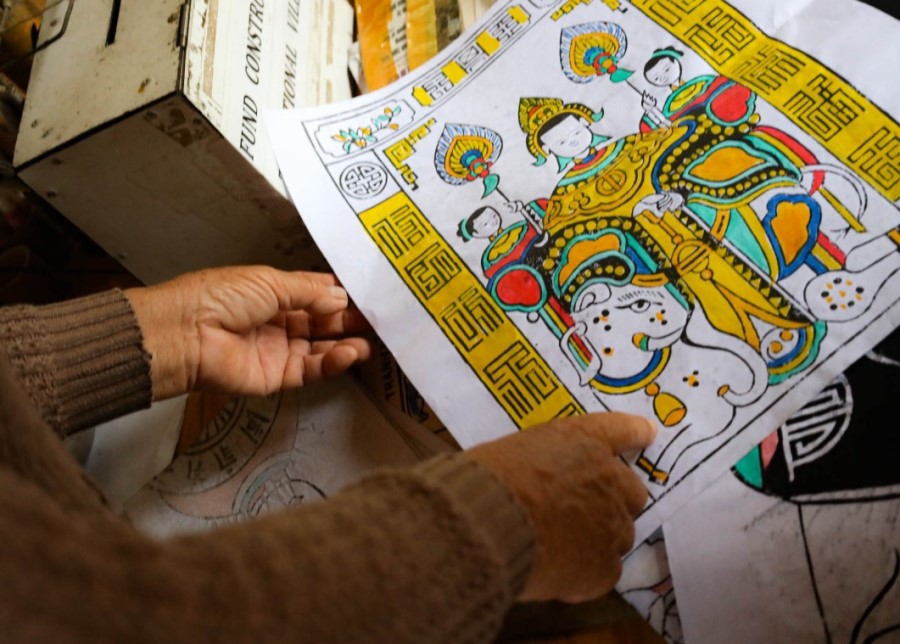
Popular modern subjects include traditional wrestling festivals with dynamic poses, folk games such as tug of war or blindfolded catching, and Bat Am (Eight Musical Instruments) featuring instruments like the two-string fiddle, moon lute, drum, flute, monochord, and zither. These contemporary additions have made Sinh paintings more diverse and appealing, especially to tourists seeking meaningful cultural souvenirs.
What to Do at Sinh Folk Painting Village
A visit to Sinh Village is more than just sightseeing; it’s an interactive cultural experience. Travelers can watch local artisans at work and even try printing their own folk paintings using traditional methods.

The peaceful rural setting also makes it a perfect place for photography, especially for those who enjoy capturing authentic local life. Visitors can browse and purchase handmade paintings as meaningful souvenirs that reflect Hue’s cultural identity.
About the Artisan Ky Huu Phuoc
Artisan Ky Huu Phuoc is one of the most dedicated craftsmen preserving the traditional art of Sinh folk painting in Hue. Born and raised in Sinh Village, he inherited the woodblock printing techniques from previous generations and has spent decades refining his skills. Despite the decline of the craft in modern times, he has remained committed to maintaining its authenticity and cultural significance.

Beyond creating paintings, Ky Huu Phuoc actively shares his knowledge with visitors and younger generations, helping to keep the tradition alive. His workshop has become a meaningful stop for travelers seeking hands-on cultural experiences in Hue. Through his passion and dedication, he plays an important role in safeguarding the heritage of the Sinh Folk Painting Village.
Sinh Painting Village Nowadays
As the country developed and people became increasingly absorbed in making a living, fewer households continued the tradition of worship using Sinh folk paintings. With the rise of the market economy, many in Hue gradually forgot these long-standing beliefs and cultural practices, and the craft of Sinh painting nearly disappeared.

By 1996, when the government introduced policies to revive traditional craft villages, Sinh painting was on the brink of extinction, with only artisan Ky Huu Phuoc still preserving the full knowledge of the craft. Determined to restore this heritage, he went from house to house, encouraging local families to take part in reviving the tradition.

In the following years, as living standards improved, people began to seek a return to fading spiritual and cultural values. In 2007, Sinh folk paintings were recognized as a cultural heritage worthy of preservation.
Combined with growing interest in cultural and craft village tourism, this recognition helped breathe new life into the tradition. Gradually, Sinh paintings regained their place in the cultural and social life of the village, with researchers and artisans affirming their artistic and spiritual significance.
Responding to renewed market demand, the traditional craft of paper painting in Sinh Village has been given a second chance to flourish. Although many original woodblocks had been lost, artisans worked to recreate them by studying preserved paintings and carving new blocks by hand.
To date, around 25 traditional woodblocks have been successfully restored. From only a few households continuing the craft, the number has grown to several dozen, with about 32 families now practicing the tradition, often alongside their agricultural work.
Useful Travel Tips
Best Time to Visit Sinh Village
The best time to visit Sinh Folk Painting Village is during the dry season, from around March to August, when the weather is sunny and ideal for outdoor exploration.
However, the most culturally vibrant time is before Lunar New Year (Tet), when artisans are busiest producing paintings for traditional rituals. This period offers a unique glimpse into the village’s lively atmosphere and cultural significance.
Entrance Fee and Opening Hours
Sinh Folk Painting Village is generally open to visitors throughout the day, and there is usually no fixed entrance fee.
However, small contributions around 2 USD/ person (roughly 60,000 VND) or purchases are appreciated to support local artisans. You can take photos, make videos, and learn how to make and color the paintings.
It is recommended to visit during daylight hours, preferably in the morning or early afternoon, to fully experience the village and interact with residents.
Nearby Attractions
Located close to Hue city, Sinh Folk Painting Village can easily be combined with several fascinating nearby attractions, offering a deeper cultural and local experience:
Thanh Toan Tile-Roofed Bridge
Thanh Toan Tile-Roofed Bridge is a beautifully preserved wooden bridge built in the 18th century, reflecting traditional Vietnamese architecture with its curved tiled roof.

Located in a peaceful farming village, it offers visitors a glimpse into authentic rural life, complete with local markets and rice fields. The site also features a small museum showcasing agricultural tools, making it both a scenic and educational stop.
Thuy Xuan Incense Village
Thuy Xuan Incense Village is famous for its vibrant bundles of incense sticks arranged in eye-catching displays. Visitors can observe the traditional incense-making process and learn how natural ingredients are used to create fragrance.
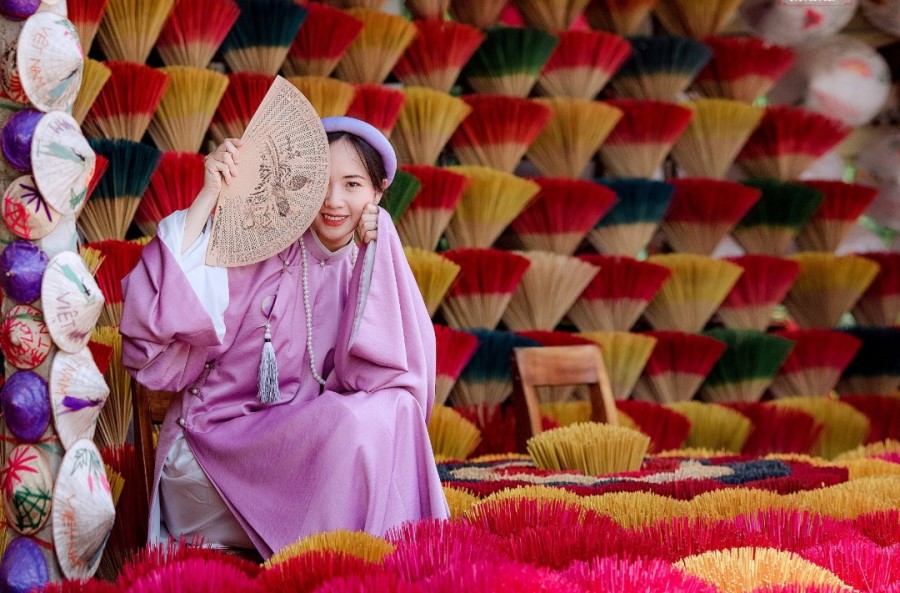
It is also a popular photography spot, thanks to its bright colors and cultural atmosphere.
Thanh Tien Paper Flower Village
Thanh Tien Paper Flower Village has a long history of crafting delicate paper flowers, especially lotus blossoms used in religious rituals.

Artisans skillfully create each flower by hand, preserving a tradition that dates back hundreds of years. Visitors can try making their own paper flowers and gain insight into the spiritual significance behind this unique craft.
Hue Imperial City
Hue Imperial City is a UNESCO World Heritage Site and the former royal capital of the Nguyen Dynasty. The complex features grand gates, palaces, temples, and courtyards that reflect the power and sophistication of Vietnam’s last feudal dynasty.

Exploring the citadel allows visitors to better understand Hue’s rich history, culture, and imperial legacy.