Introduction
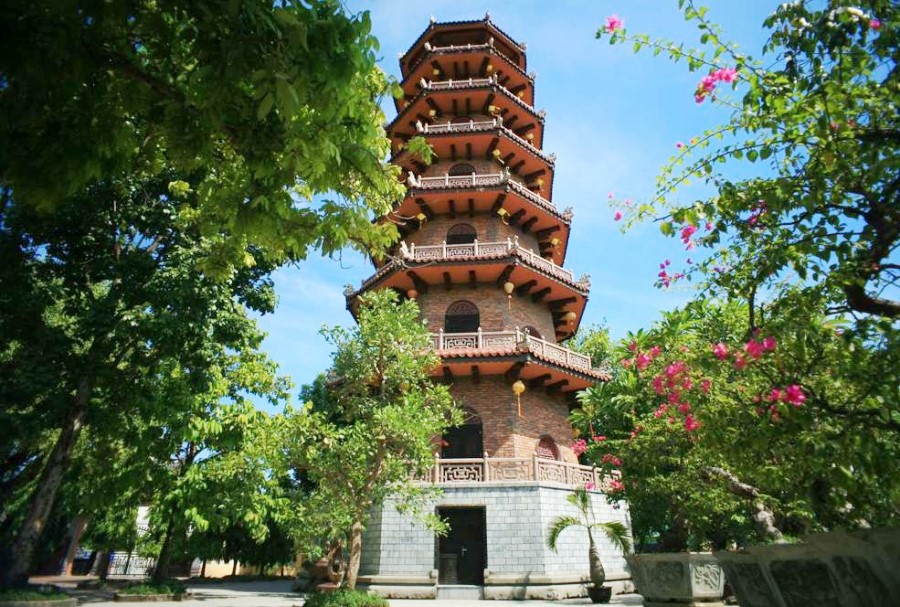
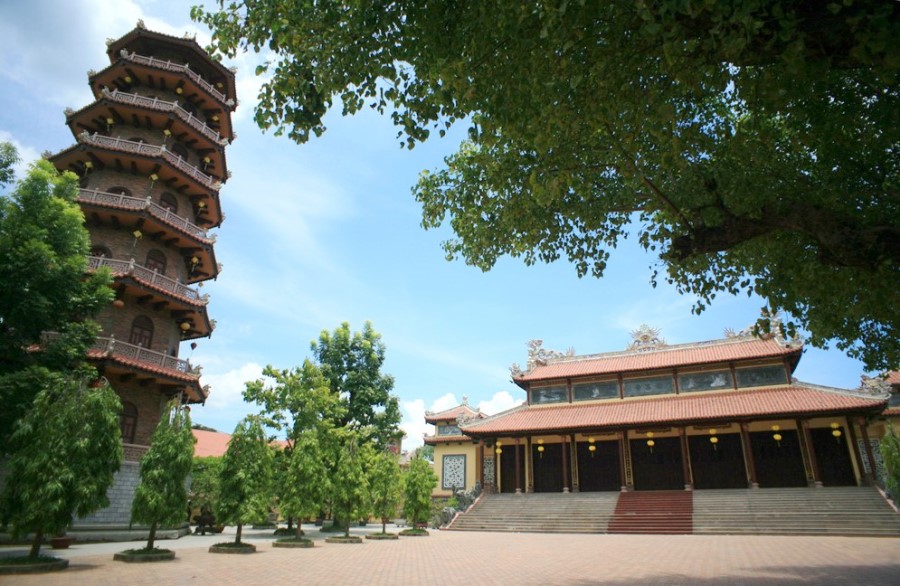
Nestled quietly in a lush residential area of Hue, Tu Dam Pagoda is one of the most important Buddhist centers in Central Vietnam. More than just a place of worship, the pagoda has played a significant role in the development of Vietnamese Buddhism, especially during the 20th century.
With its serene atmosphere, elegant architecture, and deep historical roots, Tu Dam Pagoda offers visitors a meaningful glimpse into the spiritual life of Hue. It is a destination where history, culture, and tranquility blend harmoniously.
Location and How to Get There
Tu Dam Pagoda is located on 01 Su Lieu Quan Street, Truong An, Thuan Hoa ward, Hue city, about 2 km southwest of Hue city center. The journey takes around 5 – 10 minutes by car or motorbike, making it easily accessible for travelers staying in central Hue.
Visitors can reach the pagoda by:
- Motorbike or bicycle: A convenient and flexible way to explore nearby attractions
- Taxi or ride-hailing apps: Comfortable and quick
- Private car or guided tour: Ideal for a more relaxed and informative experience
✓ You can have a look at our Hue Buddhist Tour– from 50 USD/ pax.
The route is simple, passing through quiet streets lined with trees, giving you a gradual transition from the city’s bustle to a peaceful spiritual space.
History of Tu Dam Pagoda
The Tu Dam Pagoda firsly was originally a meditation hermitage, built by Minh Hoang Tu Dung, a Chinese Zen master, at the end of the 17th century (around 1690), during the reign of Lord Nguyen Phuc Thai.
It was located on Hoang Long Mountain and was named An Ton, meaning “taking the transmission of the mind as the main principle.” In 1703, Lord Nguyen Phuc Chu officially granted the title “Sac Tu An Ton Tu” to the pagoda. Later, in 1841, Emperor Thieu Tri renamed it “Tu Dam Tu,” which means “auspicious cloud,” symbolizing the Buddha and Vietnamese pagodas.
In 1699, Lieu Quan came to study meditation under Master Minh Hoang Tu Dung. He presented a verse called “Duc Phat” (Bathing the Buddha), which was accepted by the master. He then received the transmission of the Dharma during the summer retreat in the year 1712.
From being an ancient pagoda of the Lam Te Zen sect, Tu Dam Pagoda was later developed into the headquarters of the provincial Buddhist association. From the 1920s, the movement to revive Vietnamese Buddhism spread across the country. In Hue, the An Nam Buddhist Association was founded in 1932 by respected monks and laypeople such as Giac Tien, Giac Nhien, Tinh Hanh, Tinh Khiet, Dr. Le Dinh Tham, Mr. Nguyen Khoa Tan, and Mr. Nguyen Dinh Hoa.
In 1936, the monastic community agreed to hand over the pagoda to the association to serve as a place of worship and its headquarters. On December 18, 1938, the Thua Thien Provincial Buddhist Association rebuilt the pagoda on its old foundation, adding a lecture hall, monks’ residences, and several working buildings for the association.
Entrance Fee and Opening Hours
Tu Dam Pagoda is open daily from early morning (around 6:00 AM) until late afternoon (around 5:30 PM).
- Entrance fee: There is no entrance fee; it is free.
- Donations: Optional and appreciated
Visitors are welcome throughout the day, but early morning and late afternoon are the best times to enjoy the calm and gentle ambiance.
Tu Dam Pagoda Hue Architecture
The pagoda is designed in a traditional Vietnamese style, harmoniously integrated with nature. The spacious courtyard is shaded by ancient trees, creating a cool and tranquil environment. The layout is simple yet balanced, reflecting Buddhist principles of harmony and mindfulness.
The Three Door Gate (Tam Quan)
The Tam Quan gate serves as the symbolic entrance to the sacred space. Its three passages represent different spiritual paths in Buddhism.
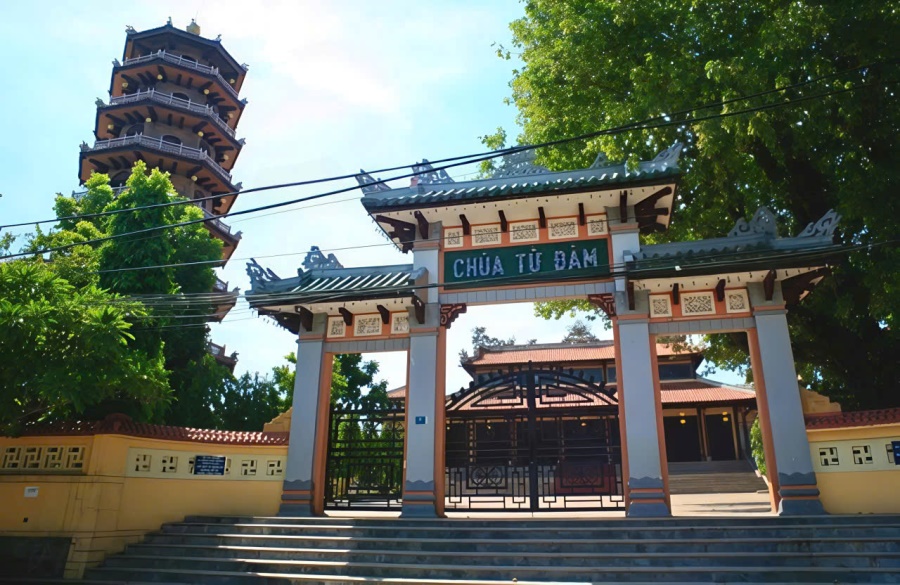
Only when people truly understand the meaning of these three gates can they let go of anger, hatred, and suffering, and find peace in life. The architecture is elegant and understated, setting a respectful tone as visitors enter the pagoda grounds.
The Main Hall
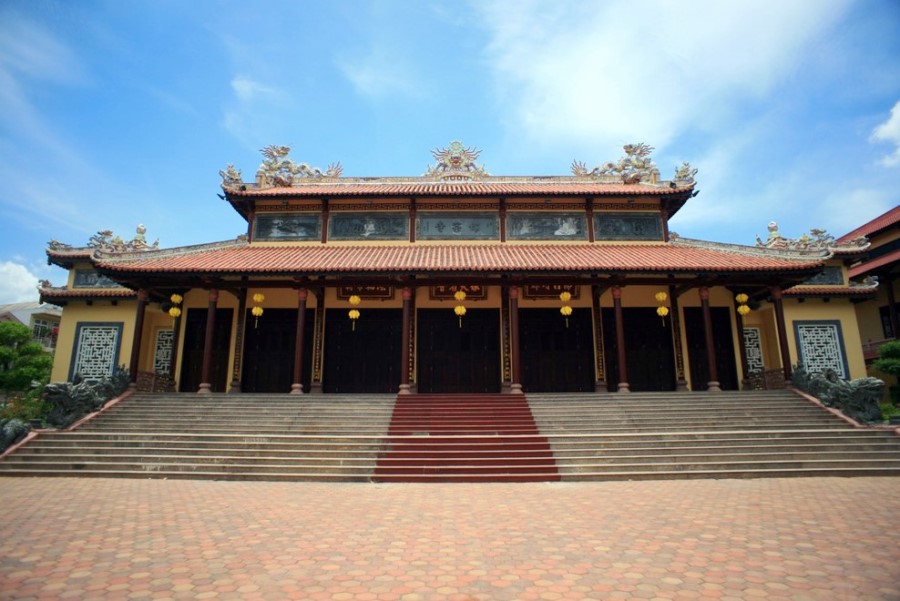
At Tu Dam Pagoda, the main sanctuary is designed and arranged in a very simple way, yet it still conveys a sense of solemnity and reverence.
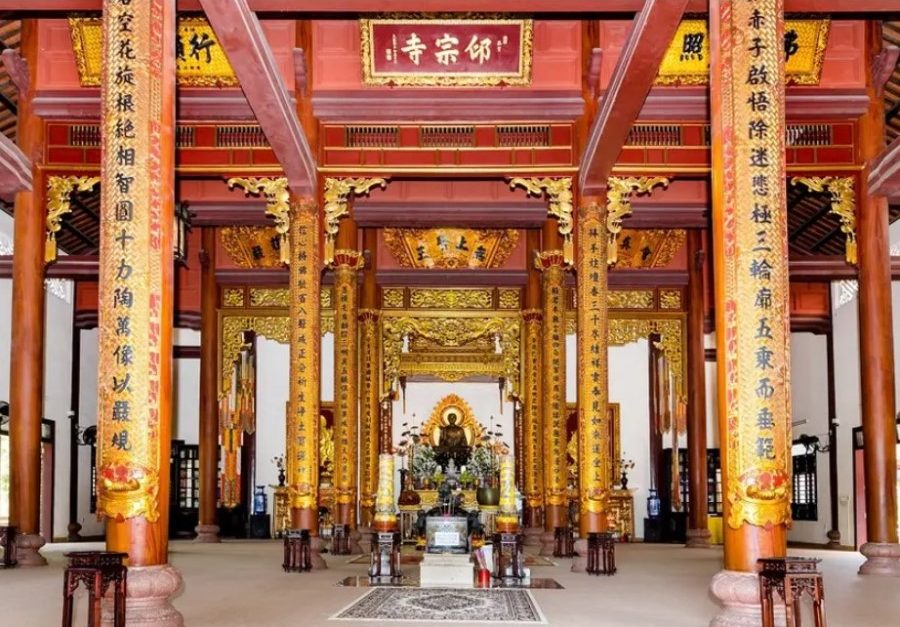
Inside, there is a statue of Shakyamuni Buddha seated on a lotus pedestal, with his hands forming a symbolic gesture (mudra). On both sides stand the bodhisattvas Samantabhadra and Manjushri.
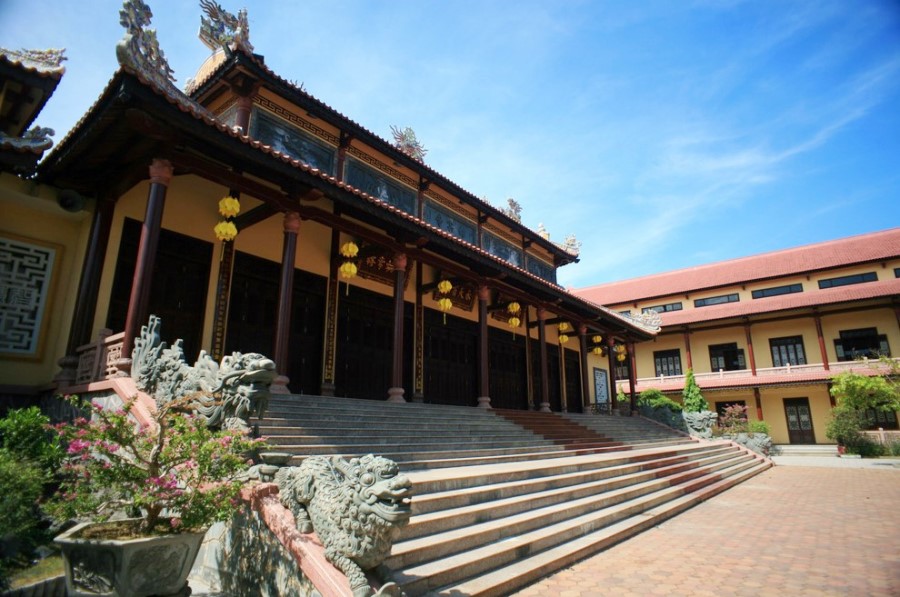
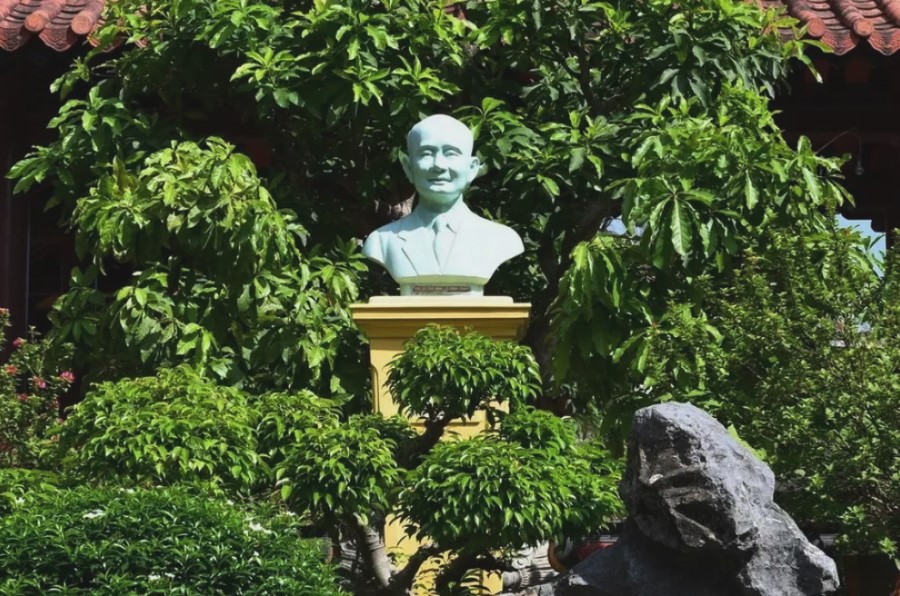
To the right of the main hall are the guest house and the living quarters for monks and nuns. In front of the guest house, there is a small garden featuring a bust statue of layman Le Dinh Tham (Tâm Minh).
Directly behind the main hall is the ancestral house dedicated to past patriarchs.
The Sacred Bodhi tree
This Bodhi tree originates from the sacred Bodhi tree in India, where Shakyamuni Buddha attained supreme enlightenment. Its lineage was first brought to Sri Lanka by the monk Mahinda (a former prince and son of King Ashoka) when he spread Buddhism there in the 3rd century BCE.
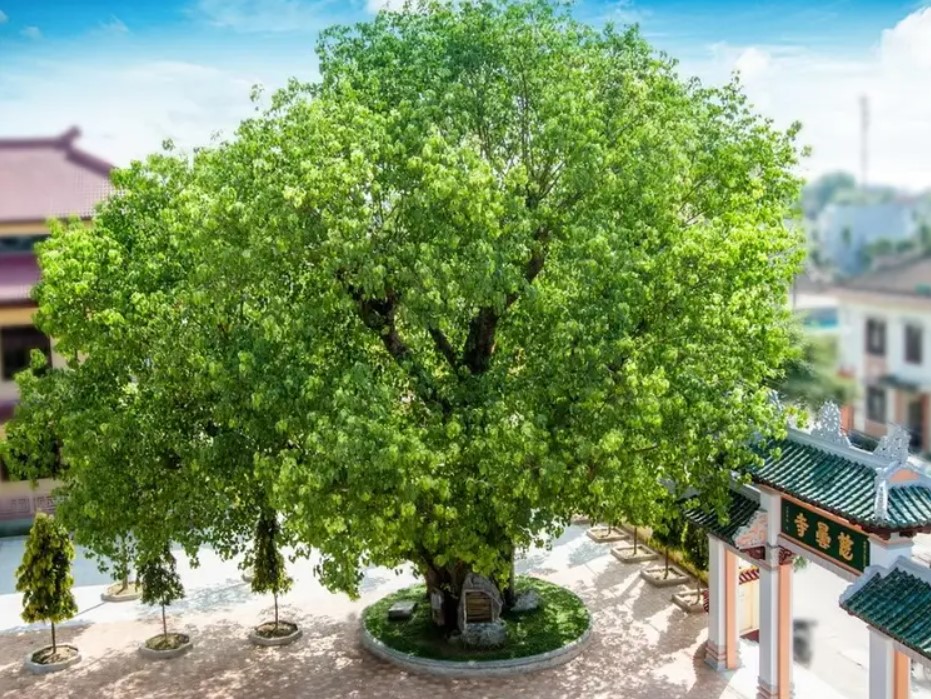
Later, Venerable Narada took a sapling from the Bodhi tree in Sri Lanka, and together with Mrs. Karpeles from a Cambodian Buddhist delegation, presented it to the Central Vietnam Buddhist Association. The tree was planted here during their visit to Hue in 1939.