
Hue Royal Court Music Overview
Hue Royal Court Music (Nhã nhạc cung đình Huế) is not only a refined cultural symbol of Vietnam but also a remarkable embodiment of the nation’s musical heritage. It has been honorably recognized by UNESCO as an Intangible Cultural Heritage of Humanity, highlighting its outstanding historical and artistic value.
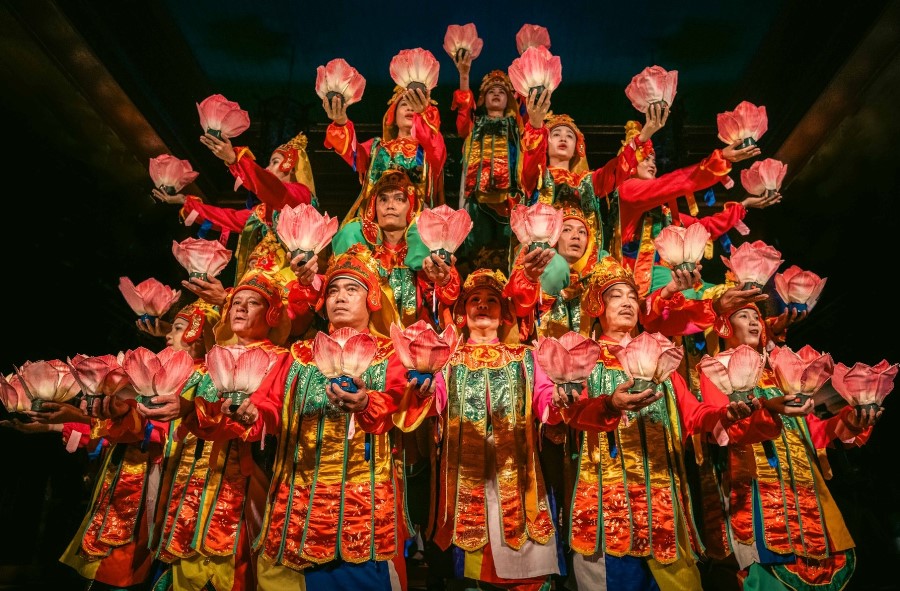
With its elegant melodies and sophisticated, regal rhythms, Hue Royal Court Music leaves a lasting impression on visitors who experience it even once. That is why a journey to Hue is more than just exploring the Nguyen Dynasty’s architectural complexes or admiring the poetic beauty of the Perfume River; it is also an opportunity to immerse yourself in this unique musical tradition, an experience not to be missed.
What is the Nhã Nhạc Cung Đình Huế exactly?
Generally, Nhã nhạc cung đình Huế is a broad term that encompasses court music, dance, and theatrical performances, typically presented during royal ceremonies, official court events, and important national celebrations organized by the imperial court.
These occasions also offered the emperor and royal family moments of leisure and refined entertainment. It was during the Hồ Dynasty that the term “Nhã nhạc” began to be used to refer more generally to court music, including ceremonial and ritual performances. At times, the name was even used to describe specific musical ensembles or orchestras within the court.
On November 7, 2003, Hue Royal Court Music was officially inscribed by UNESCO on the list of Masterpieces of the Oral and Intangible Heritage of Humanity, recognizing its scholarly nature and its role as a symbol of Vietnamese court music.
These days, it stands as one of the cultural highlights of Hue City, enriching the city’s heritage landscape and enhancing its appeal as a must-visit destination alongside its historic monuments and the poetic beauty of the Perfume River.
Hue Royal Court Music Formation and Development
Over time, Nhã nhạc cung đình Huế has undergone a clear and well-documented process of formation and development. Through successive historical periods, it was carefully preserved and passed down from one generation to the next, reflecting a strong sense of cultural continuity. Each generation not only safeguarded this tradition but also enriched it with new elements, enhancing its depth and sophistication.
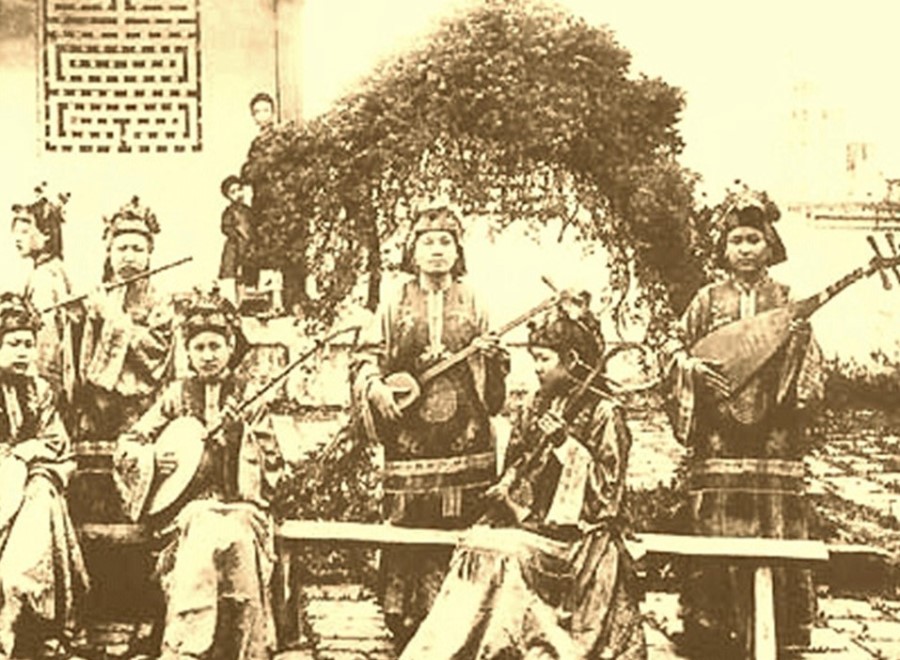
This continuous process of preservation and creative refinement allowed Nhã nhạc to flourish, eventually reaching its artistic peak during the Nguyễn Dynasty, when it became the most complete and refined expression of Vietnamese court music.
According to historical records, Hue Royal Court Music first appeared in Vietnam during the Lý Dynasty and gradually developed into a well-structured and formalized art form. As a genre of court music, it symbolized the longevity and prosperity of feudal monarchical power. For that reason, Nhã nhạc was required to embody refined lyrics and elegant melodies that conveyed the noble, dignified spirit of the royal court.
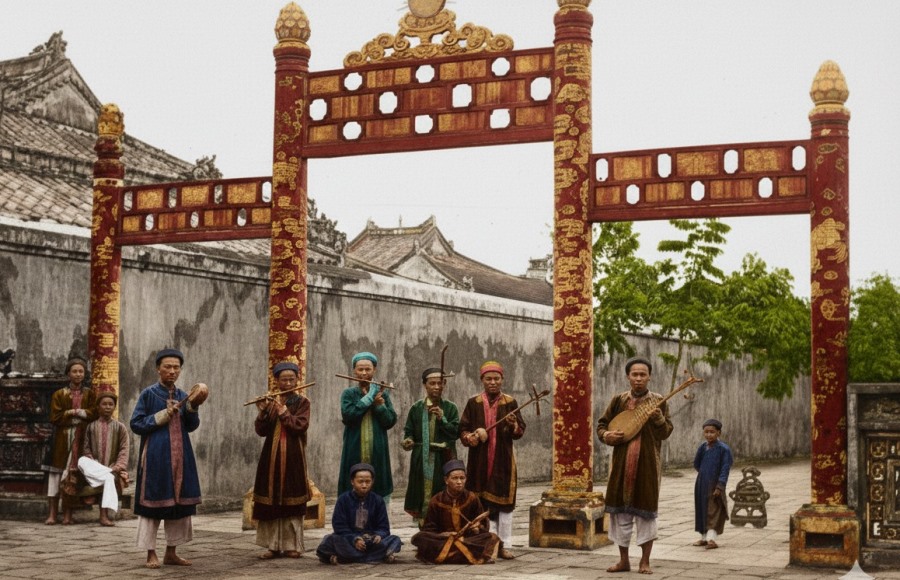
Emerging as early as the 13th century, Nhã nhạc evolved through various dynasties, closely tied to the broader course of Vietnam’s history. During the Lê Dynasty, it became an art form reserved exclusively for the aristocracy and scholarly elite. At this stage, it was highly structured, with complex organization and clearly defined systems.
Hue Royal Court Music was also divided into distinct categories, including Giao nhạc, Miếu nhạc, Đại triều nhạc, Thường triều nhạc, and Đại yến nhạc, among others. Although it achieved notable refinement during this period, its development was not entirely continuous, and by the late Lê era, it gradually declined due to various historical factors.
It was not until the Nguyễn Dynasty that Nhã nhạc truly flourished and was organized more systematically than ever before, especially in the early 19th century. After establishing their capital in Huế, the court of Emperor Gia Long recognized the importance of music as a means of cultural and spiritual cultivation. From this point onward, Nhã nhạc became closely associated with the Huế royal court and developed according to strict imperial standards.
The Nguyễn period marked a crucial foundation for the continued development of court music under later emperors. During this time, Nhã nhạc became increasingly sophisticated, with a rich repertoire of hundreds of musical pieces and lyrics written in classical Chinese.
It was officially regarded as the national music and was performed only on the most important ceremonial occasions, such as the Heaven Worship Ceremony at Nam Giao Esplanade, the Xã Tắc rituals, royal coronations, imperial birthday celebrations, and formal receptions of foreign envoys. The term “Huế Royal Court Music” also originates from this era, as the Nguyễn Dynasty established its capital in Huế for nearly 150 years.
Despite its remarkable achievements, Nhã nhạc faced serious challenges with the introduction of Western musical instruments and styles. Its position was further threatened by major historical changes, particularly the collapse of Vietnam’s last feudal dynasty in 1945.
Yet, despite these fluctuations over time, Nhã Nhạc Huế has endured, preserving its elegance, refinement, and distinctive courtly character much as it has since its earliest days.
The Great Artistic Value of Hue Royal Court Music
Nhã nhạc cung đình Huế represents a pinnacle of artistic achievement in Vietnam’s traditional culture, embodying both refined aesthetics and profound cultural meaning. Its value lies not only in its music but also in the harmonious integration of melody, dance, costume, and ceremonial performance. Every element is carefully composed to reflect balance, order, and the philosophical ideals of harmony between heaven, earth, and humanity.
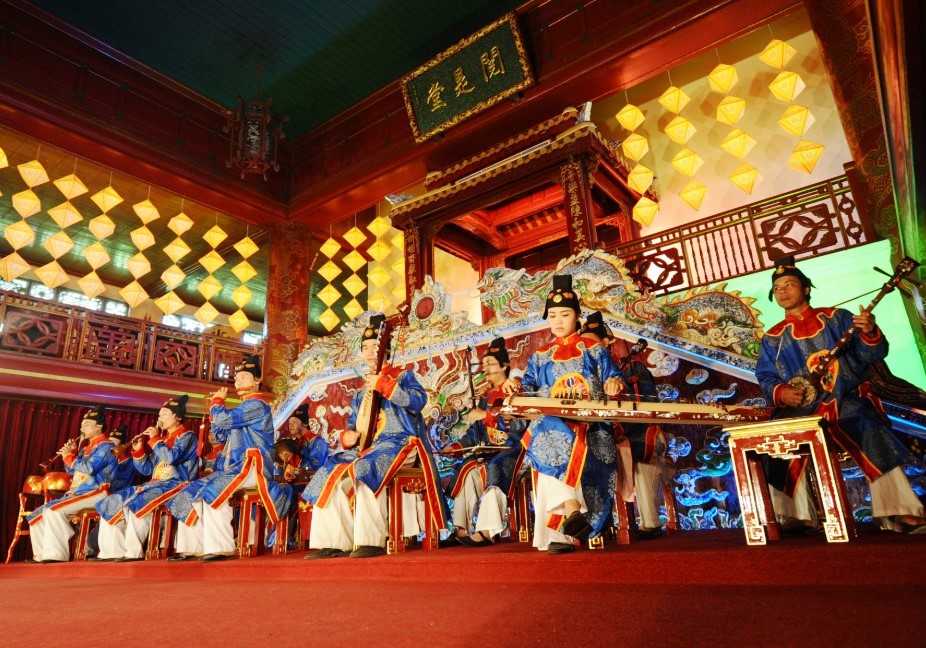
Musically, Hue Royal Court Music is distinguished by its elegant melodies, sophisticated structures, and the use of traditional instruments that create a solemn yet graceful atmosphere. The performances follow strict rules and standardized forms, demonstrating a high level of organization and artistic discipline. At the same time, its lyrical content, often written in classical Chinese, adds depth and intellectual richness, elevating it beyond entertainment into a form of scholarly art.
Beyond its aesthetic qualities, Nhã nhạc also carries significant symbolic value. It was once regarded as the official “national music” of the imperial court, performed exclusively during important state ceremonies to affirm royal authority and express spiritual beliefs. This deep connection between music, ritual, and power gives Nhã nhạc a unique place in Vietnam’s cultural heritage.
Performance Costumes
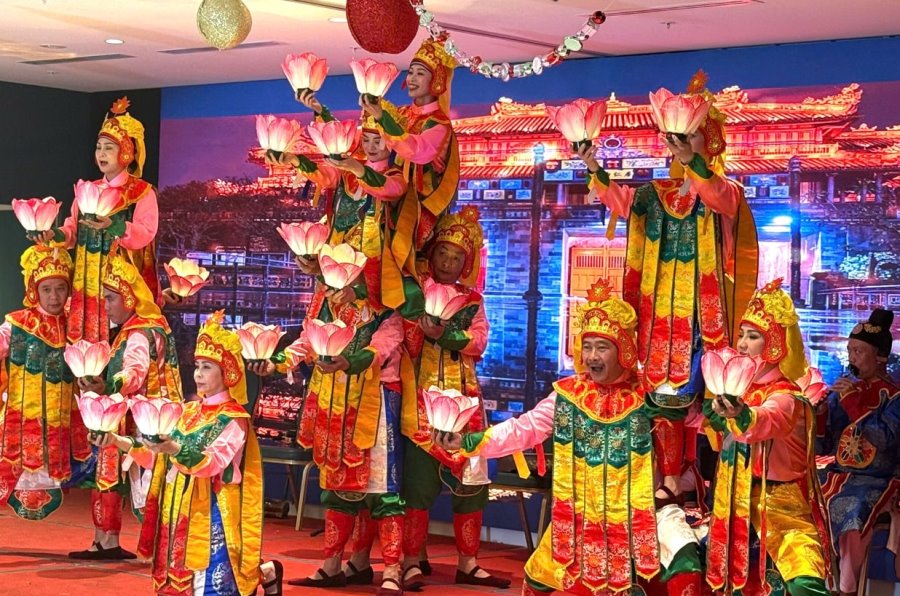
One of the most striking features of Nhã nhạc cung đình Huế is its performance costume. The artists appear in traditional imperial court attire, meticulously crafted with intricate patterns and carefully selected to match each specific performance. These costumes are not merely decorative; they form an essential part of the ritual itself, adding dignity, harmony, and ceremonial grandeur to the entire presentation.
A Rich System of Musical Instruments
The distinctive sound of Nhã nhạc is created through an extensive and clearly structured system of musical instruments.
Huyền nhạc employs 26 different instruments.
Đại nhạc features as many as 42 instruments.
Nhã nhạc itself is centered around 8 principal instruments.
Ti trúc tế nhạc includes 8 instrumentalists and 8 vocal performers.
Together, these elements create a richly layered soundscape with remarkable depth and a strong ceremonial character.
A Highly Formalized Performance Style
The performance of Nhã nhạc is closely intertwined with imperial court dance. Many pieces combine music with traditional dances inspired by the dragon, unicorn, turtle, and phoenix, as well as lantern and fan dances, all based on the traditional pentatonic scale.
The drum plays a central role, guiding the rhythm and pace of the entire performance. Dancers dressed in formal court costumes move with grace and precision, their synchronized movements creating a seamless and elegant flow from beginning to end.
Recognized by UNESCO as an Intangible Cultural Heritage of Humanity, Hue court music continues to stand as a living testament to the creativity, sophistication, and enduring identity of Vietnamese culture.
Where can you experience Nhã nhạc cung đình Huế?
Nowadays, Hue Royal Court Music is performed in two distinctive settings, each offering a very different experience.
Listening to Hue Royal Court Music on the Perfume River
The Perfume River is often one of the first places visitors encounter when arriving in Huế. Beyond its poetic scenery, the river has become an open-air stage for many traditional art forms, including Nhã nhạc.

The experience begins with boarding a traditional dragon boat. As the boat glides along the river, the illuminated city slowly fades into the background. Surrounded by water and evening breeze, visitors can listen to Nhã nhạc alongside other traditional musical performances presented by local singers.
What makes this experience especially memorable is the atmosphere. The music is not confined by walls or ceilings; instead, the sound drifts gently across the water and blends with the open air, creating a setting that feels both ceremonial and intimate. After the performance, visitors often take part in releasing floating lanterns onto the Perfume River, ending the evening with a symbolic and peaceful ritual.
✓ Tour recommended Perfume River Sunset Cruise with dinner
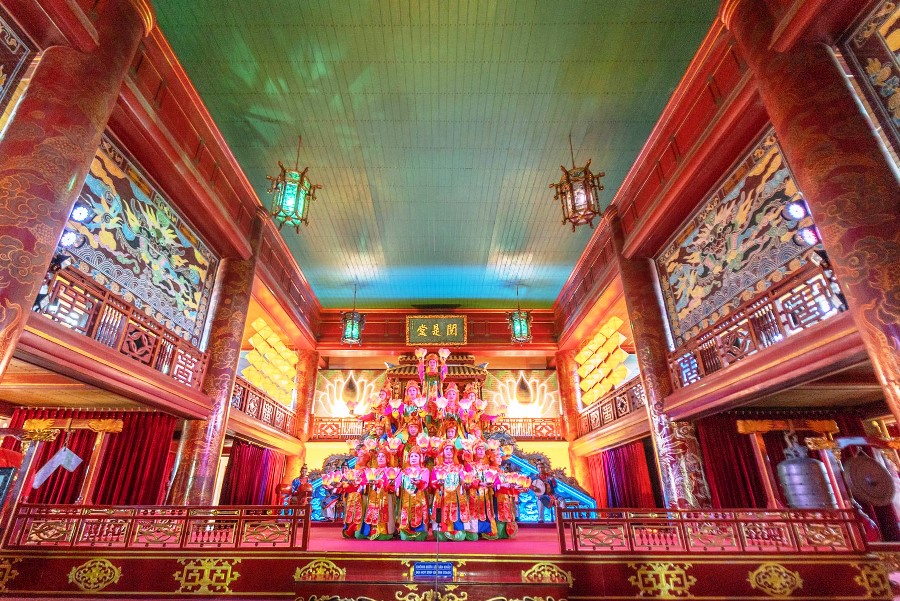
Duyệt Thị Đường Royal Theatre, The Original Setting of Nhã nhạc
If the Perfume River offers a softer and more relaxed experience, Duyet Thi Duong Royal Theater preserves the true spirit of the imperial court. Built in 1826 during the reign of Emperor Minh Mạng, this historic royal theatre was reserved exclusively for the emperor and members of the royal family.
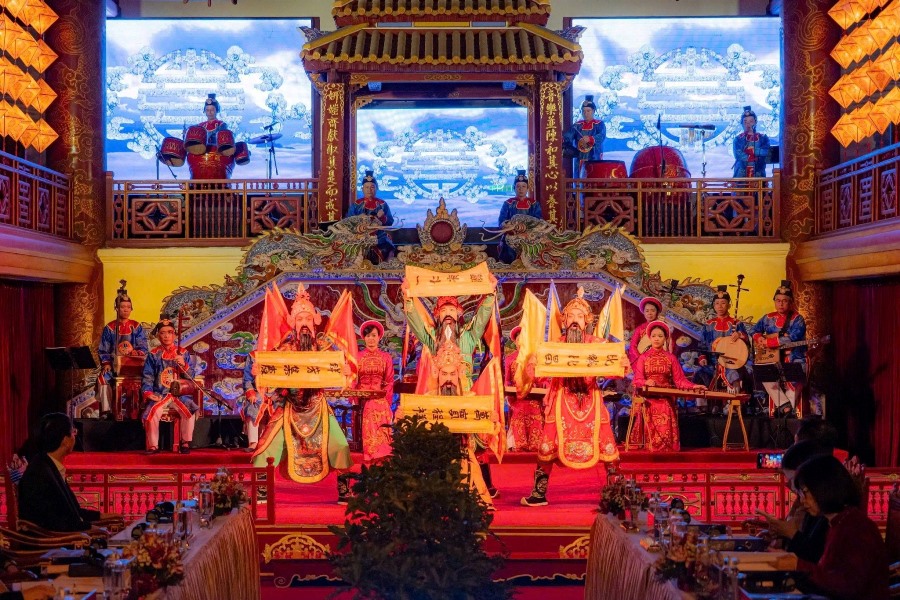
For nearly 200 years, this Hue Royal Theater has served not only as a venue for Nhã nhạc but also for classical tuồng opera, court dances, and ceremonial performances for foreign envoys.
These days, visitors exploring the Hue Imperial City have the opportunity to step into this original performance space. Although restored, the theatre still retains its historic layout, architectural character, and formal atmosphere. Every performance here is more than artistic entertainment. It is also part of an ongoing effort to revive and preserve rare court compositions, especially ceremonial court music, which was once at risk of disappearing.
Performance Schedule
To plan your visit more easily, it helps to know the performance times at each venue.
On the Perfume River, Nhã nhạc performances are usually held in the evening, typically between 6:00 PM and 8:00 PM daily. This is one of the most pleasant times to be in Huế, when the city lights begin to glow, and the weather becomes cooler.
At Duyệt Thị Đường Royal Theatre, performances take place during the day, with two regular time slots: 10:00 AM to 10:40 AM and 3:00 PM to 3:40 PM. The duration is ideal for visitors who want to experience the refined spirit of imperial ceremonial music within the historic atmosphere of the Nguyễn court.
Hue Royal Court Music Ticket Prices
Considering the cultural value of this heritage, experiencing Nhã nhạc is generally considered quite accessible.
For performances on the Perfume River, tickets for adults usually cost around 100,000 VND (roughly 4 USD) per person. Children under 1.3 meters tall are typically admitted free of charge.
At Duyệt Thị Đường Royal Theatre, tickets generally cost around 200,000 VND (roughly 9 USD) per person.
This price usually includes access to the royal theatre setting as well as performances of Nhã nhạc and traditional court dances in one of Huế’s most historically significant spaces.
Efforts to Preserve The Royal Court Music in Hue
In recent years, preserving Hue Royal Court Music has remained an important cultural priority in Huế. Today, the Huế Royal Traditional Theatre has successfully safeguarded several significant court compositions, including the renowned Ten Royal Pieces (Thập thủ liên hoàn), such as Phẩm tuyết, Nguyên tiêu, Hồ quảng, Liên hoàn, Bình bán, Tây mai, Kim tiền, Xung phong, Long hổ, and Tẩu mã, along with other important works like Long đăng, Long ngâm, and Tiểu khúc.
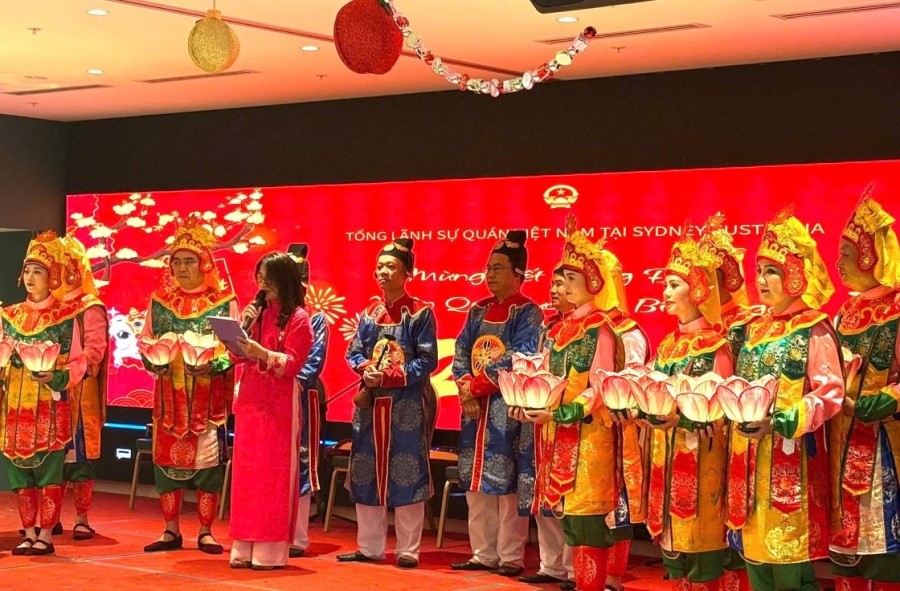
Beyond preserving and restoring these musical treasures, the theatre also regularly presents performances in various traditional forms. These performances are often featured during major cultural occasions such as the Huế Festival, Buddhist celebrations, folk festivals, and chamber music programs, helping bring this royal heritage closer to contemporary audiences.
If you have the chance to visit, you can also explore exhibition spaces that introduce the rich world of Nhã nhạc in greater depth. Through court costumes, masks, archival materials, and traditional musical instruments, visitors gain a fuller understanding of the artistic and historical value of this remarkable cultural heritage.