

What Is Thanh Toan Tile Bridge?
Tucked away in the peaceful countryside of Hue, Thanh Toan Tile Bridge (Cầu Ngói Thanh Toàn) is one of the most charming cultural landmarks you can visit outside the city center. Unlike grand imperial monuments, the bridge offers something more intimate and authentic, reflecting everyday life in central Vietnam.
What makes this bridge special is not only its age but also its unique “house over bridge” design, which provides both shelter and passage. Surrounded by rice fields and local homes, it feels worlds away from busy tourist areas.
Visitors can expect a calm atmosphere, scenic views, and a deeper connection to Hue’s rural heritage. It is an ideal stop for travelers seeking culture, history, and a slower pace.

Thanh Toan Bridge Basic Traveler Info
Before diving into the deep knowledge about this special bridge’s history and cultural significance, let’s discover the very first information that many travelers care about.
Where Is It?
Thanh Toan Tile Bridge is located in Thanh Thuy Chanh Village (Thuy Thanh commune), about 8 kilometers east of Hue city center. The journey typically takes around 15 to 20 minutes by car or motorbike, depending on traffic.
The setting is distinctly rural, with narrow roads, rice fields, and small houses lining the way. This short distance makes it an easy escape from the city without requiring a long trip. Visitors can quickly transition from urban sights to peaceful countryside scenery. Very suitable for those with limited time in Hue.
How To Get There
There are several ways to reach the Thanh Toan Bridge, each offering a slightly different experience:
- Motorbike: Flexible and convenient, ideal for independent travelers
- Bicycle: A popular choice for those who want to enjoy the countryside at a slower pace
- Private car: Comfortable and efficient, especially for families or groups
- Guided tour: Often includes additional stops and local insights
Join Hue cycling tour to Thanh Toan Bridge now with a lovely local tour guide to enjoy the pastoral atmosphere and meet the villagers at Thanh Toan.

Road conditions are generally good, with mostly flat terrain. Cycling is particularly enjoyable, as the route passes through scenic landscapes. Each option allows visitors to tailor their journey based on their preferences and schedule.
If you want to join a tour or travel by a private car to Hue’s nearby locations, Hue Top Tours might have what you need. Consider our Hue tours and Hue private cars, such as:
- Hue City Tour By Cyclo – 64 USD/sedan
- Hue City Tour For Muslim – contact for price
- Hue To La Vang Holy Land By Private Car – 50 USD/sedan
- Hue To Thuan An Beach Private Car – 33 USD/sedan
Best Time To Visit
The best time to visit Thanh Toan Tile Bridge is during the dry season, which typically runs from March to August. During this period, the weather is more stable. Also, the surrounding fields are often lush and vibrant.

In the rainy season, the area can become wet and less accessible. However, it still has its own charm. The canal may appear fuller, and the greenery becomes more intense. Travelers should check the weather forecast before planning their visit. Choosing the right season can significantly enhance the overall experience.
Time of Day Recommendations:
Early morning and late afternoon are the most recommended times to visit. These hours offer cooler temperatures and better lighting conditions for photography.
Midday can be quite hot, especially during the summer months. So it’s less comfortable for exploring. Visiting during quieter times also allows for a more peaceful experience. The bridge feels more intimate when there are fewer people around. Planning your visit around these times ensures a more enjoyable and memorable trip.
Entrance Fees & Opening Hours
Thanh Toan Tile Bridge is free to visit. So it’s an accessible attraction for all travelers. There are no strict opening hours, as the bridge is part of a living village. However, daytime visits are recommended for safety and visibility.
Parking is available nearby. Basic facilities can also be found within the village. Most visitors spend around 30 to 60 minutes exploring the area. It is advisable to bring cash for small purchases or donations. Keeping expectations realistic will help ensure a smooth and pleasant visit.
The Story Behind Thanh Toan Tile Bridge
The story of the Thanh Toan Tile Bridge dates back to the late 18th century, during the reign of the Nguyen Lords. The bridge was funded by a local woman named Tran Thi Dao, who used her own wealth to build it for the benefit of her village.

Her intention was simple yet meaningful. She wanted to make travel safer and more convenient for local residents, especially farmers and traders crossing the canal. This act of generosity reflects the strong community values of rural Vietnam at the time.
Instead of being built by rulers or officials, the bridge stands as a symbol of local initiative and compassion.
Over the centuries, it has been repaired and maintained. But its original purpose remains unchanged. It continues to serve as both a functional crossing and a reminder of how individual contributions can shape a community’s identity.
How Does It Matter To Local Community Life?
Beyond its practical use, the Thanh Toan Bridge has long been a central gathering place for villagers. Its covered design allows people to rest, socialize, and even conduct small exchanges away from the sun or rain. Farmers often pause here after working in nearby rice fields, while elders gather to chat and observe daily life passing by.
The bridge also plays a role during local events and festivals. It acts as a focal point for community interaction. Its presence is deeply woven into the rhythm of village life.

Unlike many tourist attractions that feel detached from their surroundings, this bridge remains part of a living culture. Visitors who spend time here will notice how naturally it blends into daily routines. Therefore, it offers a rare glimpse into authentic Vietnamese countryside life.
Thanh Toan Bridge As Hue’s Heritage Site
Today, the Thanh Toan Tile Bridge is recognized as an important cultural and historical site within the Hue region. It has been preserved carefully to maintain its original structure and traditional character. Local authorities and heritage organizations have worked to protect the bridge while still allowing it to serve the community.

Its value lies not only in its age but also in its representation of rural architecture and social history. In a region known for imperial landmarks like Hue Imperial City, this bridge offers a different perspective. It highlights the lives of ordinary people rather than royalty.
This balance makes it a meaningful addition to any visit to Hue. It enriches the overall understanding of the area’s cultural landscape.
Unveil Thanh Toan Tile Bridge’s Unique Design
What Is Thuong Gia Ha Kieu Style?
One of the most distinctive aspects of Thanh Toan Tile Bridge is its design of “thượng gia hạ kiều” (a house above and a bridge below). The structure is made primarily of wood, supported by sturdy pillars, and topped with a tiled roof that protects it from harsh weather conditions.
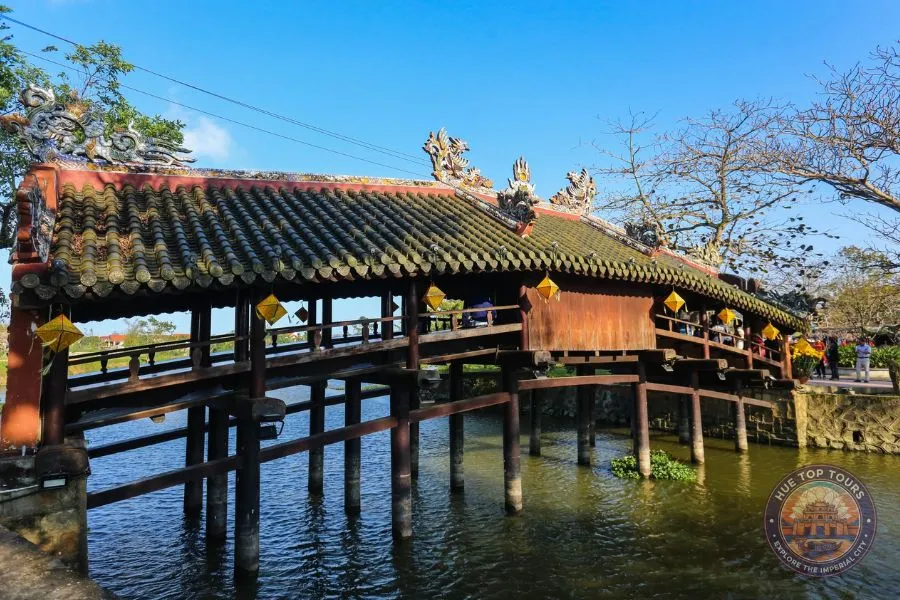
The roof is not only functional but also visually striking. Its curved shape and traditional tiles give the bridge an elegant yet simple appearance. Inside, wooden benches line the sides, allowing people to sit and rest.
The craftsmanship reflects traditional Vietnamese building techniques, emphasizing durability and harmony with nature. Despite being centuries old, the bridge continues to stand strong, demonstrating the effectiveness of its design.
Compared To Other Famous Vietnamese Bridges
While Vietnam is home to many iconic bridges, Thanh Toan Bridge offers a noticeably different experience.
Compare it to another “thuong gia ha kieu” bridge, the elegant Japanese Covered Bridge in Hoi An. While it features ornate carvings and strong Japanese influences, Thanh Toan Tile Bridge feels simpler and more rooted in everyday village life. It was not built for trade symbolism or tourism appeal, but for practical community use.

Meanwhile, structures like Long Bien Bridge in Hanoi highlight a completely different scale and purpose. It functions as major transport infrastructure with strong historical ties to colonial engineering.
In contrast, Truong Tien Bridge represents a more urban and iconic image of Hue, stretching across the Perfume River and serving as a central landmark in the city. This contrast within the same destination makes Thanh Toan Bridge stand out even more for its quiet charm, human scale, and deep connection to rural life.
Hidden Meanings Of Its Design
The design of Thanh Toan Tile Bridge reflects deeper cultural values rooted in Vietnamese traditions. The covered structure symbolizes protection and care, while its integration into the surrounding landscape represents harmony with nature.
The bridge also embodies the idea of community connection. It physically links two sides of the canal. But it also brings people together socially and culturally.
This dual function highlights the importance of shared spaces in village life. For visitors, understanding these symbolic elements adds another layer of appreciation.
What To Experience At Thanh Toan Bridge
Photography And Scenic Views
Thanh Toan Tile Bridge is a dream location for photography enthusiasts. The combination of the wooden structure, calm canal, and surrounding rice fields creates a picturesque scene. Early morning light adds a soft glow. Meanwhile, late afternoon offers warm tones that enhance the landscape.

Popular angles are shots from the side of the canal, capturing the reflection of the bridge in the water. Standing on the bridge itself also provides a unique perspective of village life.
You should notice that the changing seasons bring different colors to the fields. So each visit is slightly different. Even casual visitors will find plenty of opportunities to capture memorable images.
Visit The Nearby Agricultural Tools Museum
Just a short walk from the bridge, visitors can explore a small agricultural museum that showcases traditional farming tools and techniques. The exhibits provide insight into how local communities have cultivated rice and managed their land over generations.

This museum complements the visit to the Thanh Toan Bridge by adding educational value. It helps visitors understand the broader context of rural life in Hue. The displays are simple but informative.
Such rich simplicity makes it an easy and worthwhile stop. Spending time here enriches the overall experience and deepens appreciation for the region’s heritage.
Engage With The Local Village Life
One of the highlights of visiting Thanh Toan Bridge is the chance to observe and engage with local life. Villagers go about their daily routines, creating an authentic atmosphere that cannot be staged.

Visitors may see farmers returning from the fields, children playing nearby, or small vendors selling snacks. Taking the time to walk around the village offers a deeper connection to the area. Respectful interaction with locals can lead to meaningful experiences.
This human element is what truly sets the destination apart from more commercialized attractions.
Suggested Routes & 1 Day Itinerary For Visitors
Instead of visiting Thanh Toan Tile Bridge in isolation, you can easily turn it into a rewarding half-day or full-day journey that blends countryside charm with Hue’s iconic highlights. Thanks to its short distance from Hue, the route is simple, scenic, and flexible for different travel styles.
Below is a practical, easy-to-follow itinerary designed to maximize your experience without feeling rushed.
| Time Period | Location | Experience | Transportation | Fees |
| 08:00 – 08:30 | Hue → Thuy Thanh Village | Depart the city and enjoy a scenic ride through rice fields and quiet countryside roads | Motorbike, bicycle, or private car | Free |
| 08:30 – 10:30 | Thanh Toan Tile-roofed Bridge | Walk across the bridge, take photos, observe local life, and enjoy the peaceful rural setting | Walking | Free |
| 10:30 – 11:30 | Nearby Agricultural Museum | Learn about traditional farming tools and rural culture through simple exhibits | Walking | Free or small donation |
| 11:30 – 13:00 | Thuy Thanh Village | Wander village paths, interact with locals, optional cycling loop, lunch at a local eatery | Walking or bicycle | Meal cost varies (~50,000–100,000 VND) |
| 13:30 – 15:30 | Hue Imperial City | Explore the historic citadel, palaces, and royal heritage of the Nguyen Dynasty | Motorbike, car, or taxi | ~200,000 VND |
| 15:30 – 17:00 | Thien Mu Pagoda | Visit a peaceful riverside pagoda, enjoy views of the Perfume River, relax before ending the day | Motorbike, car, or taxi | Free |
Quick Notes for Travelers
- Total duration: Full day (flexible half-day option available)
- Best transport combo: Bicycle (morning) + car/motorbike (afternoon)
- Ideal for: Culture lovers, photographers, slow travelers

Travel Tips For First-Time Tourists
- Dress Comfortably for Walking: Wear light, breathable clothing and comfortable shoes, as you will be walking on village paths and around the bridge area.
- Respect Local Customs: Be polite when interacting with locals and always ask for permission before taking photos of people to show cultural respect.
- Keep Noise Levels Low: The bridge is part of daily village life. So avoid loud behavior that may disturb residents or disrupt the peaceful atmosphere.
- Bring Sun Protection and Essentials: Pack water, sunscreen, and a hat, especially during hot days, as shade can be limited outside the bridge area.
- Plan Ahead for a Smooth Visit: Check the weather, arrange transportation in advance, and visit during cooler hours to make your trip more comfortable.
- Adopt a Respectful Travel Mindset: Approach the visit with patience and awareness, since small gestures of respect can greatly enhance your overall experience.
Conclusion: Is Thanh Toan Tile Bridge Worth Visiting?
Thanh Toan Tile Bridge is ideal for travelers who appreciate culture, history, and authentic experiences. It may not offer the grandeur of major landmarks, but it provides something equally valuable. A genuine connection to local life.
Photographers, culture enthusiasts, and those seeking a quiet escape will find it particularly rewarding. For travelers with limited time, it can be a quick yet meaningful addition to a Hue itinerary. Ultimately, its value depends on what you are looking for. Those who take the time to explore will likely find it well worth the visit.
Hue Top Tours hopes that these tips and advice on visiting the Thanh Toan Tile-roofed Bridge have benefited tourists on their journey to Hue. Thanks for reading. Come back to our homepage to read more insightful travel blogs.