
Why Nguyen Dynasty Clothing Matters?
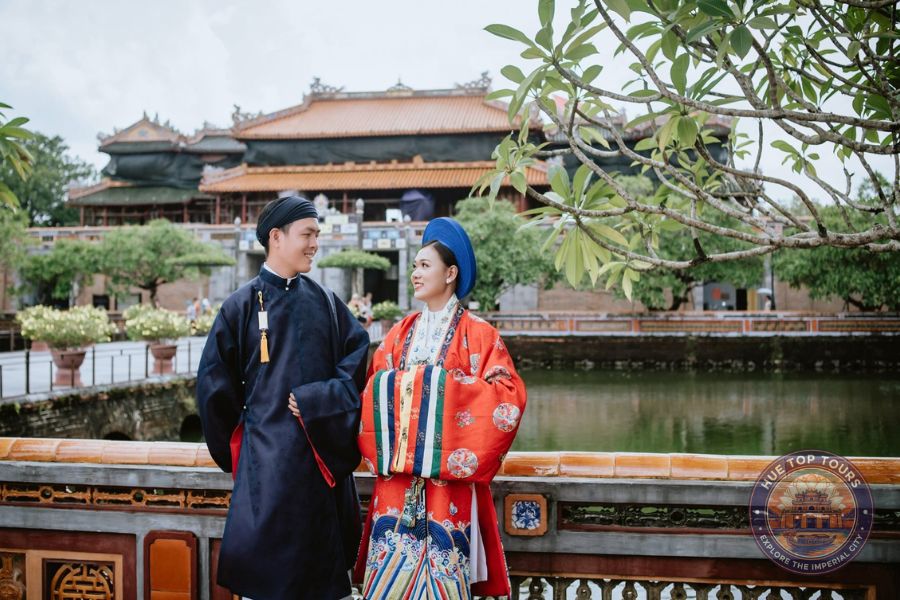
Traveling through central Vietnam, especially Hue, you quickly sense that history here is not locked behind museum glass. It lives in architecture, rituals, and clothing. Nguyen dynasty clothing reflects the final imperial era of Vietnam, spanning from 1802 to 1945, when Hue served as the political and cultural heart of the country.
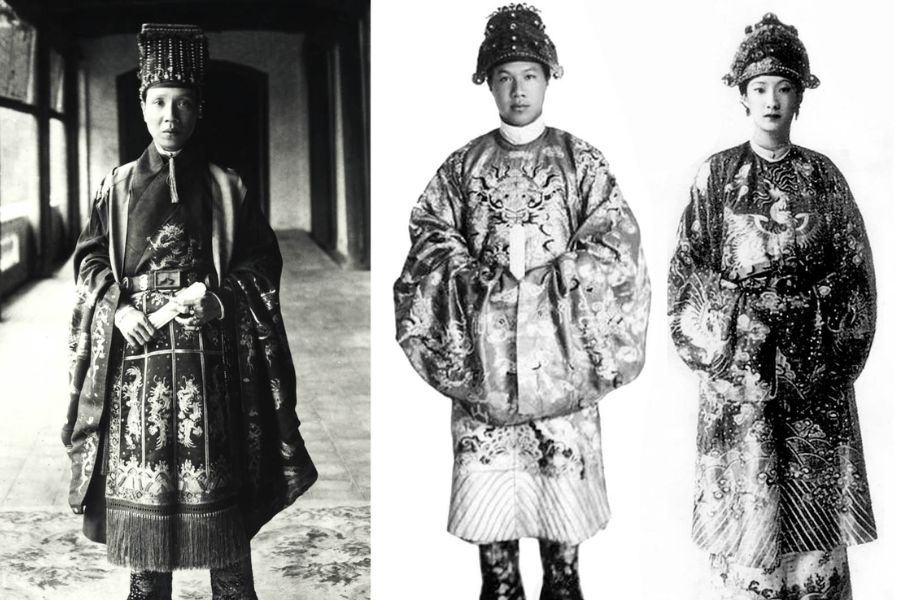
During this time, dress was never just about appearance. It expressed hierarchy, morality, and identity in a Confucian society shaped by both local traditions and external influences. Understanding Nguyen dynasty clothing matters because it explains how Vietnamese culture balanced order and beauty.
Royal, aristocratic, and commoner attire followed different rules, yet shared an elegant harmony in form and symbolism. From elaborate court robes to practical everyday garments, clothing told stories about power, gender roles, and craftsmanship.
In our travel-focused guide, you will explore the Nguyen dynasty clothing history, learn about women’s attire, formal court costumes, and see how these styles continue to inspire modern fashion and cultural tourism today.
Experience traditional clothing, Hue dragon boat tours, and many more unusual things to do in Hue with our Hue tours. For example:
- Hue City Private Tour – from 55 USD/pax
- Hue City Tour by Cyclo – from 64 USD/pax
- Hue Imperial City Walking Tour – from 21 USD/pax
- Hue Pagoda Tour – from 50 USD/pax
Nguyen Dynasty Clothing Historical Background
What Affected Hue Clothing In The Past?
These are the core forces that directly influenced the Nguyen dynasty’s clothing and costumes:
- Confucian Social Hierarchy: Confucianism defined strict social ranks. This translated into regulated clothing based on status, age, and gender.
- Centralized Imperial Authority: The Nguyen emperors used clothing as a tool of governance. It issued formal decrees that standardized dress across the empire.
- Royal Dress Codes and Sumptuary Laws: Laws strictly controlled colors, fabrics, and motifs. They reserved imperial yellow, dragons, and specific embroidery for the emperor and high nobility.
- Chinese Ming–Qing Court Influence: Nguyen court attire adopted structural elements from Chinese imperial dress, especially in ceremonial robes and court hats, while localizing details. This is an inevitable cultural interaction process, not a total copy.
- State Rituals and Court Ceremonial Culture: Frequent rituals such as coronations, ancestral worship, and court audiences required highly codified ceremonial costumes.
- Gender Norms and Moral Ideals: Clothing reinforced Confucian gender roles, emphasizing modesty, layered silhouettes, and symbolic differentiation between male and female attire.
- Capital-Based Cultural Centralization in Hue: Hue became the cultural reference point, with court fashion influencing regional elites while rural clothing remained more practical.
Clothing Evolution Across Nguyen Dynasty Periods
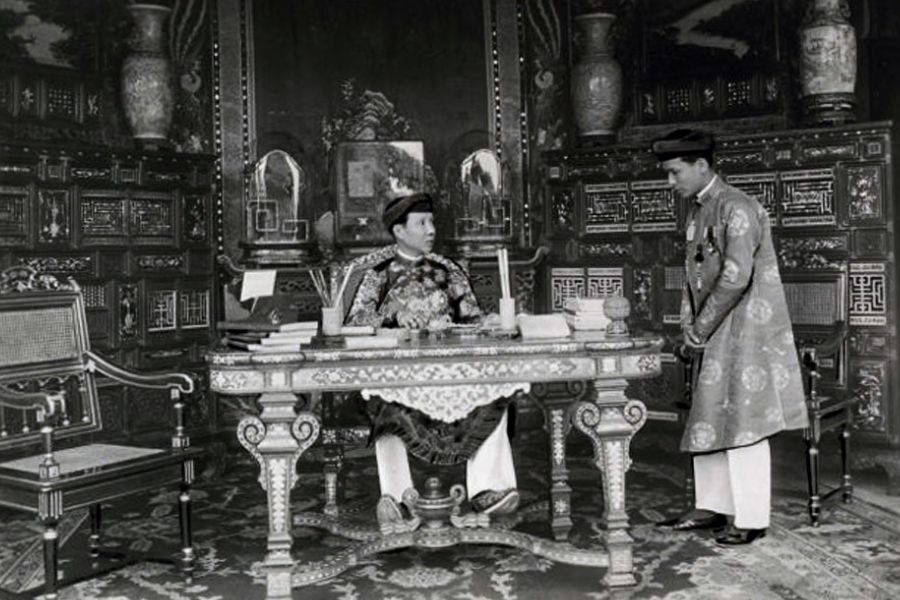
Nguyen dynasty clothing did not remain static. Look at its chronological development from 1802 to 1945:
| Period / Phase | Timeframe | Key Characteristics of Clothing Evolution |
| Foundational Standardization | Gia Long Era (1802–1820) | Clothing systems were unified after national reunification, establishing clear hierarchies in court dress to reinforce imperial authority. |
| Formal Codification | Minh Mang Era (1820–1841) | Detailed dress regulations defined garment structure, colors, and insignia by rank, creating the most rigid and standardized clothing system of the dynasty. |
| Aesthetic Refinement | Mid-Nguyen Period | Court attire emphasized symmetry, balance, and ceremonial elegance, while commoner clothing remained practical and occupation-focused. |
| Stabilization of Core Forms | Mid-Nguyen Period | Key garments such as the five-panel robe (Ao Ngu Than) became standardized and widely accepted, influencing later Vietnamese dress traditions. |
| Regional Practical Adaptation | Throughout the Dynasty | Outside the court, clothing adapted to climate, region, and labor needs, with fewer decorative and symbolic restrictions. |
| Colonial-Era Modification | Late Nguyen Period (late 19th–early 20th century) | Western textiles and tailoring techniques appeared among urban elites, particularly in Hue and Hanoi, without replacing traditional forms. |
| Preservation of Symbolic Dress Codes | Late Nguyen Period | Imperial colors, motifs, and ceremonial structures remained intact despite increasing foreign influence. |
| Transition Toward Modern Vietnamese Dress | End of the Dynasty (early 20th century) | Late Nguyen clothing provided the structural foundation for the modern ao dai, bridging imperial attire and contemporary fashion. |
Key Characteristics Of Nguyen Dynasty Clothing
If you are visiting Hue or seeing imperial costumes for the first time, Nguyen dynasty clothing can feel complex. In reality, it follows a few easy-to-spot rules. Knowing these basics will help you quickly understand what you are looking at in museums, performances, and historical sites.
Key Characteristics You Can Easily Recognize
Long, Flowing Silhouettes
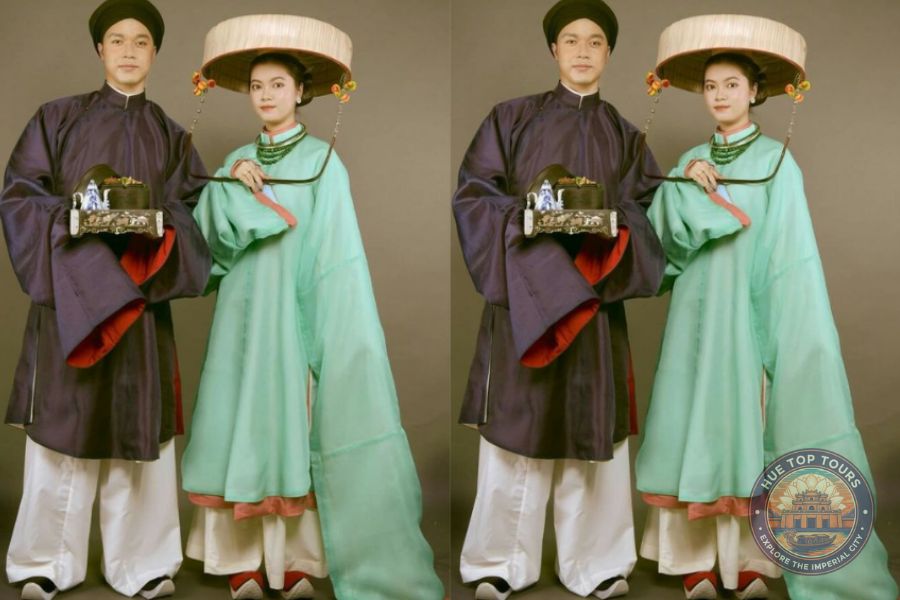
Most Nguyen dynasty clothing features long robes that fall straight from the shoulders. The shape is modest, elegant, and designed to look balanced rather than fitted.
Silk as the Main Material
Formal clothing is usually made from silk, which gives garments a soft shine and smooth texture. Everyday clothing often uses cotton or lighter fabrics.
Clear Use of Color
Colors are bold but simple. Important garments use strong, solid colors, while everyday clothing tends to be darker or more neutral.
Meaningful Decoration, Not Too Much
Embroidery is used carefully. When you see detailed patterns, they usually mean the clothing was worn for ceremonies or by high-ranking people.
Symbols with Clear Meanings
Common symbols include dragons, phoenixes, clouds, and flowers. These are not just decoration but signs of status, virtue, or good fortune.
Visible Differences Between Men and Women
Women’s clothing often looks softer and more layered, while men’s clothing appears straighter and simpler in shape.
Formal vs Everyday Look
Ceremonial clothing is rich and detailed. Daily clothing is plain and practical. The difference is easy to notice.
You do not need deep historical knowledge to appreciate Nguyen dynasty clothing. By remembering these simple characteristics, you can enjoy museum displays, royal court reenactments, and cultural shows with more confidence and understanding.
It turns costumes from something decorative into something meaningful, helping your travel experience feel richer and more connected to Vietnam’s imperial past.
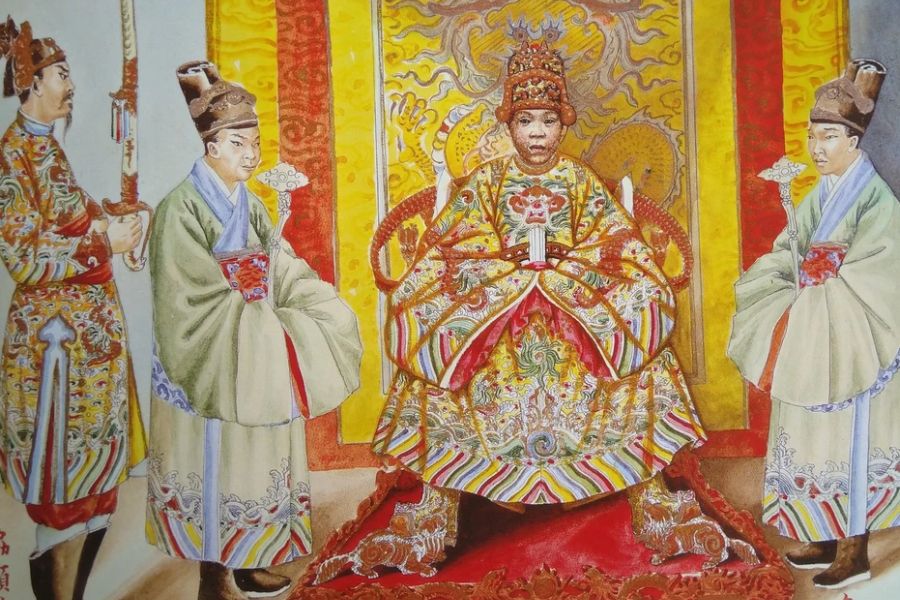
Nguyen Dynasty Clothing For Women
Nhat Binh: Royal & Noblewomen’s Clothing
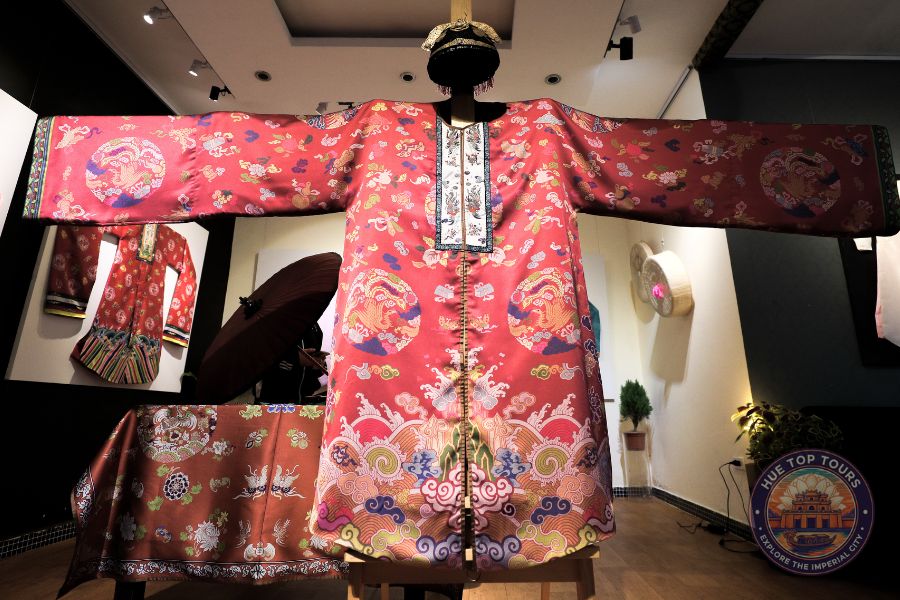
Nguyen dynasty clothing for women reached its most elaborate form within the royal court. Noblewomen and princesses wore the Áo Nhật Bình, a square-collared robe derived from earlier ceremonial garments.
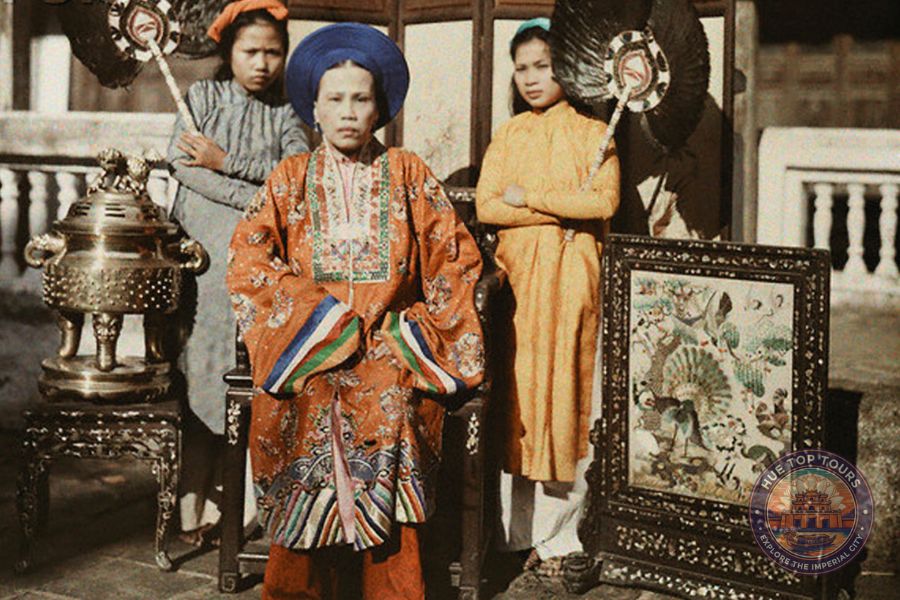
Its structure emphasized dignity and balance, with wide sleeves and layered construction. The robe was often paired with long skirts, silk belts, and inner garments that added volume and elegance.
Decoration carried deep meaning. Embroidered phoenixes, floral motifs, and auspicious symbols reflected both rank and virtue. Jewelry played an essential role, including gold necklaces, hairpins, and ornamental combs. Hairstyles were carefully arranged to complement headpieces.
For travelers visiting Hue, restored court costumes offer a vivid glimpse into how Nguyen dynasty clothing female styles embodied refinement and authority.
Tu Than & Ngu Than: Common Women’s Clothing
Outside the palace, women’s clothing focused on practicality while maintaining grace. The Áo Tứ Thân. It’s a four-panel dress, which was common among rural women and merchants. It allowed ease of movement and could be adjusted for daily labor or social occasions.
Over time, the early Áo Ngũ Thân (five-panel dress) emerged. This introduced a more structured silhouette that influenced later national dress, the modern Áo Dài.
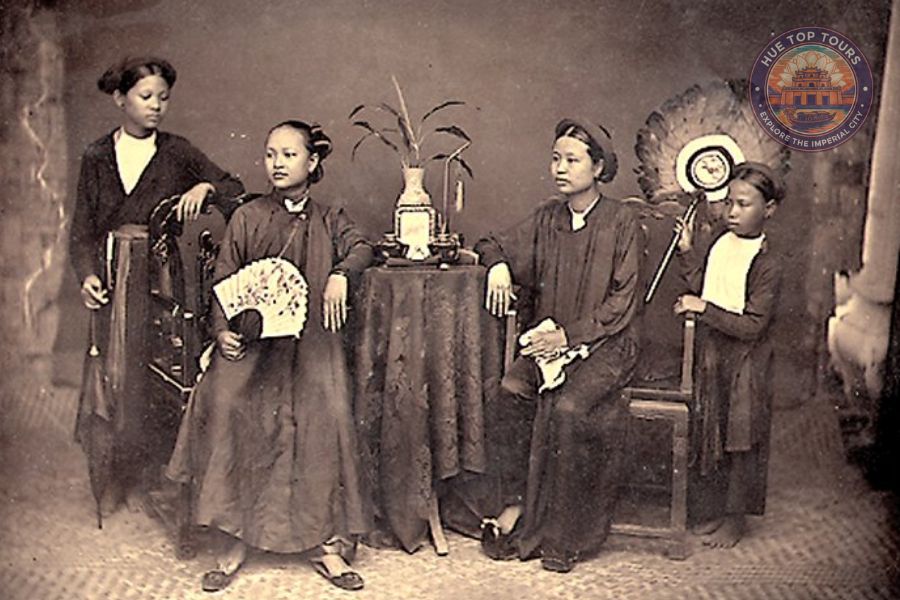
Regional variations reflected climate and lifestyle. Women in riverine areas favored lighter fabrics, while those in cooler regions layered garments. Decorative elements were modest, often limited to subtle embroidery or contrasting sashes.
This contrast between courtly and everyday attire highlights the diversity within Nguyen dynasty clothes women. It shows how fashion adapted to real life across social boundaries.
Nguyen Dynasty Clothing For Men
Men typically wore long robes with straight cuts, most commonly Áo Ngũ Thân (five-panel robe). Court officials and the emperor wore more formal ceremonial robes, including the Long Bào (dragon robe) for the emperor.
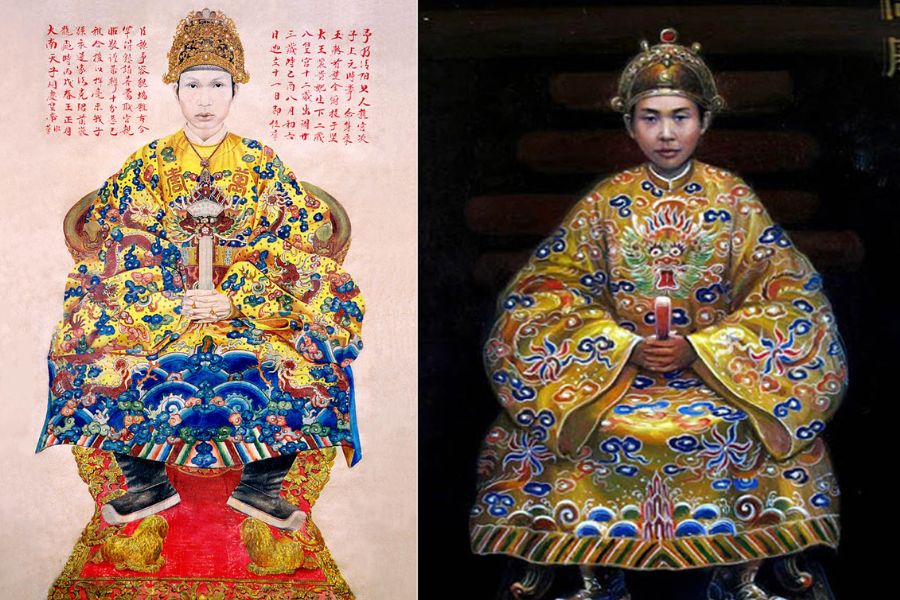
These garments used darker, restrained colors and limited decoration. Overall, men’s Nguyen dynasty clothing focused on order, rank, and dignity rather than ornamentation.
Gender distinctions in Nguyen dynasty clothing were clear but not rigid. Women’s garments emphasized flowing lines, softer fabrics, and layered silhouettes that conveyed elegance. Men’s attire focused on straight cuts and restrained ornamentation, reflecting Confucian ideals of discipline and order.
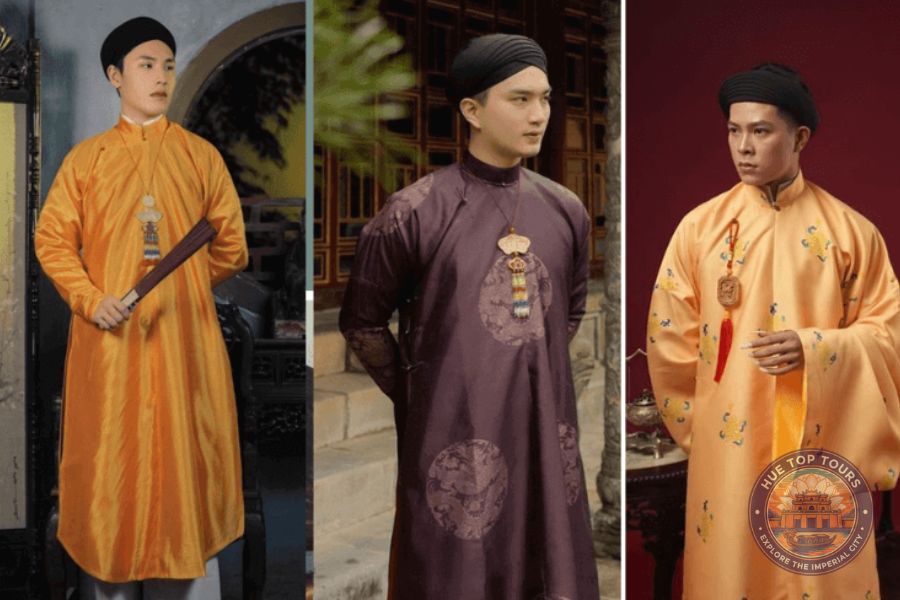
Color usage also differed. Women, especially nobles, wore brighter and more varied hues, while men’s clothing remained relatively subdued. Motifs for women often featured flowers and birds, while men’s garments used symbols associated with authority or scholarship.
These differences were not simply aesthetic. They communicated social expectations and roles, helping travelers today understand how clothing shaped daily interactions in the Nguyen era.
Nguyen Dynasty Clothing vs. Other Vietnamese Dynasties
How do costumes in the Nguyen Dynasty compare to those in other dynasties in Vietnamese history? Let’s find out over the following table:
| Aspect | Ly–Tran Dynasties | Le Dynasty | Nguyen Dynasty |
| Dynasty Years | Ly: 1009–1225
Tran: 1225–1400 |
1428–1789 | 1802–1945 |
| Typical Clothing | Áo Giao Lĩnh (cross-collar robe), Áo Đối Khâm (loose long robes) | Áo Giao Lãnh (cross-collared robe) | Áo Ngũ Thân (five-panel robe), Nhật Bình, Long Bào (imperial dragon robe) |
| Overall Style | Loose, flowing silhouettes influenced by Buddhist aesthetics | More structured clothing reflecting Confucian order | Highly standardized and formalized with strict visual rules |
| Clothing Regulation | Limited formal regulation | Early use of dress codes by rank | Detailed and strictly enforced dress regulations |
| Silhouette & Structure | Soft, relaxed shapes with wide sleeves | More defined forms but still flexible | Straight-cut, layered robes with clear structure |
| Cultural Influence | Strong Buddhist influence | Confucian ideology becomes dominant | Confucianism fully shapes dress hierarchy |
| Foreign Influence | Early Chinese influence | Continued Chinese influence | Stronger absorption of Qing court elements, especially in ceremonial dress |
| Visual Hierarchy | Less visually rigid between classes | Clearer distinction by rank | Very clear visual separation between emperor, officials, and commoners |
Nguyen Clothing Dynasty In The Modern Day
Influence On Contemporary Fashion
One of the most lasting legacies of the Nguyen dynasty clothing is its role in shaping the modern ao dai. Ao Ngu Than introduced a structured form that balanced modesty and elegance. Over time, this evolved into the streamlined ao dai known today.
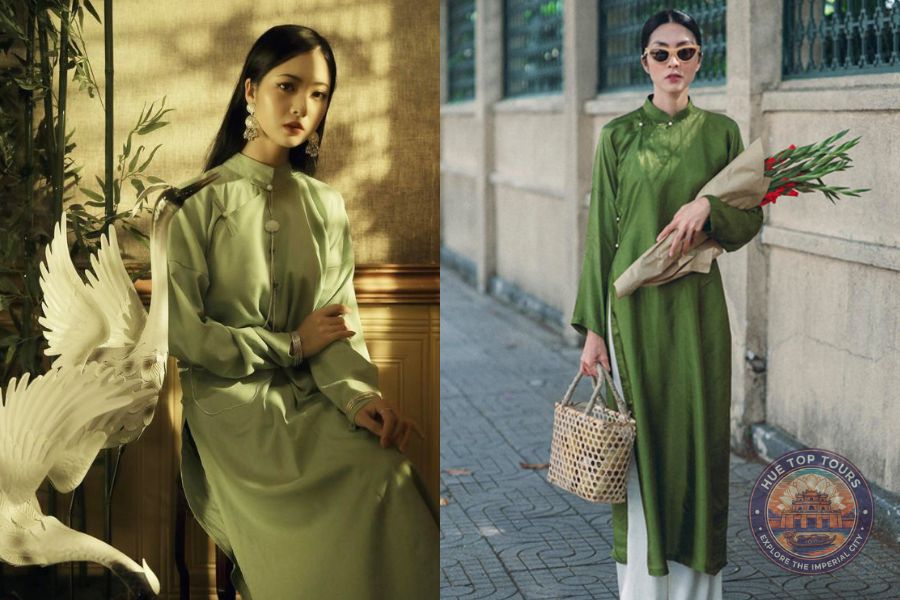
Key elements such as high collars, long panels, and side slits trace directly back to Nguyen-era designs. Understanding this connection enriches travel experiences, especially when seeing ao dai worn during festivals or cultural events.
Moreover, today, designers draw inspiration from Nguyen dynasty clothing modern interpretations. Revived styles such as Ao Nhat Binh appear in weddings and cultural celebrations. Fashion shows reinterpret traditional motifs using contemporary materials, bridging past and present.
These adaptations respect historical form while making garments accessible for modern wear. Travelers often encounter these designs in boutique studios and heritage events, where tradition meets creativity.
Featuring In Media & Tourism
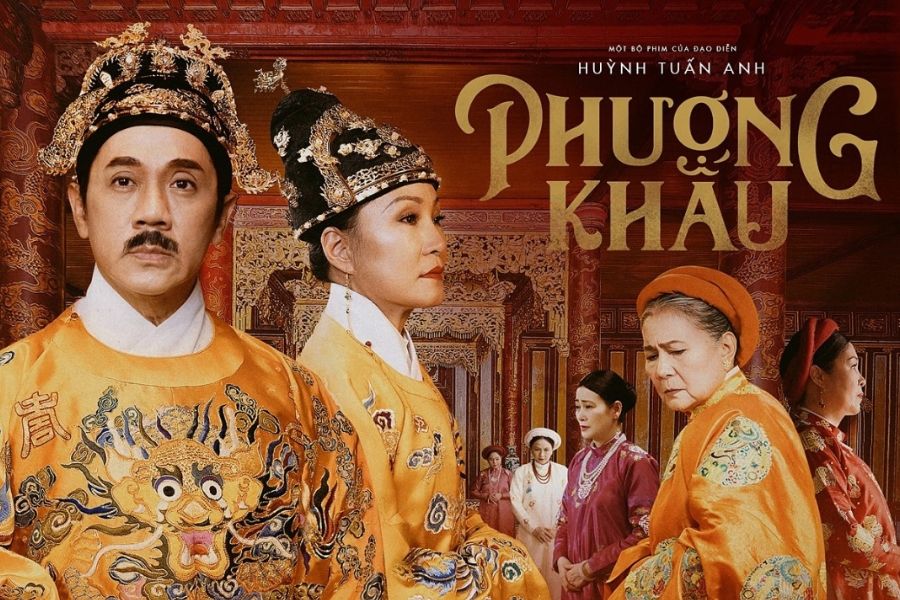
Historical dramas and films have renewed interest in Nguyen dynasty costumes. Accurate costume design enhances storytelling and educates audiences. Museums and heritage performances in Hue use reenactments to bring imperial life to the public.
Here are some films and TV/drama productions where Nguyen Dynasty clothing appears or is highlighted:
- Phượng Khấu (The Queen’s Robe Button) (2020) – A historical Vietnamese palace drama series set during the Nguyen Dynasty.
- The Last Queen (2025) – A movie about the last queen of the Nguyen- Queen Nam Phuong.
- The Third Wife (2018) – A Vietnamese costume drama set in the 19th century, which includes historical clothing styles from the era, reflecting rural life and period dress.
For visitors, these experiences offer immersive learning that goes beyond static displays, making history tangible and memorable.
Cultural Preservation & Modern Craftsmanship
Preserving Nguyen dynasty clothing requires skilled artisans and dedicated researchers. Restoration projects rely on historical records and surviving garments. Designers collaborate with historians to ensure accuracy while allowing innovation.
This balance between authenticity and creativity ensures that Nguyen dynasty clothing remains relevant and respected in modern Vietnam.
Where To See Authentic Nguyen Dynasty Clothing?
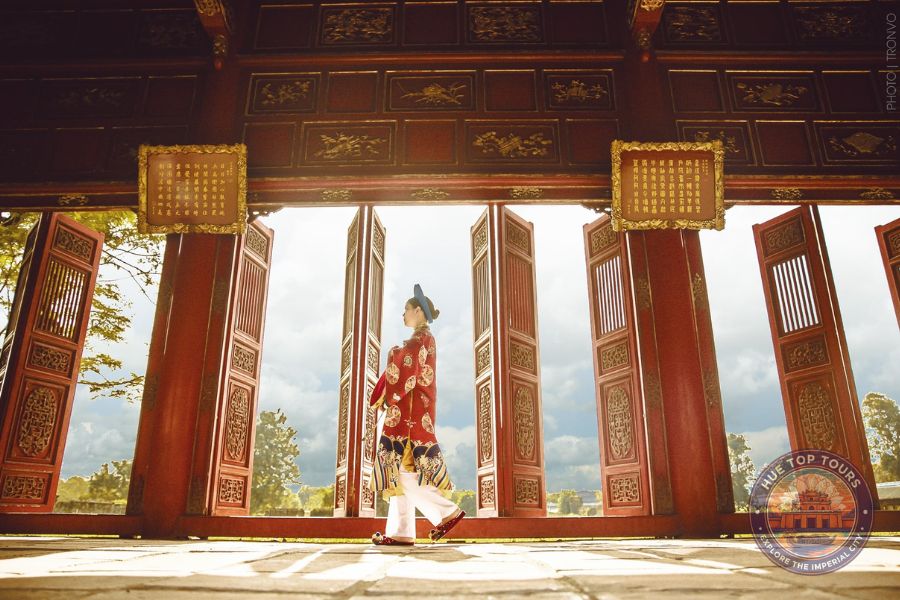
Tourists can see the traditional costumes of the Nguyen at museums, historical sites, cultural events, and reenactments.
In general, Hue Imperial City is the best place to see authentic Nguyen dynasty clothing in context. A quick look at all the places in Vietnam to enjoy the Nguyen Dynasty’s costumes:
| Place / Event | City | Type / Form | What You Can See | Address / Area | Typical Cost | Time Needed |
| Hue Imperial City (Dai Noi) | Hue | UNESCO heritage site | Original and reconstructed Nguyen Dynasty court clothing, including imperial and noble attire displayed in palace spaces | Thuan Thanh Ward, Hue City | ~200,000 VND | 2–3 hours |
| Royal Antiquities Museum (Hue) | Hue | Museum | Imperial garments, court accessories, embroidery details related to Nguyen Dynasty costumes | 3 Le Truc Street, Hue | Often included with Hue monument tickets | 45–60 minutes |
| Vietnam National Museum of History | Hanoi | National museum | Nguyen Dynasty clothing evolution, ceremonial costumes, textiles, and rank-related dress | 1 Trang Tien Street, Hoan Kiem | ~40,000 VND | 60–90 minutes |
| Royal Court Music Performances (Nha Nhac) | Hue | Live performance | Court musicians and performers wearing Nguyen Dynasty ceremonial costumes inspired by Nhat Binh and court robes | Duyet Thi Duong Theatre, Hue Imperial City | ~200,000–300,000 VND | 45–60 minutes |
| Royal Court Reenactments | Hue | Cultural reenactment | Emperor, officials, and noble costumes including Ao Ngu Than and court dress | Hue Imperial City (seasonal events) | Often included in site ticket | 30–45 minutes |
| Hue Festival (Biennial) | Hue | Cultural festival | Full Nguyen Dynasty–style costumes in parades, ceremonies, and stage performances | City-wide venues | Varies by event | 1–2 hours per show |
| Vietnam Traditional Costume Festival | Hanoi / HCMC | Exhibition & shows | Recreated Ao Ngu Than, Ao Tu Than, Nhat Binh displayed and worn in live showcases | Occasional / annual | Often free or ticketed | 1–2 hours |
| Ao Dai & Traditional Dress Exhibitions | Hue | Exhibition | Nguyen-era garments presented alongside historical explanation | Seasonal | Usually free | 30–60 minutes |
How To Try On The Nguyen Costumes
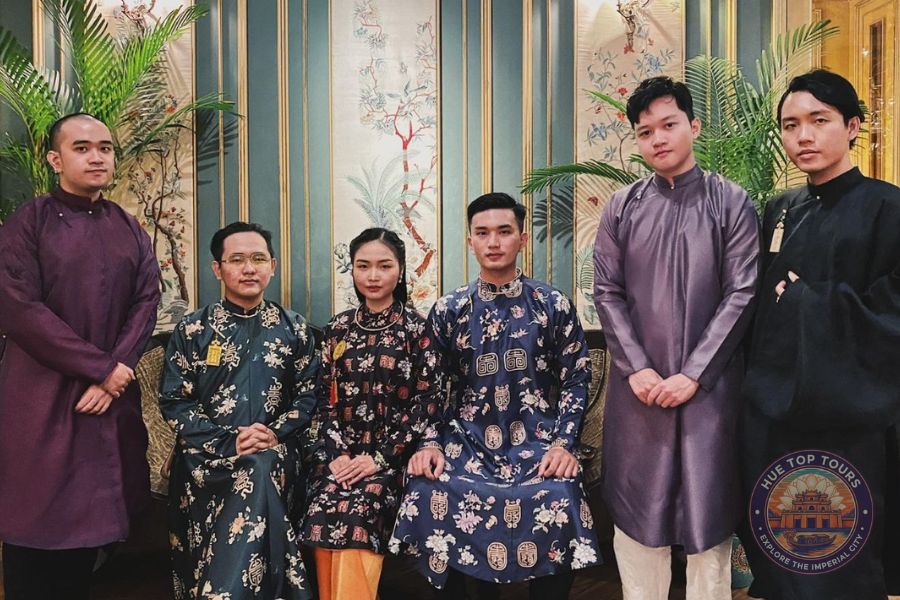
An interesting fact is that you, the modern tourists, can experience putting on the traditional clothes from the Nguyen era. In Hue and many cities around Vietnam, there are good rental shops. For example:
Traditional Costume Rentals & Services in Vietnam
(Great for photos, immersive cultural experiences, and travel memories)
| Place | City | What They Offer | Extras |
| Tiem Thue Co Phuc Hoang Thanh Hue | Hue | Traditional costumes including historical attire; often includes Ao Ngu Than and royal-style outfits | Makeup & photo packages available near Imperial City |
| Hoa Nghiem Viet Phuc | Hue | Large selection of traditional Vietnamese outfits | Accessories and styling options |
| Nha Gao | Hue | Costumes including Ao Dai and traditional clothing | Good for individual and couple photos |
| Hoang Quyen | Hue | Styled traditional dresses and classic rentals | Some basic makeup support |
| Co Phuc Anh Hue | Hue | Rental & sales of traditional outfits | Simple photo props available |
| Ao Dai Mun’s Yeu | Hue | Costume store with traditional wear | Casual rentals for travel photos |
| Linh Chi’s Ao Dai Rental – Old Quarter | Hanoi | Premium Ao Dai & traditional costume rental | Often paired with photo suggestions in Old Quarter |
| Ao Dai Nhan | Hanoi | Large traditional dress rental selection | Photo sessions & costume fitting |
| Thanh Thúy Ao Dai Rental & Photoshoots | Hanoi | Traditional rentals with photography options | Optional props and studio shots |
| Key Costume | Hanoi | Costume rental + photo accessories | Good option for themed photo sessions |
| Yuncos – Rental Cosplay costumes | Hanoi | Costume rentals including traditional styles | Makeup/hair addons with some packages |
What Clothing Experience To Expect
Dress Up in History: Many shops, especially in Hue near the Imperial City, offer Nguyen dynasty-inspired outfits like Ao Ngu Than, and Ao Nhat Binh or other period costumes you can wear for photos at historic sites.
Photography & Styling Services:
- Some studios include professional photoshoots, makeup, and historical hairstyle services that make your cultural photos more memorable.
- Packages often include props and accessories like traditional hats, fans, and jewelry.
Perfect for Vacation Keepsakes: Dressing up in traditional clothing and having photos taken near locations like the Hue Imperial City or the Old Quarter in Hanoi or Hoi An adds a tangible cultural layer to your travel memories.
Tips For Booking & Wearing Traditional Costumes
- Reserve ahead during peak travel seasons (holidays and festivals often see high demand).
- Ask about photo packages and hair/makeup add-ons when you book.
- In Hue, many shops are within walking distance of major historical sites, making it easy to wear the costumes directly for sightseeing photos.
FAQs
What did women wear during the Nguyen Dynasty?
Women wore garments ranging from Ao Tu Than for daily life to Ao Nhat Binh for court ceremonies.
What is the difference between Ao Nhat Binh and Ao Dai?
Ao Nhat Binh was ceremonial court attire, while ao dai evolved later as a more streamlined national dress.
Were Nguyen Dynasty clothes influenced by China?
Yes, especially court attire, but styles were adapted to Vietnamese culture.
Can Nguyen Dynasty costumes still be worn today?
Yes, they are worn in cultural events, weddings, and historical performances.
Conclusion
Nguyen dynasty clothing is more than historical attire. It is a cultural language that tells stories of power, beauty, and identity. For travelers, understanding these garments adds depth to visits across Vietnam, especially in Hue. By exploring their history, symbolism, and modern revival, we gain insight into how tradition continues to shape Vietnamese life today.
Hue Top Tours hopes that our travel blog has brought helpful tips and information for tourists who are learning about Hue and Vietnam traditional clothing. Thanks for reading.