
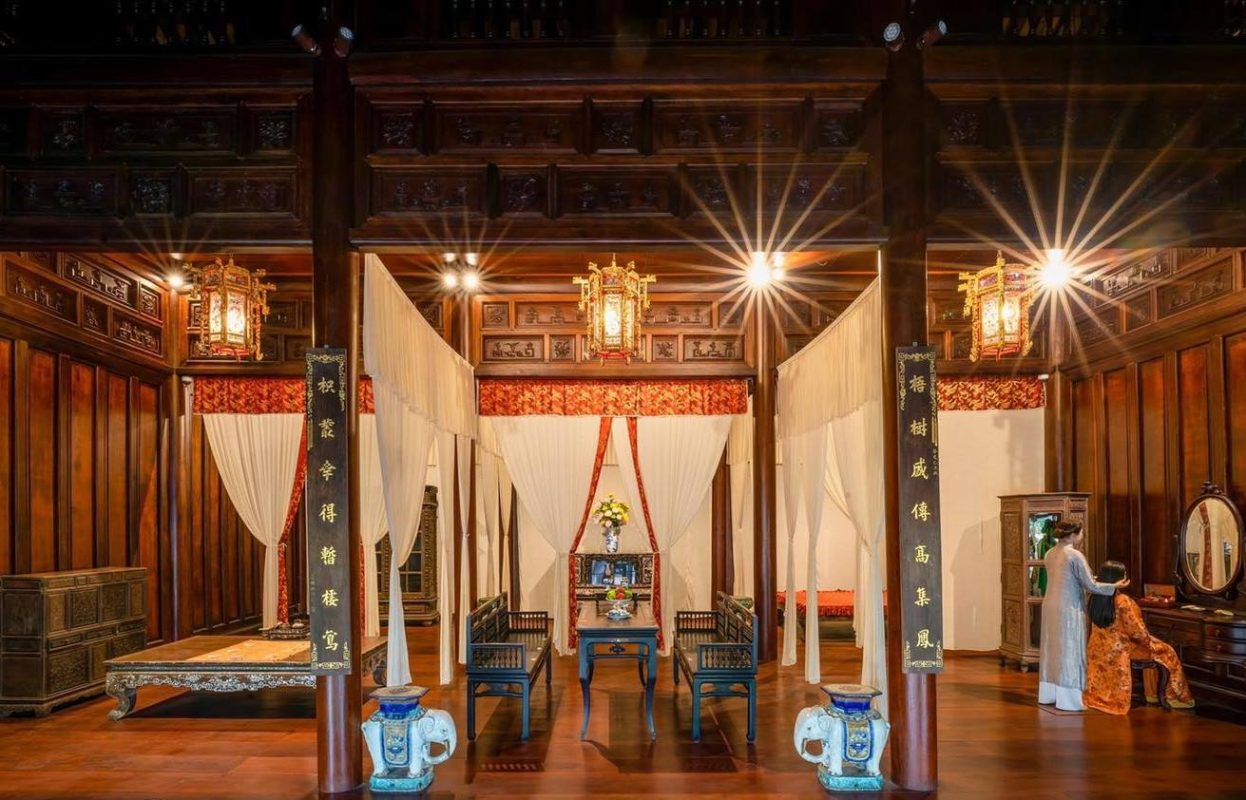
Dien Tho Residence Overview
Dien Tho Residence is one of the most peaceful and meaningful architectural complexes inside the Hue Imperial City. Unlike the grand ceremonial palaces used for royal audiences, Dien Tho Residence was designed as a living space, closely associated with daily life, dignity, and respect for the Queen’s mothers of the Nguyen Dynasty.
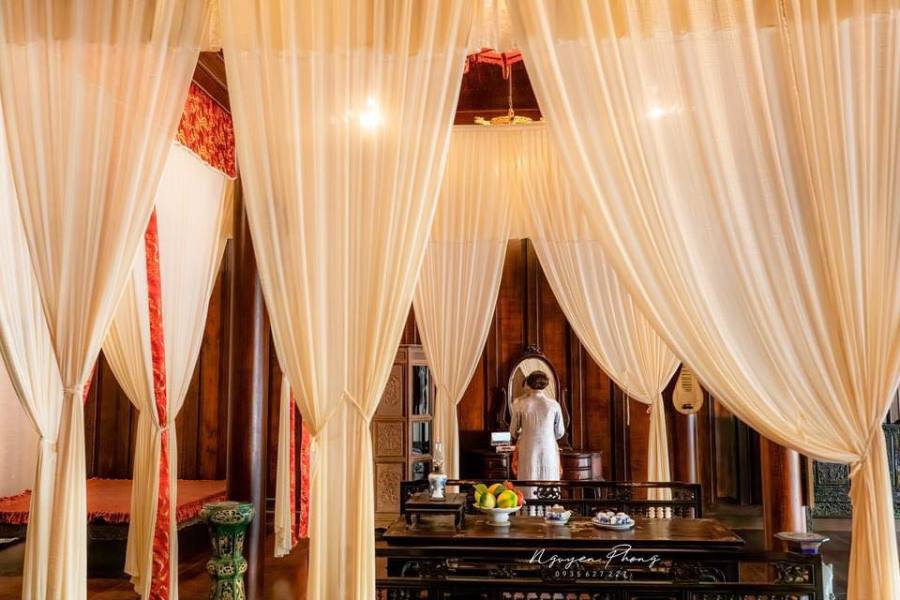
Located in the northwest area of the Forbidden Purple City, Dien Tho Residence reflects the Confucian values of filial piety and reverence for elders, which played an important role in Vietnamese royal culture.
History of Dien Tho Palace
A Brief Historical Timeline of Dien Tho Residence
During the reign of Emperor Gia Long, in April 1804, Truong Tho Palace was constructed as the residence of the emperor’s mother, replacing the former Hau Dien. This marked the earliest foundation of what would later become Dien Tho Residence.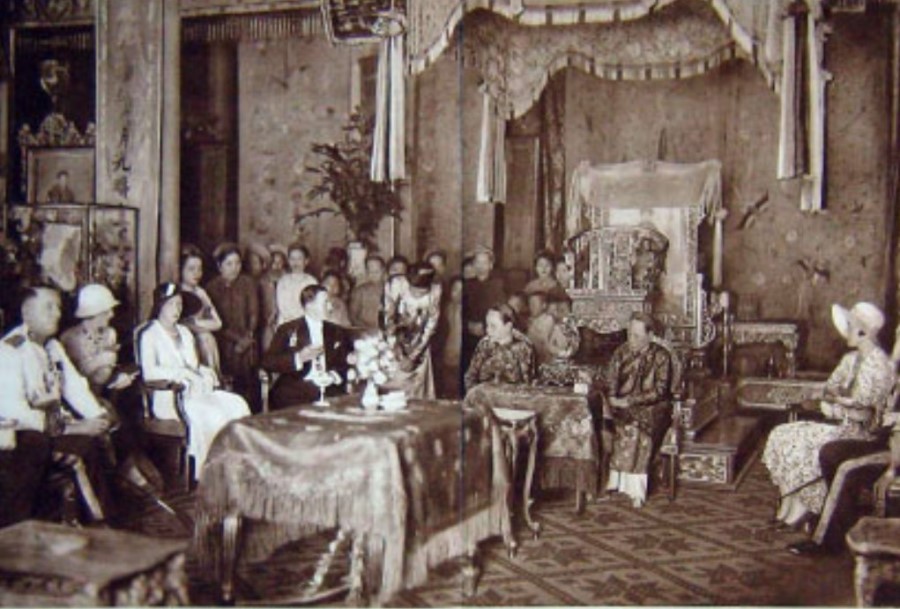
Under Emperor Minh Mang, Tu Tho Palace was built within the grounds of Truong Tho Palace as a place of rest and retirement for Empress Mother Thuan Thien Cao Hoang Hau Tran Thi Dang, the emperor’s mother.
During the reign of Emperor Tu Duc, Tu Tho Palace was completely dismantled by imperial order and rebuilt as Gia Tho Palace. Completed in February 1849, it became the residence of Empress Mother Tu Du, one of the most influential Empress Dowagers of the Nguyen Dynasty.
Under Emperor Thanh Thai, the complex was renamed Ninh Tho Palace. It served as the residence of Empress Dowager Nghi Thien, and later Empress Dowager Tu Minh, the mother of Emperor Thanh Thai.
During the reign of Emperor Khai Dinh, Ninh Tho Palace was renovated and restored, then officially renamed Dien Tho Palace. At that time, it became the residence of Thanh Cung Hoang Quy Phi, one of the most respected royal consorts of the Nguyen court.
Throughout the Nguyen Dynasty, Dien Tho Residence witnessed many historical changes, from the height of imperial power to periods of decline. Despite the impact of war and time, the complex has been carefully preserved and restored, allowing visitors today to glimpse the refined and dignified lifestyle of the royal women of Hue.
Who Lived in Dien Tho Residence?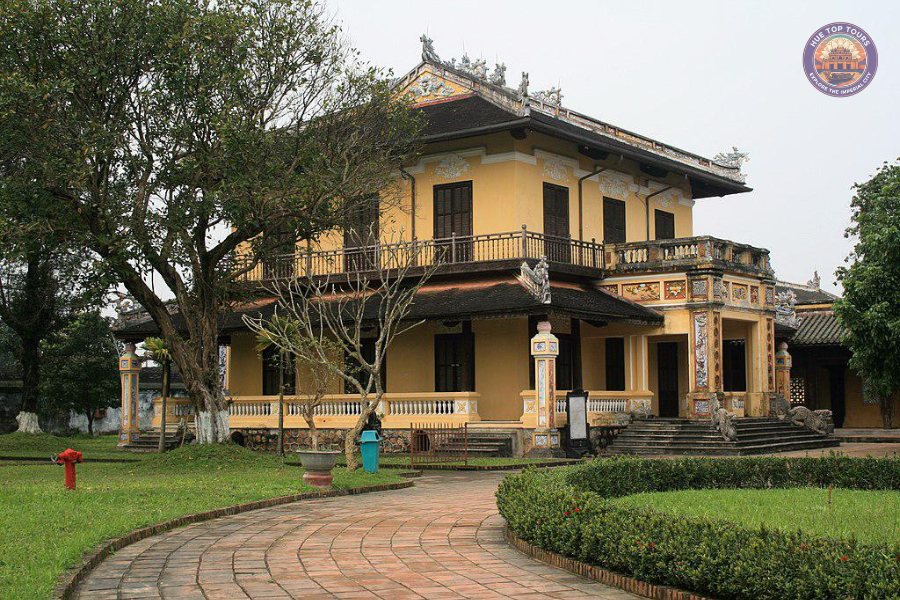
Dien Tho Residence was the emperor’s mother’s residence. Originally, it was named Truong Tho Palace and later underwent four name changes, becoming Tu Tho Palace, Gia Tho Palace, Ninh Tho Palace, and finally Dien Tho Palace.
Although the name changed over time, its meaning remained the same, expressing the wish for longevity and symbolizing the emperor’s filial piety toward the empress’s mother.
These women held an honored position in the court, symbolizing moral authority, family continuity, and royal lineage. Life in Dien Tho Residence was calm and dignified. Although they did not directly rule the country, the Empress Dowagers played an important advisory role and were deeply respected by both the emperor and court officials.
Architectural Features of Dien Tho Residence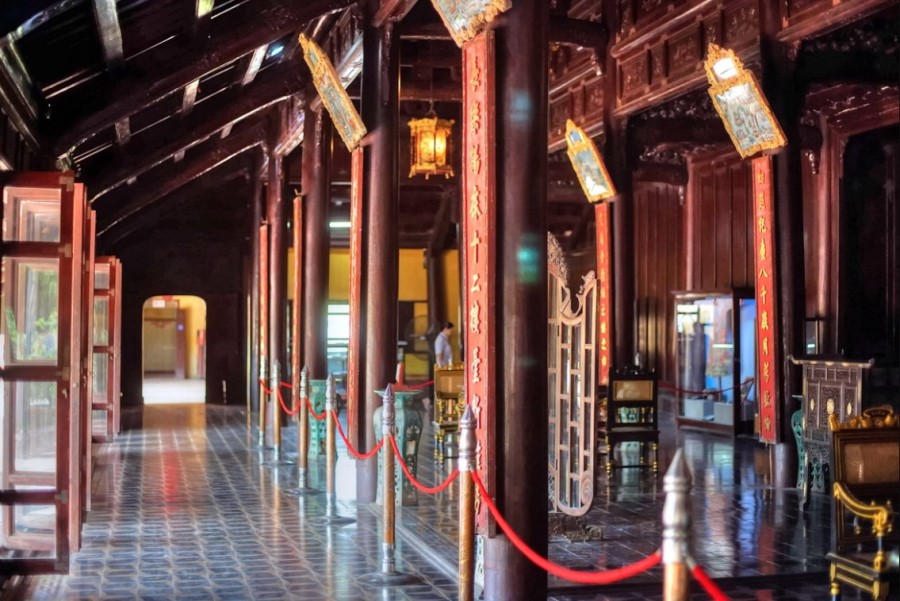
The architecture of Dien Tho Residence emphasizes harmony, balance, and elegance rather than grandeur. The buildings follow traditional Nguyen Dynasty design, with wooden structures, tiled roofs, and carefully planned open spaces.
Decorative elements are subtle but meaningful, featuring floral motifs, longevity symbols, and soft colors that reflect femininity and grace. Compared to major palaces like Thai Hoa Palace, Dien Tho Residence feels more intimate and residential, offering a quiet contrast to the formal atmosphere of the imperial court.
The Dien Tho Residence complex consists of around 20 architectural structures, both large and small. These buildings are diverse not only in function—such as palaces, pavilions, towers, and halls—but also in architectural style, as they were constructed, renovated, and expanded across different historical periods of the Nguyen Dynasty.
Notable surviving structures include Dien Tho Main Palace, Tho Ninh Palace, Truong Du Pavilion, Khuong Ninh Tower, and Tinh Minh Pavilion. Together, Dien Tho Residence represents a typical and comprehensive collection of Nguyen Dynasty architectural styles, reflecting the evolution of royal architecture over time.
Main Structures Inside Dien Tho Residence
Tho Chi Gate (the main entrance)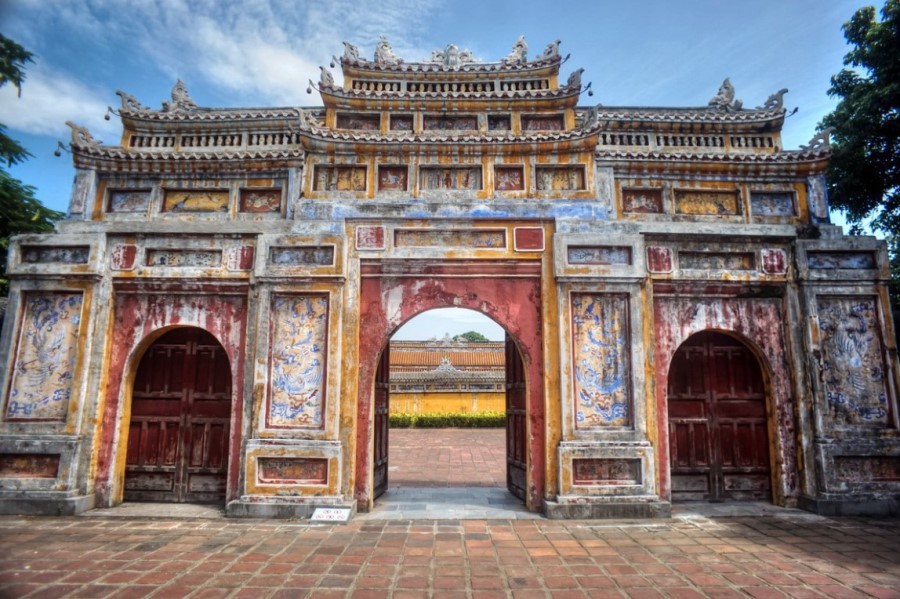
Tho Chi Gate is the main entrance to Dien Tho Residence, located on the southern side of the complex and facing the northern gate of Phung Tien Temple. Built with three south-facing doorways and paved with green stone, the gate is topped by a two-tiered gate tower, reflecting the formal yet refined style of Nguyen Dynasty architecture.
More than just an entrance, Tho Chi Gate symbolized respect and ritual order, marking the transition from the outer court to the serene living space of the Empress Dowagers.
The Feng Shui Screen
The feng shui screen located behind Tho Chi Gate was built to shield Dien Tho Residence from negative influences and to preserve privacy within the royal living quarters.
According to traditional Eastern beliefs, the screen helped block harmful energy from flowing directly into the residence while guiding positive qi gently into the inner courtyards. Decorated with symbolic motifs, it also reflected wishes for peace, longevity, and protection for the Empress Dowagers who lived there.
Ta Tra Tea House
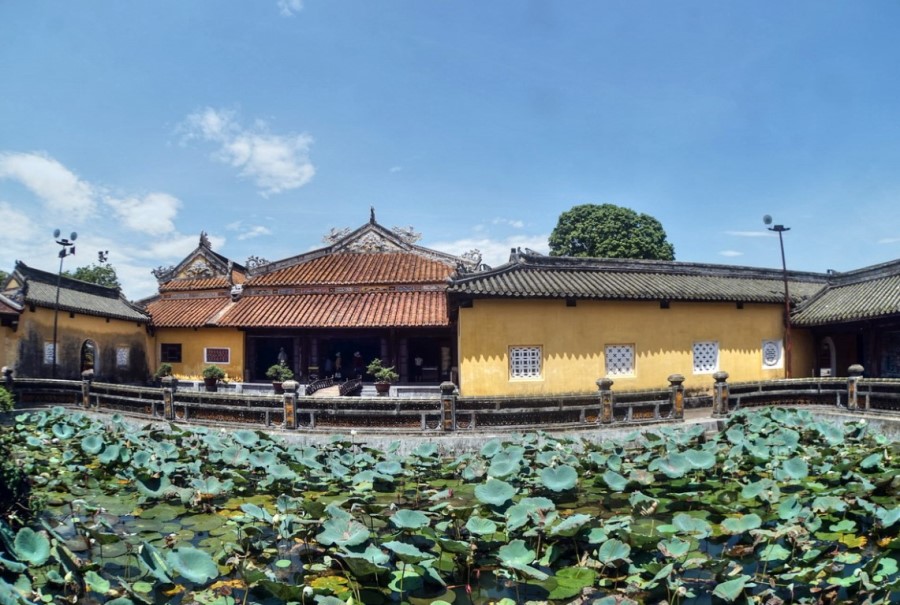
Built symmetrically opposite the Tinh Minh Pavilion, Ta Tra House functioned as a waiting area for visitors seeking an audience with the Empress Dowager. The three-bay structure was renovated with concrete in 1927 and heavily damaged during the war in 1968. Restoration began in 2011, and the building now serves as an exhibition space.
One of its most remarkable artifacts is the royal rickshaw of Emperor Thanh Thai’s mother, acquired by Thua Thien Hue Province at an auction in France in 2014 for 55,800 euros. Another highlight is the ceremonial palanquin of Empress Dowager Tu Cung (1890–1980), wife of Emperor Khai Dinh and mother of Emperor Bao Dai.
Tinh Minh Pavilion
Built in 1927 during the reign of Emperor Bao Dai on the site of the former Thong Minh Hall (a traditional royal theater), Tinh Minh Pavilion is a two-story Western-style building. It was constructed as a residence for Empress Dowager Tu Cung. In 1950, it was expanded to temporarily accommodate Emperor Bao Dai. Today, it serves as the office of the Hue Monuments Conservation Center.
Dien Tho Main Palace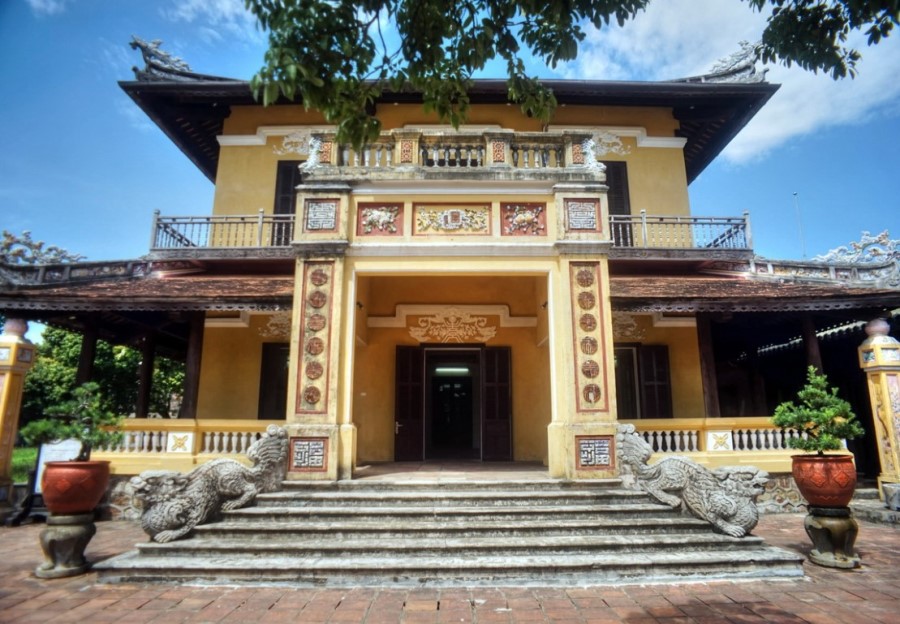
The Main Palace of Dien Tho is the central and most important structure of the complex. Built in the grand “double-eaved, layered-roof” (trung thiem diep oc) style, it consists of a seven-bay Front Hall connected to a five-bay Main Hall through exquisitely carved wooden trusses.
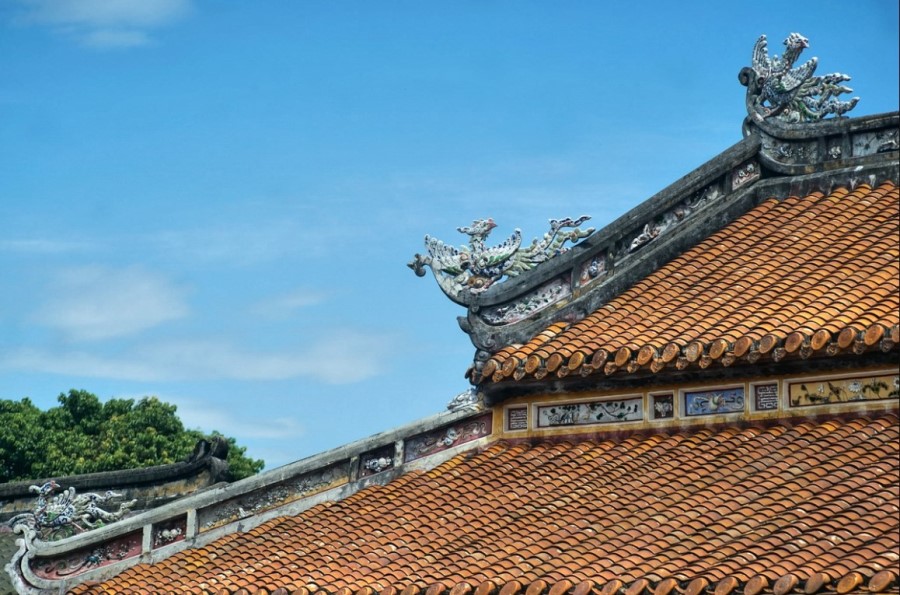
The roof is adorned with phoenix motifs—symbolizing royal women—covered with yellow-glazed tiles, and topped with a sacred gourd-shaped finial. Between the two roof tiers, decorative ceramic-inlaid panels depict vivid traditional scenes.
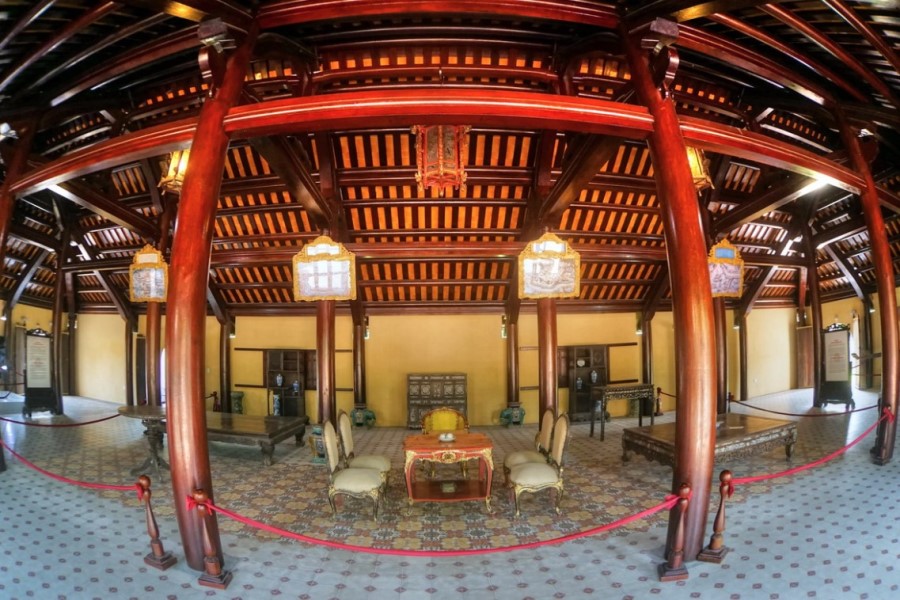
Inside, the palace is supported by an elaborate wooden column and beam system carved in the stacked-beam (chong ruong gia thu) technique. The central three bays were used as a reception area for the Empress Dowager, furnished with wooden platforms and seating, while the side bays served as private living quarters.
The interior remains remarkably intact, highlighted by the “Dien Tho Palace” horizontal lacquered board (dated 1916) and eight valuable mirror paintings depicting famous landscapes of Hue, such as Thien Mu Bell Echo, Thuong Mao Frontier Watch, and Thanh Tri Incense Refining.
Khuong Ninh Temple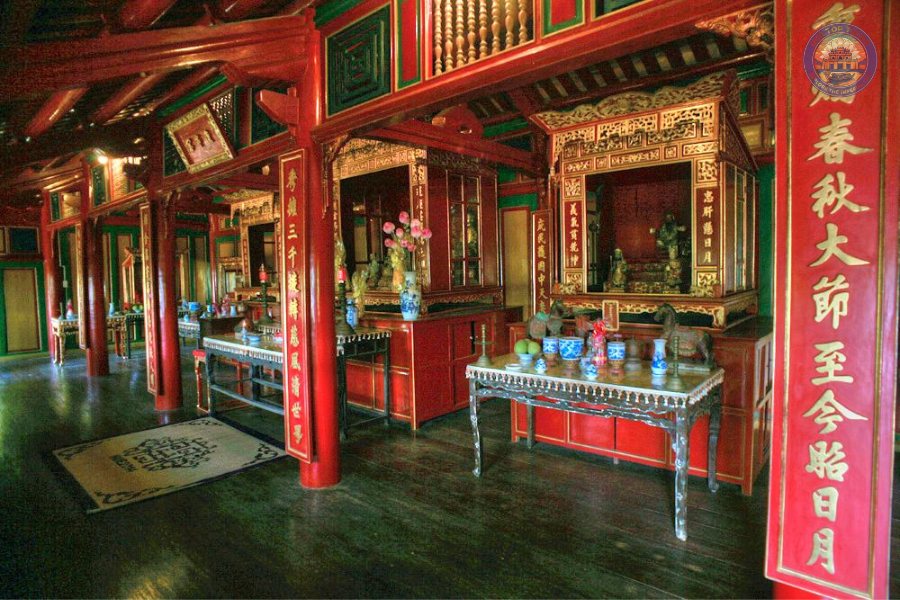
Khuong Ninh was built as a Buddhist worship space to serve the spiritual and religious needs of the Empress Dowagers and women of the royal household. The structure is a two-story tower with a well-balanced and elegant architectural design, creating a quiet and contemplative atmosphere. It stands within a separate, enclosed courtyard, surrounded by brick walls that clearly separate this sacred space from the rest of Dien Tho Residence.
Truong Du Pavilion
Truong Du is located to the east of the main hall of Dien Tho Residence and is designed in the traditional Hue ruong-house architectural style. The pavilion features a single main bay with four side wings, a roof covered in green-glazed tiles, a floor paved with decorative patterned bricks, and wooden walls with finely carved interior details. Serving as a place of relaxation for the Empress Dowagers, Truong Du Pavilion offers a carefully arranged space that feels harmonious, poetic, and deeply connected to nature.
Tho Ninh Palace (the bedroom)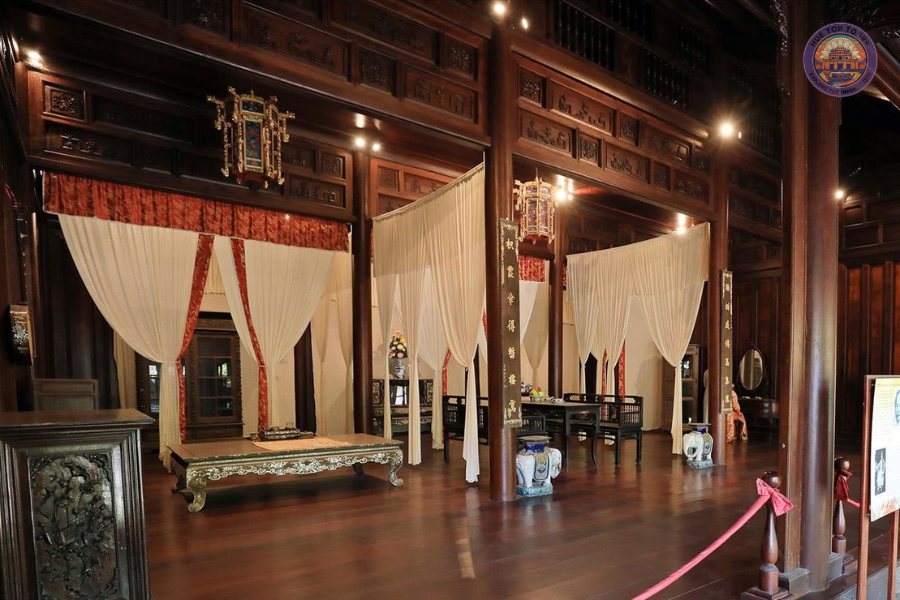
Tho Ninh Palace is located at the rear of Dien Tho Residence and served as the private living and sleeping quarters of the Empress Dowagers. Built on a raised stone platform, the palace follows traditional Nguyen Dynasty architecture with a balanced layout and a calm, enclosed atmosphere.
Unlike the ceremonial Dien Tho Main Palace, Tho Ninh Palace was designed for daily life, offering greater privacy and tranquility. Its refined yet understated design reflects the dignity, serenity, and inner life of the royal mothers who once lived there.
Feng Shui and Symbolism of Dien Tho Residence
Feng shui principles were carefully applied in the construction of Dien Tho Residence. The layout ensures a balance between built structures and natural elements such as trees, water, and open courtyards.
Symbolic decorations emphasize longevity, prosperity, and peace—qualities closely associated with the role of royal mothers. The orientation and spatial design were intended to provide spiritual stability and positive energy for long-term residence.
Cultural and Historical Values
Dien Tho Residence holds great historical value as a space dedicated to the most respected women of the Nguyen Dynasty. It offers rare insight into the private lives of the imperial family, especially the women who shaped royal traditions behind the scenes.
Culturally, the residence reflects Confucian ideals, court etiquette, and the refined aesthetic taste of Hue’s royal architecture. It is an important part of understanding the social structure of Vietnam’s last feudal dynasty.
Preservation and Heritage Value
Following the collapse of the Nguyen Dynasty in 1945 and decades of war, many structures within the Imperial City were severely damaged or destroyed. Remarkably, the Dien Tho Residence complex remained largely intact.
In 1993, Dien Tho Residence became one of the 16 monuments of the Hue Monuments Complex, recognized as a UNESCO World Cultural Heritage Site. Since then, it has continued to receive investment for conservation and restoration.
Useful Travel Tips
Opening Hours and entrance tickets
Opening hours of Dien Tho Palace follow those of the Hue Imperial City, as it is located within the Citadel complex. In general, the site is open daily from morning to late afternoon, with slightly extended hours during the peak tourist season. Visitors do not need to purchase a separate ticket to enter Dien Tho Palace, as admission is included in the Hue Imperial City entrance ticket.
The ticket grants access to major landmarks inside the Citadel, including palaces, gates, temples, and royal residences. It is recommended to visit Dien Tho Palace earlier in the day or in the late afternoon to enjoy a quieter atmosphere and softer light. During public holidays or special events, opening hours may vary, so checking local updates in advance is always a good idea.
The best way to admire Dien Tho Palace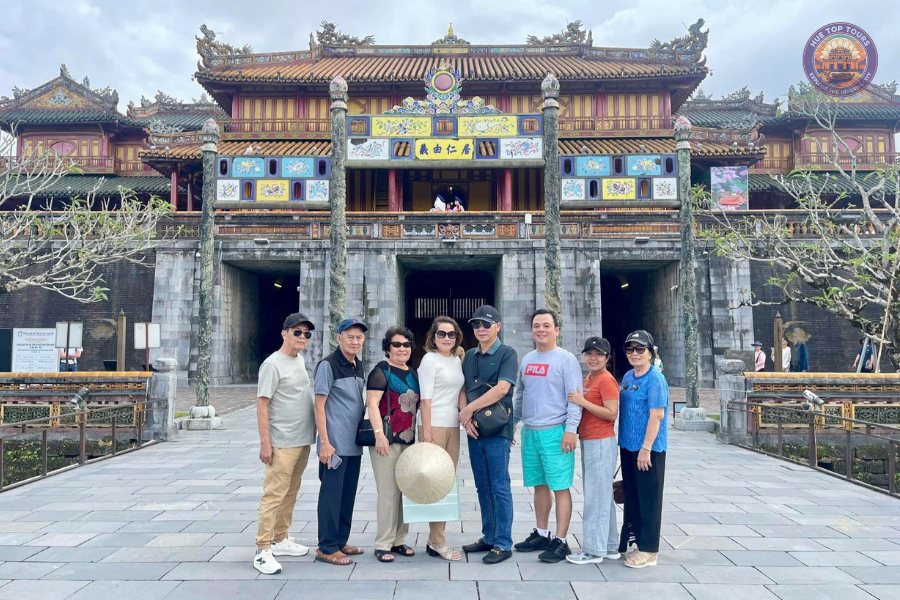
The best way to visit Dien Tho Palace is by joining a guided experience that helps you fully understand its historical and cultural significance. Travelers can consider booking a Hue Imperial City Walking Tour, which allows visitors to explore the Citadel in depth while learning fascinating royal stories from a knowledgeable guide.
Another great option is the Hue City Group Tour, offering a well-organized itinerary covering major attractions while maintaining a social and budget-friendly experience. For those who want a comprehensive journey, the Hue City Tour 1 Day is ideal, combining the Imperial City with pagodas, royal tombs, and local cultural highlights.
Dien Tho Palace Dress Code
When visiting Dien Tho Palace, visitors are encouraged to dress modestly out of respect for this important royal and cultural site. Clothing should cover the shoulders and knees, especially when entering interior spaces. Comfortable footwear is recommended, as exploring the Hue Imperial City involves a fair amount of walking. Dressing appropriately not only shows cultural respect but also helps ensure a smooth and enjoyable visit.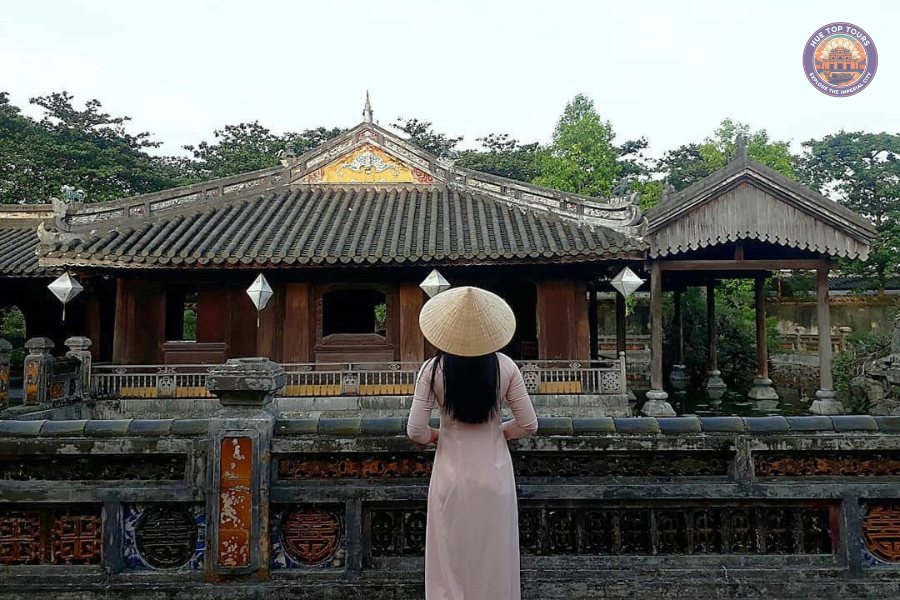
Nearby Attractions of Dien Tho Residence
Ngo Mon Gate (Meridian Gate)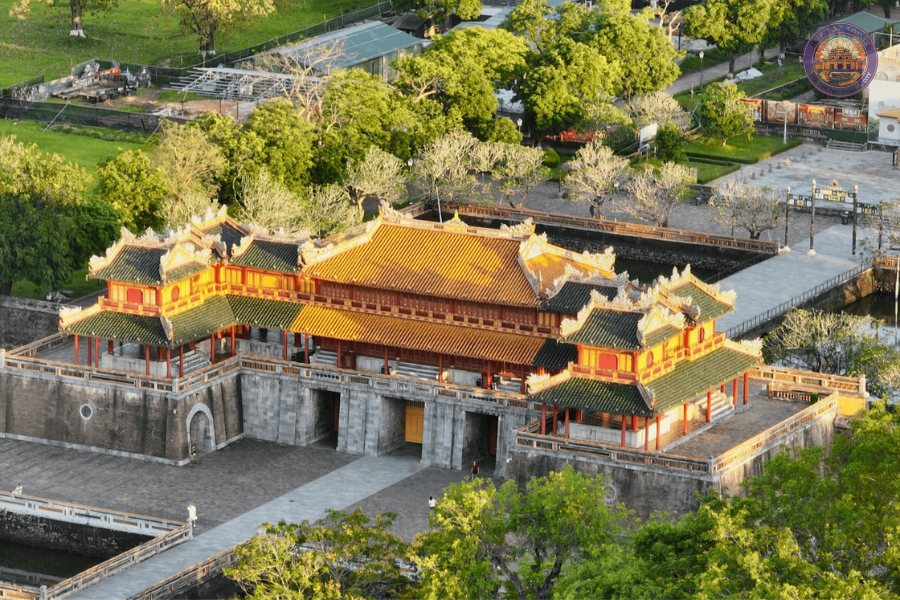
Ngo Mon Gate is the main ceremonial entrance to the Hue Imperial City and one of its most iconic landmarks. Built in 1833 under Emperor Minh Mang, the gate was used exclusively for royal ceremonies, military parades, and important imperial events. Visiting Ngo Mon Gate provides essential context for understanding the grandeur and strict hierarchy of the Nguyen court before entering the inner palaces.
Thai Hoa Palace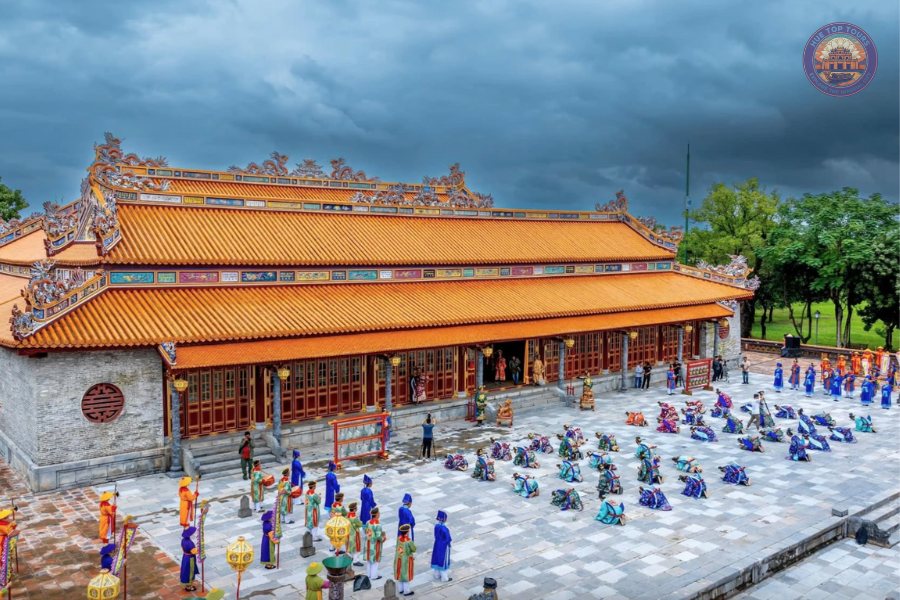
Thai Hoa Palace is the most important ceremonial hall of the Nguyen Dynasty, where coronations and major court rituals were held. The palace impresses visitors with its massive wooden structure, golden-red interior, and rows of lacquered columns symbolizing imperial authority. It offers a striking contrast to the quieter, more residential atmosphere of Dien Tho Residence.
Kien Trung Palace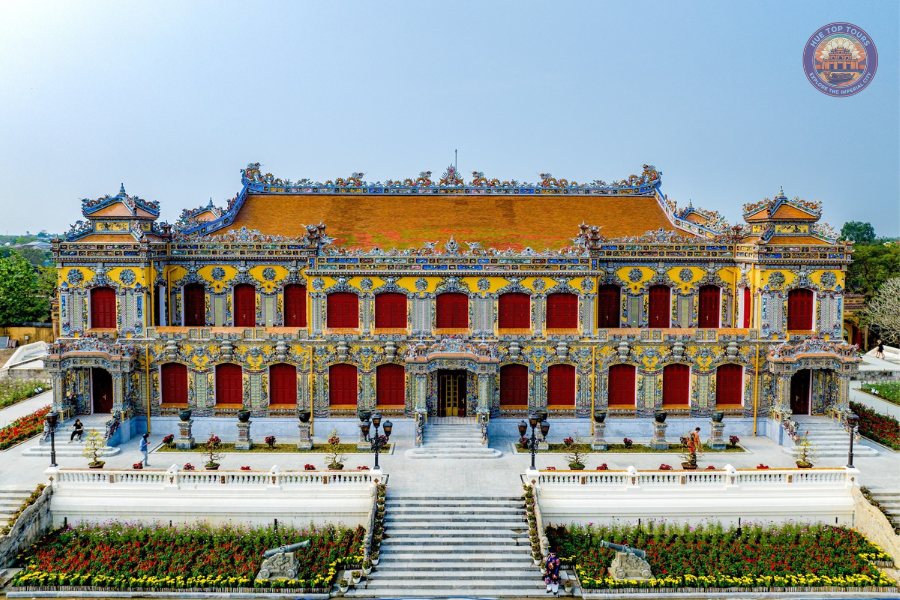
Kien Trung Palace is notable for its unique blend of traditional Vietnamese and European architectural styles, making it one of the most distinctive structures in the Imperial City. Once used as a royal residence during the late Nguyen period, the palace reflects the influence of Western culture on the court. Visiting Kien Trung Palace adds depth to the experience of Dien Tho Residence by showing the architectural evolution of the dynasty.
Duyet Thi Duong Theater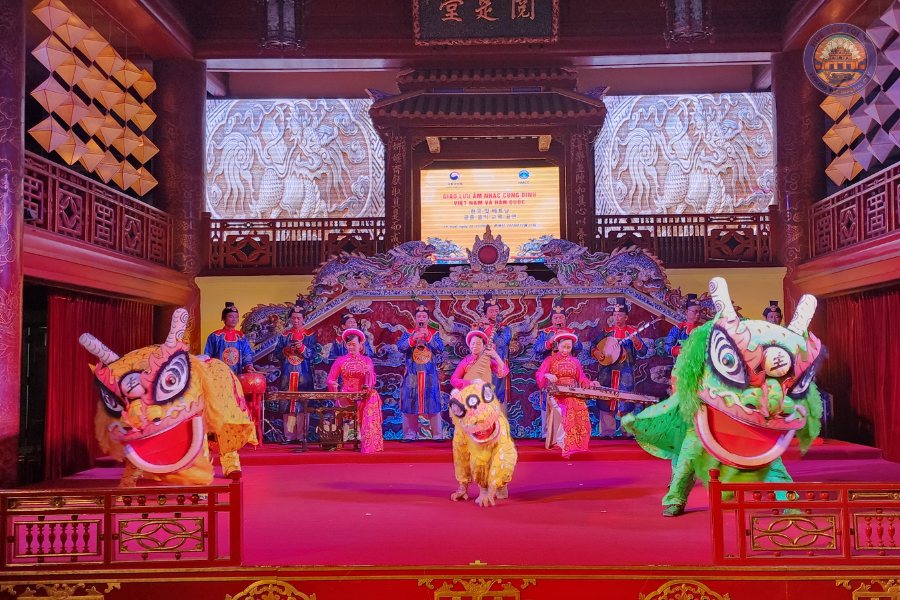
Hue Royal Theater is the oldest royal theater in Vietnam, built in 1826 during the reign of Emperor Minh Mang inside the Hue Imperial City. It was used for tuong (classical Vietnamese opera) performances presented to the emperor, the Empress Dowagers, and the royal court during important occasions.
Today, the theater remains a valuable cultural site where visitors can learn about traditional royal entertainment and the refined artistic life of the Nguyen Dynasty.