

Kien Trung Palace Overview
Kien Trung Palace is one of the most impressive royal buildings inside the Hue Imperial Citadel. It stands out for its unique combination of traditional Vietnamese design and European architectural influence. Once the private residence of the last two Nguyen emperors, the palace reflects a special period in Hue’s royal history.
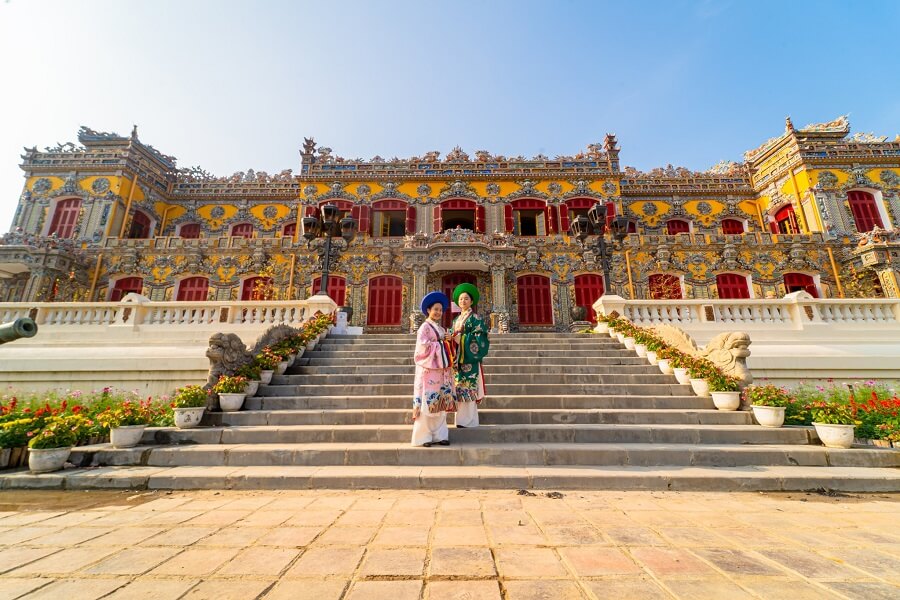
These days, Kien Trung Palace is a popular attraction for visitors who want to explore Hue’s imperial past and admire its elegant restored beauty.
History and Construction of Kien Trung Palace
Major Historical Milestones of Kien Trung Palace
Before 1921 (Early Period)
The site was originally home to Minh Vien Pavilion during the reign of Emperor Minh Mang and later Du Cuu Pavilion under Emperor Duy Tan. These structures were later removed or remodeled before the construction of Kien Trung Palace.

Construction (1921–1923)
During the reign of Emperor Khai Dinh (1916–1925), most of Vietnam’s sovereignty had already fallen under French colonial control, and Western culture strongly influenced the country. In 1922, Emperor Khai Dinh himself traveled to Europe, which further increased the impact of modern and Western ideas.
As a result, many buildings that were renovated or newly constructed during his reign included modern design elements and advanced construction techniques. Instead of using traditional local materials such as wood, stone, bricks, and lime mortar, Emperor Khai Dinh preferred strong and modern materials like cement, steel, porcelain pieces, and glass.
At his palaces and tombs, modern facilities were also introduced, including electric lights, running water, fountains, lightning rods, and iron doors, showing a clear shift toward a more modern architectural style.
Historical Events (1925–1945)
This was where Emperor Khai Dinh passed away in 1925. It was also the residence of Emperor Bao Dai, Empress Nam Phuong, Crown Prince Bao Long, Princesses Phuong Mai, Phuong Lien, Phuong Dung, and Prince Bao Thang.
In August 1945, the palace hosted the first meetings between Emperor Bao Dai and the Provisional Government to discuss his abdication.
Destruction (1947)
Kien Trung Palace was completely destroyed during the war, leaving only its foundations.
Restoration and Preservation of Kien Trung Palace (2019–2024)
On February 16, 2019, the Hue Monuments Conservation Center began a restoration and preservation project for Kien Trung Palace. The project was carried out on an area of over 3,800 square meters. The construction teams kept the existing foundation structure intact and made as few changes as possible to the site’s original elements.

The restoration included strengthening and repairing the surrounding walls, railings, and courtyard areas at both the front and back of the palace, as well as the stairways. The main building, Kien Trung Pavilion, was restored as a two-story structure with a height of about 14 meters and a construction area of around 975 square meters.

In addition, smaller surrounding structures were also restored, such as brick platforms, fountains, cannons, guard houses, green spaces, and the preserved foundations of Dong Cung Pavilion, the Royal Study Room, the Royal Guard Room, and the Royal Approval Room.

The total investment for the project exceeded 123 billion VND, funded by the national cultural development program and other legal funding sources. The palace officially reopened to visitors during the Lunar New Year of 2024.
Unique Architectural Style and Design
Kien Trung Palace is famous for its rare blend of Eastern and Western architecture. The structure combines traditional Vietnamese palace elements with European features such as balconies, arches, and decorative columns.

This mixed style reflects the influence of French culture in Vietnam during the early 20th century. At the same time, the palace still keeps royal patterns, dragon symbols, and traditional colors common in Hue imperial buildings.

The palace is a three-story building with a symmetrical layout. The main hall is located in the center, surrounded by rooms that were once used as bedrooms, dining room, offices, and living areas.

Large windows and balconies allow natural light and fresh air to flow inside. The front courtyard creates an open and elegant space, adding to the palace’s royal atmosphere. European influence can be clearly seen in the palace’s design. The building features:
-
Tall columns and wide staircases
-
Decorative railings and balconies
-
Western-style arches and windows
These elements were uncommon in traditional Vietnamese palaces, making Kien Trung Palace truly special within the Hue Imperial City.
What to See at Kien Trung Palace Today
Today, visitors can admire the fully restored three-story Kien Trung Palace, which stands out with its elegant design and impressive size. The exterior features a beautiful mix of Eastern royal patterns and Western architectural elements, such as decorative columns, arches, balconies, and wide staircases.

Inside the palace, you can see finely crafted decorative details, including colorful patterns, royal symbols, and spacious halls that once served as living and working areas for the emperors. The layout allows natural light to enter through large windows, creating a bright and open atmosphere.
From the balconies and upper floors, visitors can enjoy wide views over the Forbidden Purple City area and surrounding royal structures. The open courtyard in front of the palace also adds to its grand and peaceful setting.
Thanks to its restored beauty and unique architectural style, Kien Trung Palace has become one of the best spots inside the Hue Imperial Citadel for photography, sightseeing, and learning about the final period of the Nguyen Dynasty.
How to Get to Kien Trung Palace
Kien Trung Palace is located inside the Hue Imperial Citadel, right in the heart of Hue City. As part of the Forbidden Purple City area, it is easy to reach and convenient to include in your Hue sightseeing itinerary.
Visitors can reach the Hue Imperial Citadel by:
-
Taxi or private car (about 5–10 minutes from the city center)
-
Motorbike for flexible travel (the parking lots are on the right and left of Hue Citadel).
-
Bicycle for a relaxing ride around the Citadel walls
-
Walking if staying near the city center.
Once inside the Citadel, simply follow the signs or walk towards the Forbidden Purple City area to reach Kien Trung Palace.
To fully admire the beauty of Kien Trung Palace and listen to fascinating stories about its history, architecture, and royal life, visitors can book a Hue City Private Tour, Hue City Group Tour, or a Hue Imperial City Walking Tour with professional local guides via Hue Top Tours. These guided tours help you better understand the cultural value and hidden stories behind this unique palace.
Entrance Fee and How to Visit Kien Trung Palace
Kien Trung Palace is inside the Hue Imperial Citadel, and visiting it requires purchasing an entrance ticket to the Citadel complex. The Citadel ticket gives you access to many historical buildings, including Kien Trung Palace, Thái Hòa Palace, Duyệt Thị Đường, and other royal structures.
Hue Imperial Citadel Ticket Prices (2026)
Here are the typical ticket prices for the Citadel, valid for both domestic and international visitors:
- Adults: 200,000 VND per person
- Children (7–12 years): 40,000 VND
- Children under 6 years: Free
Tickets allow access to the main Citadel area, where Kien Trung Palace is located. Many attractions inside, such as the Museum of Royal Antiquities and other temples, may require additional tickets or combo tickets.
Combo Ticket Options (Optional)
For a richer cultural experience, visitors can choose combo tickets that include other royal tombs and heritage sites:
- Citadel + 2 tombs: 420,000 VND (adult), 80,000 VND (child)
- Citadel + 3 tombs: 530,000 VND (adult), 100,000 VND (child)
Combo tickets are valid for multiple days, giving you flexibility to explore at a relaxed pace.
Travel Tips for Visiting Kien Trung Palace
- Wear comfortable shoes for walking inside the Citadel
- Bring water and sun protection, especially in summer
- Visit early to avoid crowds and photo bombs.
- Wear polite clothes that cover your knees and chests.
- Respect historical structures and do not touch fragile areas
Nearby Attractions to Combine with Your Visit
Thai Hoa Palace
Thai Hoa Palace is the most important ceremonial hall of the Nguyen Dynasty, where emperors held royal coronations and major court meetings. The building stands out with its grand wooden architecture, golden interior decorations, and rows of stone mandarin statues in the courtyard. It reflects the power, dignity, and traditional imperial style of Hue’s royal court.
The Forbidden Purple City Ruins
The Forbidden Purple City was once the private living area reserved exclusively for the emperor and royal family. Although much of it was damaged during wars, the remaining foundations and restored structures still show the original layout and royal lifestyle. Walking through this area helps visitors imagine the daily life inside the ancient imperial palace.
Ngo Mon Gate (Meridian Gate)
Ngo Mon Gate is the main entrance to the Hue Imperial Citadel and one of its most iconic landmarks. Built with a massive stone base and an elegant wooden upper pavilion, it was used for royal ceremonies and important announcements. From the top of the gate, visitors can enjoy a beautiful panoramic view of the Citadel complex.
The Royal Theaters (Duyet Thi Duong Theatre)
Hue Royal Theater is one of the oldest surviving traditional theaters in Vietnam, where emperors enjoyed court music and classical performances. Its colorful wooden carvings and refined architecture reflect the artistic taste of the royal family. Today, visitors can watch traditional Hue royal music performances here, bringing history to life.
Thien Mu Pagoda (a short drive away)
Thien Mu Pagoda is Hue’s most famous Buddhist temple, located peacefully on the banks of the Perfume River. The seven-story Phuoc Duyen Tower is a symbol of the city and offers stunning views of the surrounding landscape. The pagoda is known not only for its beauty but also for its spiritual atmosphere, the mysterious love curse, and historical significance.
Why Kien Trung Palace Is a Must-See in Hue
Kien Trung Palace is a unique historical landmark that shows the transition between traditional royal culture and modern European influence in Vietnam.
With its beautiful restored design, rich history, and special architectural style, the palace offers visitors a deeper understanding of Hue’s imperial past. If you are visiting Hue, Kien Trung Palace is definitely a place you should not miss.