

Overview of Thieu Phuong Royal Garden
Thieu Phuong Royal Garden, also known as Thieu Phuong Vien, is a royal garden located inside the Forbidden Purple City of the Hue Imperial Citadel. It is one of the four main royal gardens of the Nguyen Dynasty, including Thieu Phuong Garden, Ngu Vien, Co Ha Garden, and Doanh Chau Islet.

The garden was ranked by Emperor Thieu Tri as the second most beautiful landscape among the 20 famous scenic spots of the ancient capital. The Thieu Phuong royal garden was originally built in 1828 during the reign of Emperor Minh Mang. It is located in the eastern part of the Forbidden City, inside Hung Khanh Gate.
During and after your lovely stay in Hue, you may be interested in our services, such as
- Hue Photo Tour– from 84 USD/ pax.
- Hue City Tour From Da Nang– from 65 USD/ pax.
- Sunset On Tam Giang Lagoon Tour– from 21 USD/ pax.
- Hue to Hoi An by Jeep via Hai Van Pass– from 172 USD/ Jeep.
- Hue to My Son Sanctuary by Private Car– from 92 USD/ Sedan.
- Hue to Nha Trang Private Car– from 344 USD/ Sedan.
Thieu Phuong Royal Garden Feature
The name “Thieu Phuong” carries a beautiful and symbolic meaning in royal culture. It reflects the king’s desire to preserve the beauty of nature and make it part of palace life.

- “Thieu” means continuation, inheritance, and development
- “Phuong” means fragrance, beauty, and elegance
Together, the name can be understood as “continuing the fragrance”, symbolizing the preservation and spread of natural beauty.
The garden is surrounded by brick walls, with the main entrance facing south. It is located near several important structures: Duyet Thi Duong (Royal Theater) to the south, Ngu Vien to the north across Ngoc Dich Lake, Thai Binh Pavilion to the west, and the eastern wall of the Forbidden City to the east.

One of the most unique features of the garden is its “Van Tu Hoi Lang” structure, a corridor shaped like the Buddhist symbol (卍), extending in four directions. At each corner, there are small architectural buildings, including halls and pavilions.
Each corner has its own structure:
- Di Nhien Hall (southwest) facing south
- Vinh Phuong Pavilion (southeast) near a small pond
- Cam Xuan Hall (northeast) facing north
- Ham Xuan Pavilion (northwest) facing west
Inside the garden, small water canals called Ngu Cau connect to Ngoc Dich Lake. There is also a small artificial mountain called Trich Thuy Son, adding to the landscape.

In 1841, under Emperor Thieu Tri, the garden was renovated and expanded. New buildings were added, including Hoang Phuc Palace, lotus ponds, pavilions, and a waterside structure for fishing and relaxing. Later, some structures were rebuilt and renamed.

During the Nguyen Dynasty, Thieu Phuong Garden was considered one of the most beautiful royal gardens and was associated with famous royal poetry. However, after the reign of Emperor Tu Duc, there were fewer records about it, and by the time of Emperor Dong Khanh, the garden was completely dismantled.

Role and Function of Thieu Phuong Garden
Thieu Phuong Garden was not just a decorative space but an important part of royal life. It served as a peaceful place where emperors and royal family members could relax after court duties. Walking in the garden, they could enjoy fresh air, listen to birds, and find inner peace.

The garden also functioned as a royal botanical garden, with many rare plants, flowers, and herbs collected from different regions. Every tree and flower was carefully maintained, showing the refined taste and deep appreciation for nature of the Nguyen court.
It was also a cultural and artistic space, where emperors composed poetry, admired nature, and expressed their creativity. The garden reflected the elegant and intellectual lifestyle of the royal family.
In addition, the garden symbolized royal power and prosperity. Its large scale and carefully designed landscape showed the wealth and status of the Nguyen Dynasty. It was sometimes used to welcome guests or for royal leisure activities.
What to Experience at Thieu Phuong Royal Garden
Enjoy the peaceful royal atmosphere
When visiting Hue and Thieu Phuong Garden, travelers can enjoy a quiet and elegant space filled with royal charm. Today, the garden has been restored with traditional plants and flowers, so each season offers a different beauty.

- In spring, the garden is colorful with blooming flowers, especially yellow apricot blossoms
- In summer, lotus ponds create a cool and peaceful atmosphere
- In autumn, chrysanthemums bloom gently under golden sunlight
- In winter, peonies show their elegant beauty
Walking here feels like entering a different world, calm, quiet, and full of greenery, far away from the busy city outside.
You can take your time to breathe fresh air, enjoy the light scent of flowers, listen to birds, and relax under shady trees. Every corner of the garden looks like a beautiful painting.
Take photos in a royal setting
For those who love both history and nature, Thieu Phuong Garden is a perfect place for photos. Every corner from tree-lined paths to flower beds, offers a classic royal atmosphere.
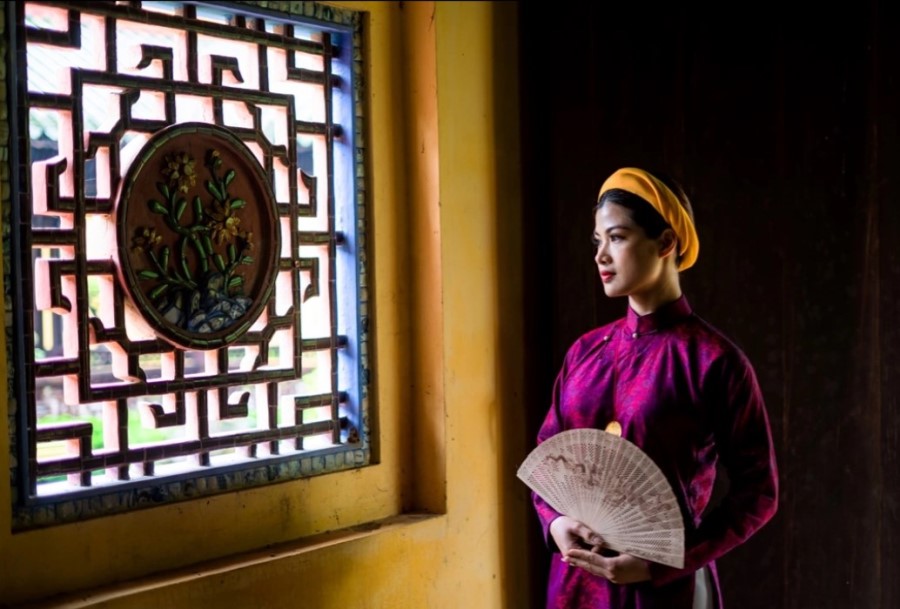
Many visitors choose to wear traditional Vietnamese costumes when taking photos here, as the setting perfectly matches the ancient style. Besides photography, you can also learn about feng shui design, traditional gardening art, and royal culture.
When visiting Hue Imperial City, besides famous landmarks like Ngo Mon Gate, Thai Hoa Palace, and Dien Tho Residence, don’t miss Thieu Phuong Garden. It offers a peaceful and refreshing experience, helping you better understand the elegant lifestyle of the royal court.
Thieu Phuong Garden Entrance Fee and Opening Hours
To visit Thieu Phuong Garden, you need to buy a ticket to the Hue Imperial City.
- Adults: around 200,000 VND
- Children (7–12 years old): 40,000 VND
- Children under 7: free
Opening hours:
- Summer (March – October): 6:30 AM – 6:00 PM
- Winter (October – March): 7:00 AM – 5:30 PM
For the best experience, visit early in the morning or late in the afternoon when the weather is cooler. During festivals like Hue Festival, the site may also open at night.
Nearby Attractions
After visiting Thieu Phuong Garden, you can explore many famous sites within the Imperial City. Start with Ngo Mon Gate, the grand main entrance of the citadel, then visit Thai Hoa Palace, where important royal ceremonies took place. Nearby is the Forbidden Purple City, the private living area of the emperor and royal family.
You can also visit Dien Tho Residence, home of the Queen Mother, and Truong Sanh Palace, a peaceful royal residence surrounded by nature. Don’t miss The Mieu Temple, dedicated to the Nguyen emperors, and Hien Lam Pavilion, the tallest structure in the citadel.
Finally, visit Duyet Thi Duong Royal Theater, the oldest royal theater in Vietnam, where traditional court music and performances were held. Exploring these places together will give you a deeper understanding of Hue’s royal architecture, culture, and history.