

An Overview Of The Hue Royal Antiquities Museum
If you are planning a cultural journey through central Vietnam, the Hue Royal Antiquities Museum (or Bảo tàng Cổ vật Cung đình Huế) deserves a place high on your itinerary. Located in the historic city of Hue, this museum offers a rare and intimate look into the material world of Vietnam’s last royal dynasty. It preserves thousands of artifacts that once belonged to emperors, mandarins, and the imperial court.
Unlike grand palaces that impress with scale, this museum focuses on detail and storytelling. Inside, visitors encounter everyday royal objects alongside ceremonial treasures, from intricately designed ceramics to symbolic regalia.
Therefore, the experience feels personal and educational rather than overwhelming. It is especially valuable for travelers who want to understand how imperial life actually functioned beyond architecture.
A visit to the Hue Royal Antiquities Museum complements the broader historical landscape of Hue, helping you connect physical spaces with the objects that gave them meaning.

Quick Facts
If you don’t have time to read everything, here is a quick summary of the Hue Royal Antiquities Museum.
| Category | Information |
| Official Name | Hue Royal Antiquities Museum |
| Also Known As | Hue Museum of Royal Antiquities, Museum of Royal Antiquities Hue |
| Location | Hue (near Hue Imperial City) |
| Historical Period | Primarily Nguyen Dynasty (1802–1945) |
| Main Highlights | Royal costumes, ceramics, imperial seals, court artifacts |
| Building Type | Former imperial structure with traditional architecture |
| Visit Duration | 1–2 hours |
| Ticket Price | 50,000 VND per adult, free for children under 12 |
| Opening Hours | 7:00 AM – 5:30 PM every day |
| Best Time to Visit | Early morning or dry season (March–August) |
| Travel Style | Cultural, historical, educational |
| Nearby Attractions | Hue Imperial City, Ngo Mon Gate |
First Things Visitors NEED To Know
Where Is It? How To Get There?
Address: 03 Le Truc Street, Hue City
The Hue Royal Antiquities Museum is conveniently located near the Hue Imperial City on the Le Truc Street. So you can easily include it in your itinerary. Its central position allows visitors to combine multiple historical attractions within a short distance.
If you are staying in central Hue, reaching the museum is straightforward. Walking is a great option for those who enjoy exploring the city at a relaxed pace. The route passes through scenic streets and historical landmarks.

Other transport options include:
- Taxi or ride-hailing services for convenience
- Private car for flexible travel and multi-stop visits
- Bicycle rentals for a more local experience
- Motorbike taxis for quick access
If you want to visit this place and other attractions in Hue City, don’t miss out on our Hue tours and Hue private cars:
- Hue Imperial City Walking Tour – 21 USD/pax
- Hue City Private Tour – 55 USD/pax
- Hue City Tour By Private Car – 44 USD/sedan
- Vedana Lagoon To Hue By Private Car – 44 USD/sedan

Opening Hours And Ticket Prices
Before visiting the Hue Royal Antiquities Museum, it is helpful to check practical details. Opening hours may vary slightly depending on the season, but the museum generally operates during standard daytime hours.
Ticket prices are relatively affordable compared to other heritage sites in Hue. In some cases, entry may be included in a combined ticket for the imperial complex, which can offer better value if you plan to visit multiple attractions.
Here is practical information:
- Opening Hours: Daily from 7:00 AM – 5:30 PM (summer may start earlier at 6:30 AM, winter may close around 5:00 PM)
- Ticket Price (Single Entry): About 50,000 VND per adult, free for children under 12
- Combo Ticket Option: Around 80,000 VND for combined access with An Dinh Palace
- Included Access Option: Often included in the Hue Imperial City ticket (200,000 VND), depending on route or package
Always verify current information before your visit to avoid unexpected changes.

Best Time To Visit
Timing can affect your experience at the Hue Royal Antiquities Museum. Hue’s climate includes both hot and rainy periods, so planning ahead is important.
The best time to visit Hue is during the dry season, usually from March to August. Early mornings are ideal for avoiding crowds and enjoying a calm atmosphere inside the museum.
If you visit during the rainy season, the museum remains a good indoor activity. It provides a comfortable way to explore history while staying sheltered from the weather. Choosing the right time ensures a more enjoyable and relaxed visit.

The Museum’s Historical & Cultural Significance
Origins During The Nguyen Dynasty
The roots of the Hue Royal Antiquities Museum are closely tied to the legacy of the Nguyen Dynasty. It ruled Vietnam from 1802 to 1945. During this period, Hue served as the imperial capital. So countless valuable objects were created for royal ceremonies, governance, and daily court life.
These artifacts were not merely decorative but deeply symbolic, reflecting hierarchy, Confucian values, and the authority of the emperor.

After the monarchy came to an end in 1945, many royal items faced the risk of being lost, damaged, or scattered. Recognizing their cultural importance, efforts were made to collect and preserve these objects.
The museum was established to safeguard this heritage and ensure that future generations could access a tangible connection to Vietnam’s imperial past.
Today, the Hue Royal Antiquities Museum stands as one of the most important repositories of Nguyen Dynasty artifacts. It bridges a critical historical transition from monarchy to modern Vietnam while maintaining respect for traditional values.

Role In Preserving Vietnam’s Imperial Heritage
The Hue Royal Antiquities Museum plays a crucial role in preserving Vietnam’s imperial identity. Its collections are not limited to rare objects but also represent the systems and rituals that defined court life. Every artifact tells a story about governance, religion, and social order.
For example, ceremonial items reveal how emperors communicated authority through symbolism. Royal garments demonstrate strict hierarchical rules. Even everyday utensils reflect refined craftsmanship and aesthetic values unique to the imperial court.

Beyond preservation, the museum contributes to cultural education. Visitors gain insight into how Vietnam’s past continues to influence its present identity. This is especially important in a country where modernization is rapid but historical awareness remains deeply valued.
By maintaining these artifacts in their original context, the museum ensures that Vietnam’s imperial heritage is not reduced to abstract history but remains visible, relatable, and meaningful.

What To See Inside The Hue Museum Of Royal Antiquities
Royal Artifacts And Treasures
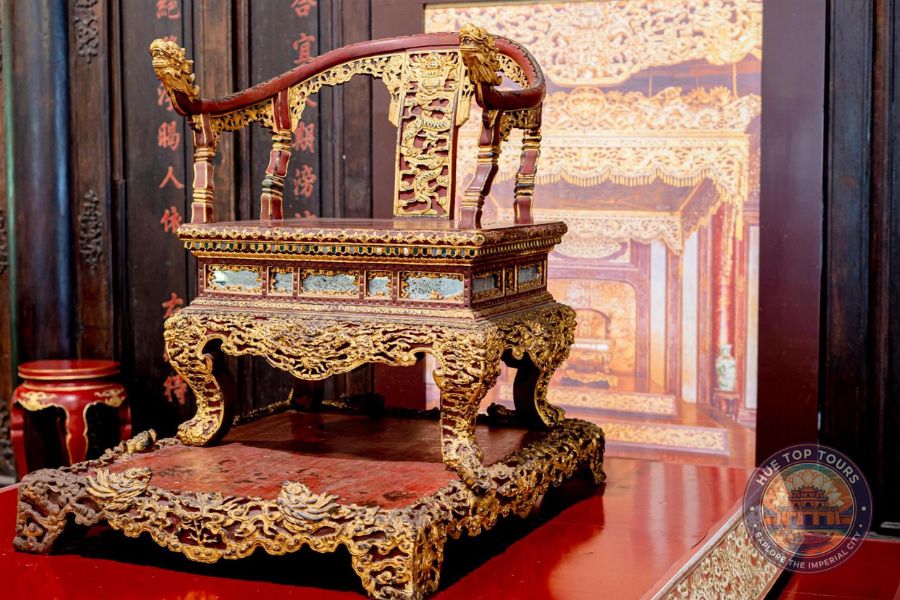
Inside the Hue Royal Antiquities Museum, the collections are both diverse and deeply symbolic. Visitors will encounter imperial seals, porcelain ware, royal costumes, and finely crafted furniture. Each category reflects a different aspect of court life.
Imperial seals, for instance, were used to legitimize official documents and decisions. Their intricate designs highlight authority and power. Ceramics often feature dragons and phoenixes, symbols associated with the emperor and empress. These motifs were not decorative choices but representations of cosmic balance and royal legitimacy.
Royal costumes provide insight into strict dress codes within the court. Colors, embroidery, and materials were carefully regulated to indicate rank and role. Even minor details carried meaning.
Furniture and everyday objects reveal the sophistication of palace life. They demonstrate a blend of functionality and artistry that defined the Nguyen Dynasty’s aesthetic values.
Rather than overwhelming visitors with quantity, the museum allows you to appreciate the craftsmanship and cultural meaning behind each piece.

Highlights You Should Not Miss
While every exhibit has its value, certain highlights at the Hue Royal Antiquities Museum stand out for their historical and artistic importance.
Look for ceremonial objects used in royal rituals. These items often feature elaborate designs and were reserved for significant events. They provide insight into how the court maintained order and tradition.

Another key highlight is the collection of royal household items. These objects bring a human dimension to the imperial family, showing how they lived beyond formal ceremonies.
You should also pay attention to artifacts linked to governance. Items such as official insignia and administrative tools reveal how the empire was managed on a daily basis.
To make your visit easier, here is a quick reference:
| Category | Why It Matters |
| Ceremonial Objects | Reflect spiritual and political authority |
| Nguyen Dynasty Royal Costumes | Show hierarchy and tradition |
| Ceramics | Represent artistic excellence |
| Administrative Items | Reveal governance structure |
These highlights help transform your visit from simple sightseeing into a meaningful historical exploration.
Architectural Features Of The Building
The building that houses the Hue Royal Antiquities Museum is itself an important historical artifact. Originally constructed as part of the imperial complex, it reflects traditional Vietnamese architectural principles influenced by royal aesthetics.

The structure features wooden frameworks, curved roofs, and decorative elements that align with the design language of the Hue Imperial City. Its layout emphasizes harmony and balance, which were central concepts in imperial architecture.
Natural light and open spaces enhance the viewing experience. They allow artifacts to be displayed in a calm and respectful environment. The building does not overshadow the collections but complements them.
Walking through the museum feels like stepping into a quieter extension of the imperial court. The architecture reinforces the cultural atmosphere and deepens your connection to the artifacts on display.

How To Visit The Museum Efficiently?
Ideal Visit Duration
- Standard Visit Time: A typical visit to the Hue Royal Antiquities Museum takes around 1–2 hours, giving you enough time to explore the collections comfortably without rushing.
- For History Enthusiasts: Visitors interested in art and history should allow extra time to examine artifacts closely and read exhibit descriptions in depth.
- Short Visit Option: If you are limited on time, a quick visit under 1 hour can still be worthwhile by focusing on key highlights.
- Itinerary Balance: Combine your visit with nearby attractions in Hue to create a well-paced and efficient travel plan.

Suggested Visiting Routes
To make the most of your visit, it helps to follow a logical route through the Hue Royal Antiquities Museum.
- Start with context → Begin at the introductory exhibits to understand the history of the Hue Royal Antiquities Museum
- Follow a logical flow → Move through sections in order: royal life → ceremonies → governance
- Build understanding step by step → Each section adds context, helping you connect artifacts to real imperial life
- Avoid random navigation → Jumping between displays can make the experience confusing and less meaningful
- Read exhibit descriptions carefully → Labels often explain symbolism and historical significance
- Take your time → Slowing down helps you appreciate craftsmanship and cultural details
- End with reflection → Revisit key highlights to reinforce what you’ve learned and fully absorb the experience
A structured approach ensures that your visit feels engaging rather than overwhelming.

Tips For First-Time Visitors
If this is your first time visiting the Hue Royal Antiquities Museum, a few practical tips can improve your experience:
- Take your time and avoid rushing through exhibits
- Respect photography rules where applicable
- Maintain a quiet and respectful attitude
- Consider hiring a guide for deeper insights
- Combine your visit with nearby attractions
These small considerations can make a significant difference in how much you gain from the museum.
Royal Antiquities Museum Vs. Other Attractions
While the Hue Royal Antiquities Museum and other attractions in Hue have their own highlights, they offer very different experiences.
| Aspect | Hue Royal Antiquities Museum | Hue Imperial City | Khai Dinh Tomb |
| Core Experience | Focus on artifacts, royal objects, and court life | Large-scale imperial architecture and historic grounds | Royal tomb with elaborate design and artistic fusion |
| Historical Focus | Daily life, rituals, governance of the Nguyen court | Political center of the Nguyen Dynasty | Personal legacy of Emperor Khai Dinh |
| Visual Style | Subtle, traditional, detail-oriented | Grand, symmetrical, and expansive | Highly decorative, dramatic, and ornate |
| Atmosphere | Quiet, reflective, educational | Open, busy, and monumental | Intimate, immersive, and visually intense |
| Time Needed | 1–2 hours | 2–4 hours or more | 1–2 hours |
| Best For | History lovers, cultural learners | First-time visitors, architecture enthusiasts | Photography lovers, design-focused travelers |
| Travel Experience | Indoor, slow-paced exploration | Walking-intensive outdoor exploration | Compact visit with strong visual impact |
Together, these three attractions create a well-rounded understanding of Hue’s imperial past. The museum explains the objects and meanings, the Imperial City provides the setting, and Khai Dinh Tomb reveals the personal and artistic evolution of the dynasty.
Nearby Attractions To Combine With Your Visit
The location of the Hue Royal Antiquities Museum makes it easy to combine with other attractions in the area.
Here are a few nearby places to consider:
- Hue Imperial City for large-scale exploration
- Thai Hoa Palace: Located inside the Hue Imperial City, this main ceremonial hall hosted imperial events. Entry requires an Imperial City ticket, and interior access may be restricted during preservation periods.
- Ngo Mon Gate: The grand southern gate of the Imperial City, famous for its layered architecture and historical significance. Visitors can walk through and climb the upper levels for elevated views, included in the entrance ticket.
- Dien Tho Residence: A quieter section of the Imperial City dedicated to the Queen Mother’s residence. Less crowded than the main halls, offering insight into royal family life and more intimate architectural details.
- Hue Royal Theatre: Also inside the Imperial City, this historic theater hosted royal performances of Nha Nhac court music. Some sessions still run today, though schedules vary and require separate tickets or guided tours.
These sites are within close proximity, allowing you to create a seamless cultural itinerary without extensive travel.

FAQs
Is the museum suitable for visitors who are not familiar with Vietnamese history?
Yes. The Hue Royal Antiquities Museum is beginner-friendly. Artifacts like costumes and ceramics are easy to understand visually, even without deep historical knowledge. Reading labels or using a guide can further enhance your understanding.
Are there guided tours available in English or other languages?
Yes, but usually not included by default. You can hire guides near the Hue Imperial City or book through tour agencies. English is common, while other languages may require advanced arrangements.
How well are the artifacts preserved and displayed?
Artifacts are well preserved in protective cases with stable conditions. Displays are simple and traditional, focusing on authenticity rather than modern technology, allowing visitors to appreciate the original historical context.
Is the museum accessible for elderly visitors or those with limited mobility?
Accessibility is moderate. The Hue Royal Antiquities Museum has relatively flat layouts, but some areas may have steps or limited support facilities. Assistance may be needed for visitors with mobility challenges.
Can the museum visit be combined with a half-day itinerary in Hue?
Yes. The museum is close to the Hue Imperial City, making it easy to combine with nearby attractions in a half-day plan without rushing.
Final Thought: Is It Worth Visiting?
The Hue Royal Antiquities Museum is worth visiting if you are interested in understanding Vietnam’s imperial past beyond surface-level sightseeing. It offers depth, context, and a more personal connection to history.
For travelers who prefer large landmarks, the museum may feel less impressive at first. However, those who take the time to explore its collections often find it one of the most meaningful stops in Hue.
The museum’s strength lies in its ability to complement other attractions. It transforms what you see elsewhere into a more complete story. If your goal is not just to visit Hue but to understand it, this museum is a valuable addition to your itinerary.
Hue Top Tours hopes that our information has somewhat helped you in your journey in Hue. Thanks a lot for reading. Have a nice trip!