
Introduction
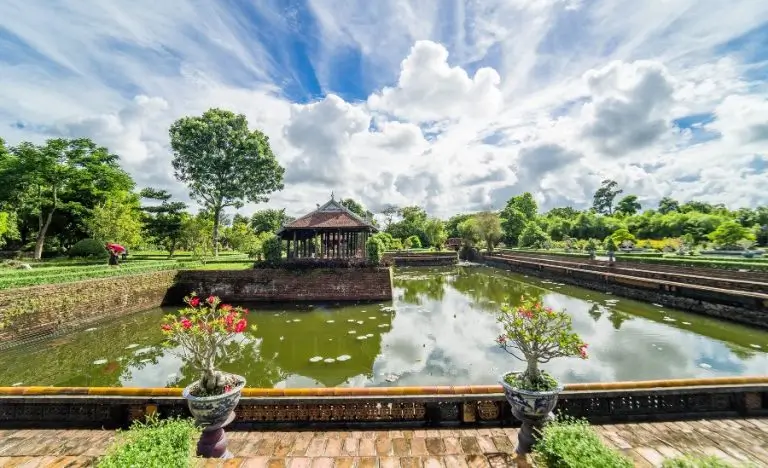
Co Ha Garden is one of the most beautiful royal gardens located inside the Imperial City of Hue. Once reserved exclusively for emperors and members of the Nguyen royal family, this elegant garden served as a peaceful retreat where the king could relax, composed poetry, and enjoy nature.
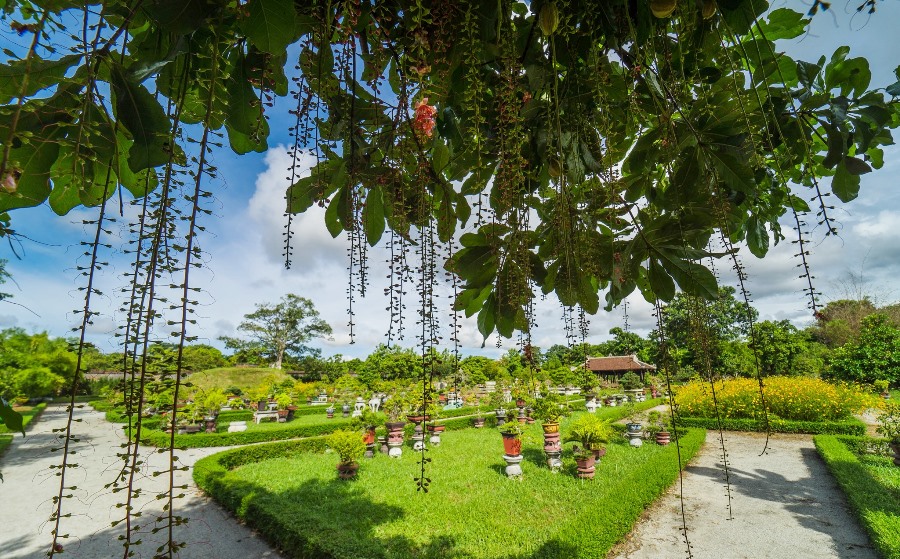
Unlike the more formal and ceremonial structures of the citadel, Co Ha Garden offers a softer, more intimate atmosphere filled with greenery, water features, and poetic charm. Nowadays, the garden remains a hidden gem within the Hue Imperial Complex, offering visitors a chance to experience the refined lifestyle and aesthetic taste of Vietnam’s last dynasty.
Co Ha Garden Hue Location
The Co Ha garden is located in the northeastern corner, covering nearly 2.3 hectares. It borders the Department of the Imperial Household to the front, Hau Lake at the back, and is flanked on the east and west by the walls of the Imperial City and the Forbidden Purple City.
How To Get To Co Ha Royal Garden?
To visit Co Ha Royal Garden, you first need to enter the larger complex of the Hue Imperial City, as the garden is located deep inside the Forbidden Purple City area.
From Hue city center, the Imperial City is very easy to reach. It is only about 2–3 km away, so you can get there by taxi, motorbike, bicycle, or even on foot if you are staying nearby. Many visitors also choose to book a private car or join a guided tour for a more convenient experience.
Once you arrive at the main entrance (Ngo Mon Gate), you will need to purchase an entrance ticket to access the Imperial City. This ticket includes entry to multiple attractions inside the complex, including Co Ha Garden.
After entering, follow the main pathway toward key landmarks such as Thai Hoa Palace and continue deeper into the Forbidden Purple City. From there, directional signs or a map will guide you to Co Ha Garden. The walk takes around 10–15 minutes, passing through several historical courtyards and structures, making the journey itself an enjoyable part of the experience.
For a smoother visit, it is recommended to go early in the morning or late in the afternoon to avoid the heat, and consider hiring a local guide to better understand the historical context of the sites along the way.
Co Ha Garden History
According to historical records of the Nguyen Dynasty, Co Ha Garden was originally a study place for Crown Prince Nguyen Phuc Dam (later Emperor Minh Mang) when he lived in the royal palace. In the 18th year of Minh Mang’s reign (1837), the area was renovated and expanded, connecting it with Hau Lake (also a royal garden), and was developed into an imperial garden.
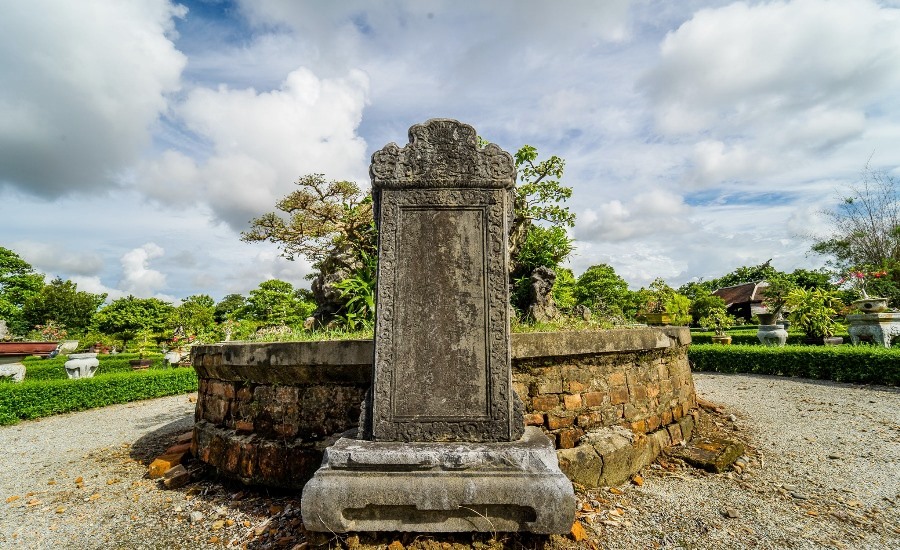
In the 3rd year of Emperor Thieu Tri (1843), many new structures were added, including Kham Van Pavilion, Vong Ho Pavilion, Thuong Thang Tower, Quang Bieu Pavilion, Minh Ly Study House, Quang Phong Terrace, Nhat Than Corridor, Kim Nghe Bridge, and the surrounding covered walkway called Tu Phuong Ninh Mat Corridor. The garden also featured lakes, caves, streams, hills, and artificial rock formations, making the landscape more diverse and beautiful. At this stage, it was officially upgraded into a royal garden known as Co Ha Garden. One of its most special features was the rectangular corridor system that surrounded the main buildings.
During the reign of Emperor Tu Duc, additional structures were built and some areas were further improved. However, toward the end of the Nguyen Dynasty, the garden fell into serious decline due to lack of maintenance.
In the 17th year of Emperor Thanh Thai (1905), parts of the corridors were removed to make space for housing soldiers.
After a long period of abandonment, Co Ha Garden, once one of the most famous royal gardens in Hue, was restored in 2012 by the Hue Monuments Conservation Center, with an area of about 16,800 square meters. The restoration aimed to bring back its original appearance for the Hue Festival.
From 2013 to 2014, the Thua Thien Hue Provincial People’s Committee continued to upgrade and expand the garden. Along with the remains of old caves, hills, and water features, the garden was replanted with greenery, flowers, and ornamental plants. Especially during the Hue Festival 2014, Co Ha Garden became a highlight attraction, drawing many visitors to explore and enjoy its scenic beauty.
The Meaning of the Name “Co Ha Garden”
The name Co Ha Garden comes from the phrase “Van Co Thanh Ha,” which carries the meaning of peace and calmness in all matters. This name reflects the purpose of the garden as a place of relaxation and tranquility.
The Nguyen emperors built Co Ha Garden as a retreat where they could rest, enjoy the scenery, and take gentle walks after busy and demanding hours of royal duties. Its location within the Imperial City also made it very convenient, allowing easy access from the inner palace while saving time and resources compared to traveling to more distant sites.
Unique Architectural Features of Co Ha Royal Garden
Inside Co Ha Garden, the layout is a harmonious combination of natural landscapes and royal architecture. The garden includes a rich system of lakes, streams, artificial mountains, caves, pavilions, and palaces, all carefully arranged to create a balanced and poetic environment. This seamless blend between man-made structures and nature reflects the refined aesthetic of the Nguyen Dynasty.
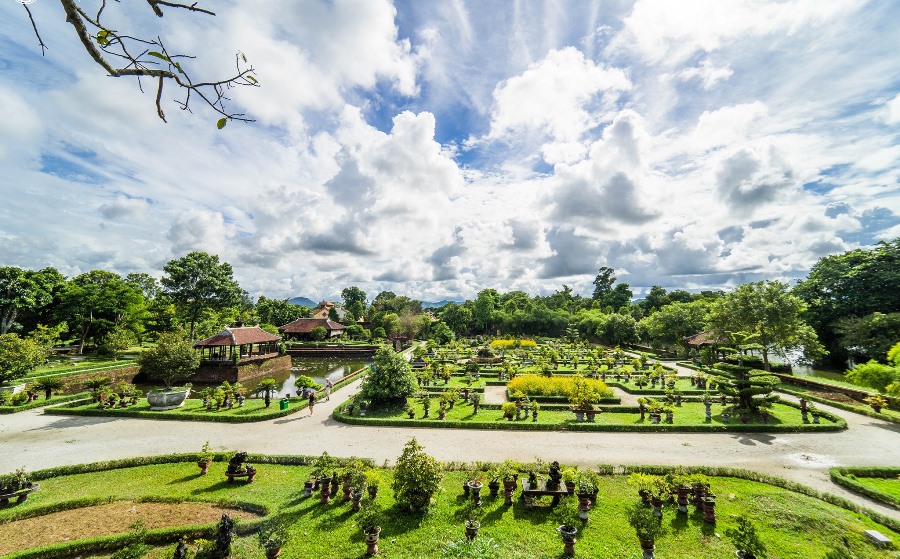
At the center of the garden lies a large and clear lake called Minh Ho. To the left of Minh Ho stands a pavilion known as Hoa Phong Terrace, while a graceful bridge crossing the lake is called Kim Nghe Ngoc Dong Bridge. On the right side of the lake is a covered corridor named Kha Nguyet. In the middle of the lake, there is a small island with a pavilion called Quang Bieu, creating a scenic focal point. Behind the lake is Thuong Thang Pavilion, adding depth to the overall layout.
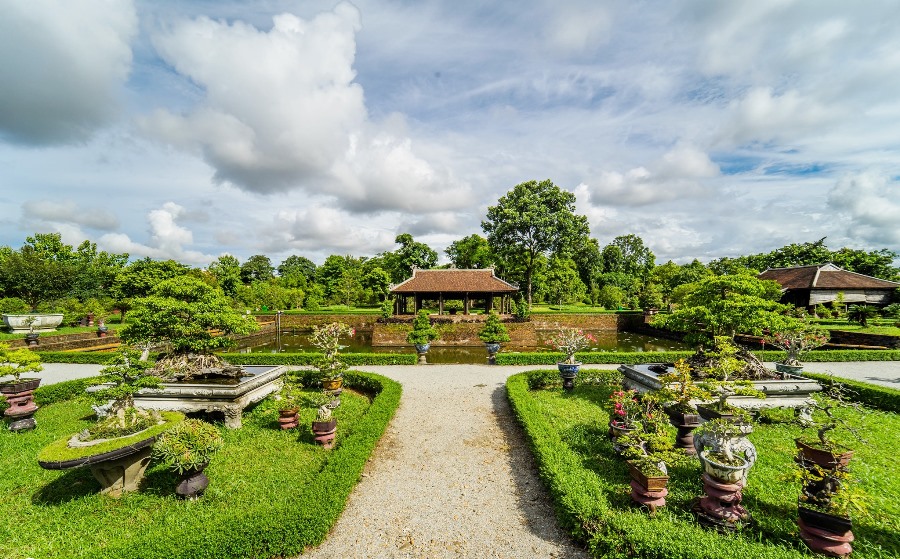
The main structure of the garden is Kham Van Palace, which serves as the central architectural highlight. The grand hall within the garden is known as Minh Ly Hall, featuring a roof covered with traditional yellow glazed tiles, symbolizing royal status. In addition, the garden once included many other features such as Phuoc Duyen Cave, Dao Nguyen Cave, Thuy Lien Pond, and Trai Vo Stream. Although many of these elements were damaged over time, they have been gradually restored to reflect their original appearance.
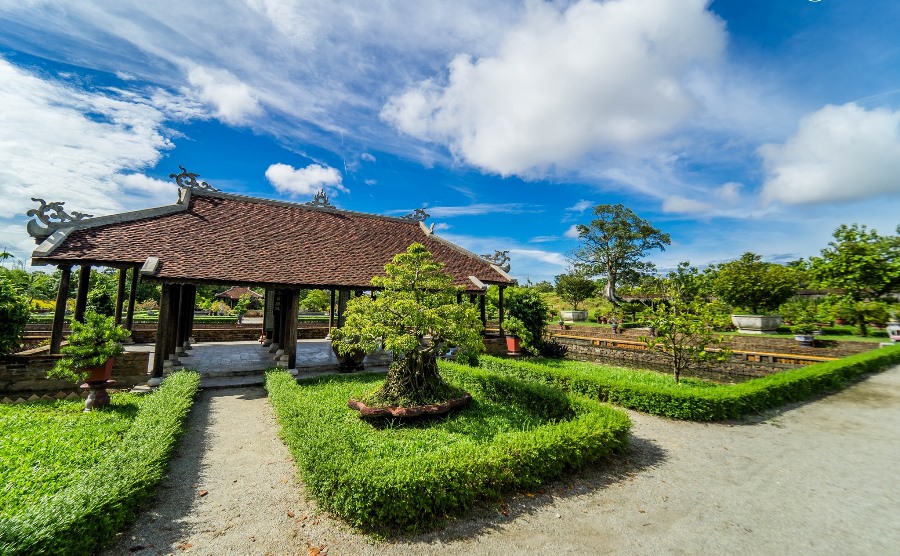
Looking more closely at the layout, to the west of Minh Ho are Trai Vu Stream, Phuoc Duyen Cave, and Dao Nguyen Cave. To the east is the Kim Nghe Bridge with a roofed structure above it. From Thuong Thang Pavilion, visitors can enjoy views toward Tho Yen Mountain, Trung Dinh Mountain, Thuy Lien Pond, and Quan Tu Mountain. Together, these elements create a layered and picturesque landscape, making Co Ha Garden a truly unique example of royal garden design in Hue.
Beautiful Natural Landscape of Co Ha Garden
The natural scenery of Co Ha Garden is one of its most captivating features. The garden brings together a wide variety of fragrant flowers, unique plants, and rare ornamental trees collected from different regions of Vietnam. It even includes special plant species that were once presented as gifts from foreign countries, adding an international touch to this royal garden.
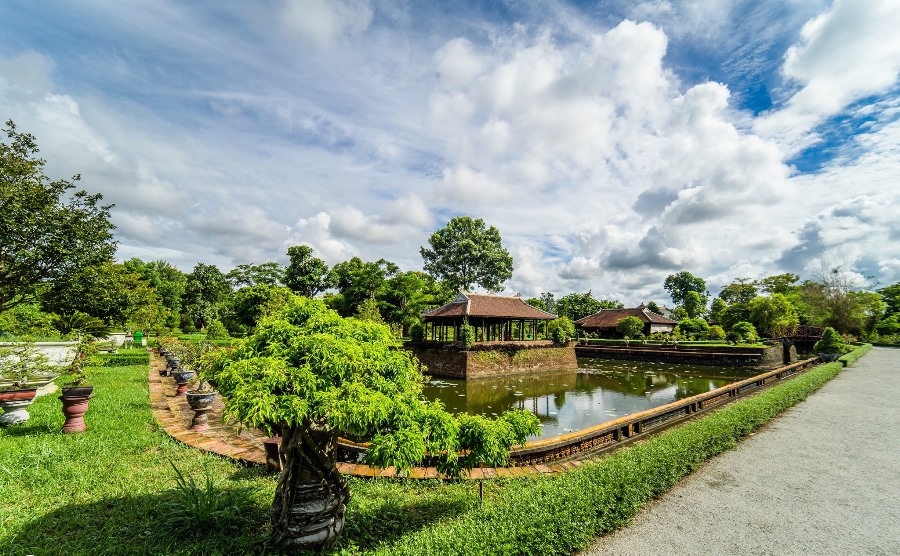
The selection of plants in the garden was carefully planned to meet both aesthetic and ecological requirements. Each tree and flower was chosen based on its shape, color, and ability to thrive in the local environment. As a result, the garden displays a rich diversity of vegetation, including large trees, medium and small plants, shrubs, climbing vines, and unique ground plants. In the water areas, aquatic plants such as lotus and water lilies create a soft and poetic atmosphere.
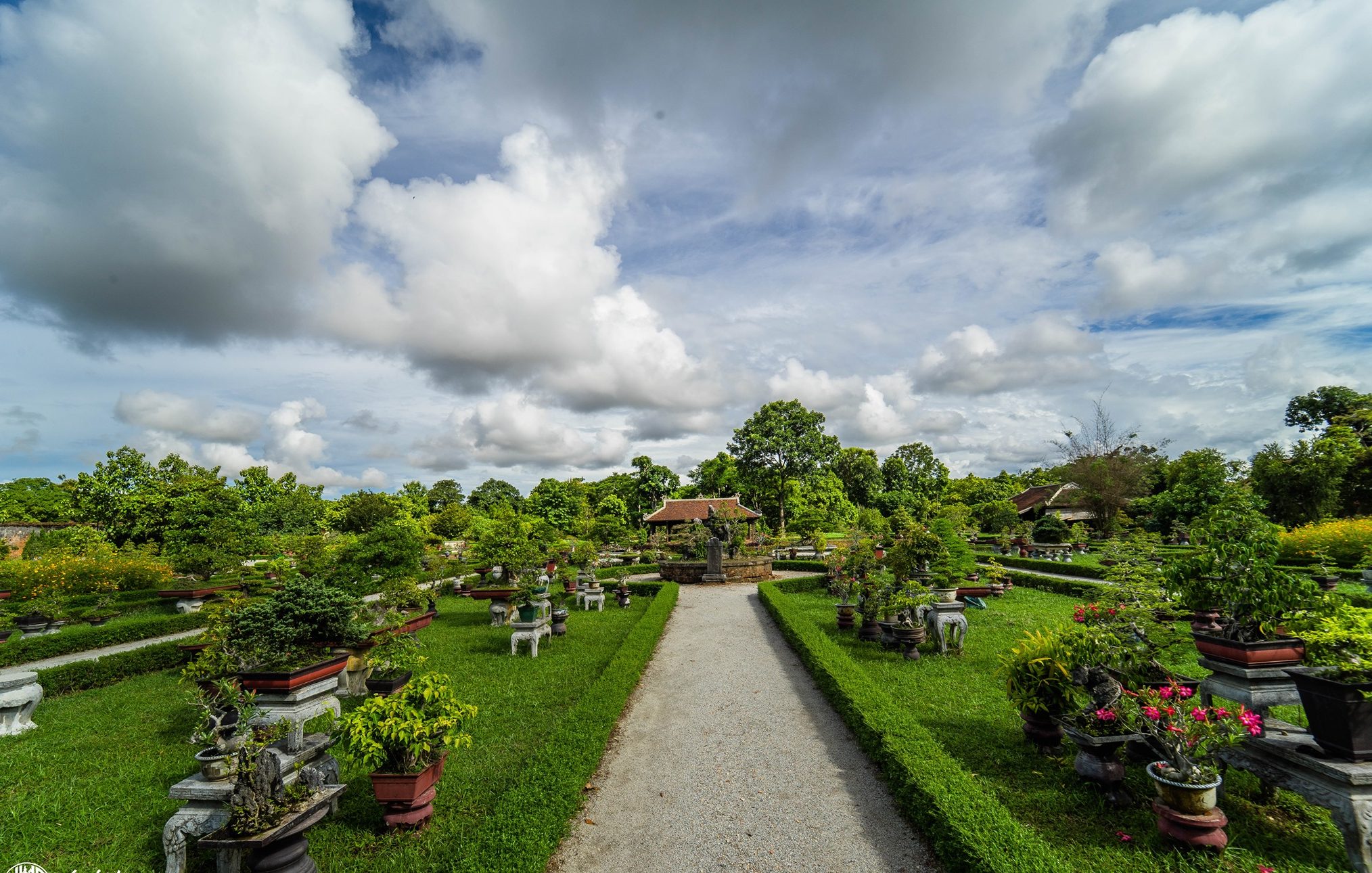
All plants were selected to suit the local climate and soil conditions. They are typically long-living, evergreen, non-toxic, and easy to shape and maintain, with low risk of pests. This thoughtful selection reflects the careful planning and long-term vision of royal garden design.
Like many royal gardens of the Nguyen Dynasty, Co Ha Garden also features a variety of fruit trees commonly found in Central Vietnam and across the country, such as jackfruit, banana, mango, and longan. Interestingly, some food crops like millet and corn were also planted, reflecting the emperors’ appreciation for agriculture and rural life.
In addition, the garden once showcased many rare and exotic plant species imported from other countries, serving the emperors’ interest in collecting and enjoying unique natural elements.
Nowadays, Co Ha Garden is home to nearly 600 valuable ornamental plants from 45 different categories. These plants were contributed by 56 bonsai and ornamental plant artisans from Thua Thien Hue and other regions, arranged to recreate the traditional royal garden setting. Notably, the Hue Orchid Association has introduced many rare and beautiful orchid species, further enriching the garden’s landscape.
With its harmonious blend of lush greenery and elegant architecture, Co Ha Garden has become an increasingly popular destination for visitors seeking both natural beauty and cultural depth in Hue.
Co Ha Royal Garden Entrance Fee and Opening Hours
To visit Co Ha Garden, you do not need a separate ticket, as the garden is located inside the Hue Imperial City. Your entrance ticket to the Imperial City already includes access to Co Ha Garden and many other attractions within the complex.
Entrance Fee
- Adults: around 200,000 VND per person
- Children (7–12 years old): around 40,000 VND
- Children under 6 years old: Free
You can purchase tickets at the main entrance (Ngo Mon Gate) or at official ticket counters of the Imperial City.
Opening Hours
Co Ha Garden follows the same schedule as the Imperial City:
- Summer (March – October): 6:30 AM – 5:30/6:00 PM
- Winter (October – March): 7:00 AM – 5:00/5:30 PM
Opening hours may change slightly depending on the season or special events, so it’s a good idea to check in advance if you are planning a visit.
Helpful Tips
- The best time to visit is early morning or late afternoon to avoid heat and crowds.
- Since the Imperial City is large, allow at least 2– 4 hours to explore comfortably.
- Wear comfortable shoes and bring water, as you will walk quite a lot inside the complex.
Nearby Famous Attractions
Thieu Phuong Royal Garden
Thieu Phuong Royal Garden is one of the most important royal gardens inside the Imperial City of Hue. It was designed as a relaxing space for the emperors, featuring a harmonious layout of greenery, pathways, and traditional architecture. The garden reflects the refined taste and lifestyle of the Nguyen Dynasty. Today, it has been carefully restored, allowing visitors to experience its elegant and peaceful atmosphere.
Duyet Thi Duong Theater
Duyet Thi Duong Theater is the oldest royal theater in Vietnam, once used for performances for the king and royal court. It showcases traditional Vietnamese performing arts, including royal court music and classical opera. The architecture of the theater is beautifully preserved, reflecting the artistic culture of the Nguyen Dynasty. Visitors can enjoy live performances here to better understand Hue’s cultural heritage.
Tinh Tam Lake
Tinh Tam Lake is a scenic royal lake known for its calm and poetic beauty. It was once a favorite place for emperors to relax, enjoy lotus flowers, and compose poetry. The lake features small islands and traditional structures that create a picturesque landscape. It is especially beautiful during the lotus blooming season, attracting both locals and visitors.
Thai Hoa Palace
Thai Hoa Palace is one of the most important buildings in the Imperial City, serving as the ceremonial hall of the Nguyen Dynasty. It was used for major events such as coronations, official receptions, and royal ceremonies. The palace stands out with its grand architecture, featuring a golden roof and intricately decorated interiors. It represents the power and authority of the imperial court.
Kien Trung Palace
Kien Trung Palace is a unique structure that blends traditional Vietnamese and European architectural styles. It was built during the later period of the Nguyen Dynasty and served as a residence for the emperor. The palace has recently been restored, bringing back its original elegance and charm. Visitors can admire its distinctive design and learn about the final years of the royal court.