
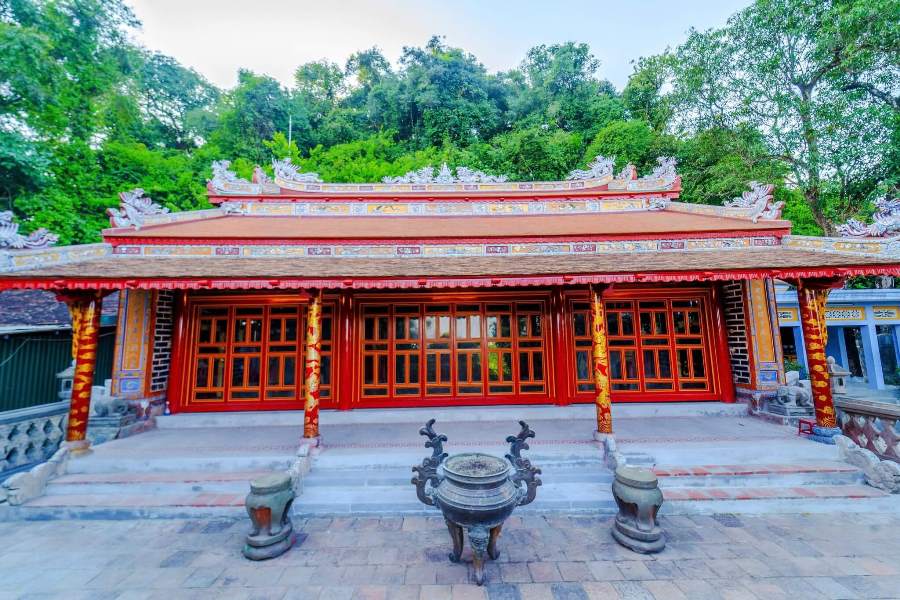
Hon Chen Temple Overview
Hon Chen Temple, also known as Hue Nam Temple, is one of the most sacred spiritual sites in Hue City. Situated on Ngoc Tran Mountain beside the peaceful Perfume River, this ancient temple is not only a place of worship but also a cultural landmark surrounded by beautiful natural scenery.
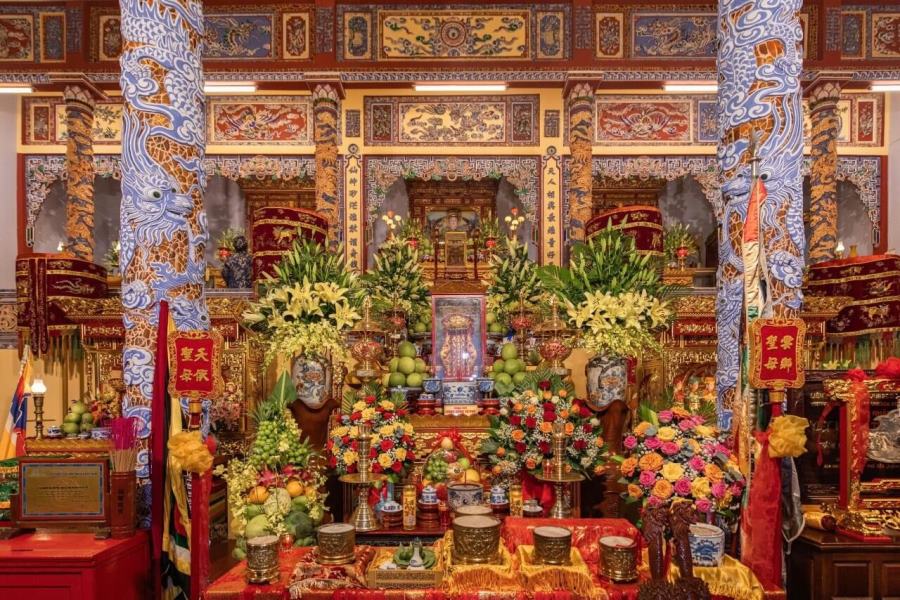
The temple is mainly dedicated to Thien Y A Na Holy Mother, a goddess widely worshipped in Central Vietnam. Over time, Hon Chen Temple has become an important spiritual destination where visitors come to pray for health, good fortune, and family happiness.
With its stunning location, rich history, unique architecture, and strong spiritual atmosphere, the temple is considered one of the most special attractions in Hue, drawing both local worshippers and travelers eager to explore the city’s traditional beliefs and scenic landscapes.
Hue Nam Temple Location
Hon Chen Temple sits on the slopes of Ngoc Tran Mountain, about 10 kilometers southwest of Hue city center.
The temple faces the gentle curve of the Perfume River, creating a peaceful and harmonious natural setting.
History and Origins of Hon Chen Temple
Hon Chen Temple was originally a place where the Cham people worshipped the goddess Po Nagar. Later, the Vietnamese continued this worship under the name Thien Y A Na Holy Mother in their spiritual belief system.
Hon Chen Temple was first built to honor Po Nagar, the Mother Goddess of the Champa culture. According to Cham legends, Po Nagar was the daughter of Heaven who was sent to Earth to help human beings plant rice and animals.
When the Vietnamese inherited this special religious site from the Cham people, they gradually combined Cham beliefs with their own spiritual traditions. The Cham Mother Goddess shared similar spiritual qualities with Vietnamese female deities, which made this cultural and religious blending easy. To write the name Po Nagar in Nôm characters, ancient scholars created the name Thien Y A Na, which sounded similar and carried a meaningful spiritual sense.
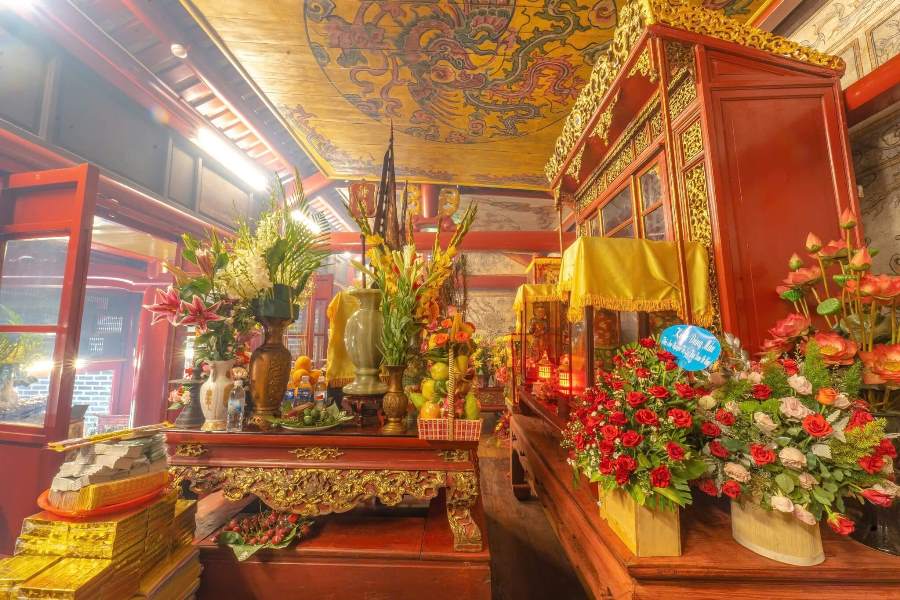
From 1954, Lieu Hanh Princess (also known as Van Huong Holy Mother) was also worshipped at the temple. In addition, Hon Chen Temple includes worship of Buddha, General Quan Cong, and more than 100 other deities believed to be followers of the main Holy Mothers. Emperor Dong Khanh himself was considered one of these followers.
The temple was repaired and expanded by Emperor Minh Mang in March 1832 and renovated again two years later. Because of this long history, the worship layout at Hon Chen Temple does not follow a single religious system but instead combines many different beliefs.
Between 1883 and 1885, during a difficult time in the Nguyen Dynasty, Emperor Dong Khanh had not yet become king. He asked his mother to visit the temple to pray and seek guidance from Thien Y A Na Holy Mother about his future. The Holy Mother predicted that he would become king.
After becoming the Emperor in 1886, Dong Khanh rebuilt the temple in a grander style, added many sacred objects, and renamed it Hue Nam Temple to show his gratitude. The name means “Blessings for the Southern Land.” Interestingly, Emperor Dong Khanh made the annual ceremony at the temple a national event and considered himself a follower of the Holy Mother, calling her “elder sister.”
Ancient Story about Hoan Chen Temple
Hon Chen Temple is a sacred shrine connected with many legends. According to local stories, the temple was once called Hoan Chen, meaning “the return of the jade cup.” This name came from a legend during the reign of Emperor Minh Mang.
It is said that while visiting the site, the emperor accidentally dropped a precious jade cup into the Perfume River. Thinking it was impossible to recover, he was surprised when a large turtle suddenly appeared from the water, holding the jade cup in its mouth and returning it to him.
However, in the official royal documents of the Nguyen emperors, the temple was recorded under its formal name Ngoc Tran Son Tu, which means “the shrine on Ngoc Tran Mountain.” Later, during the reign of Emperor Dong Khanh, the temple was renamed Hue Nam Temple, meaning “Blessings for the Southern Kingdom,” and became associated with many more legends.
Spiritual Significance and Beliefs
Hon Chen Temple plays a vital role in the spiritual life of Hue residents. It is believed that the Holy Mother has the power to bring blessings, protect families, and guide people through difficult times.
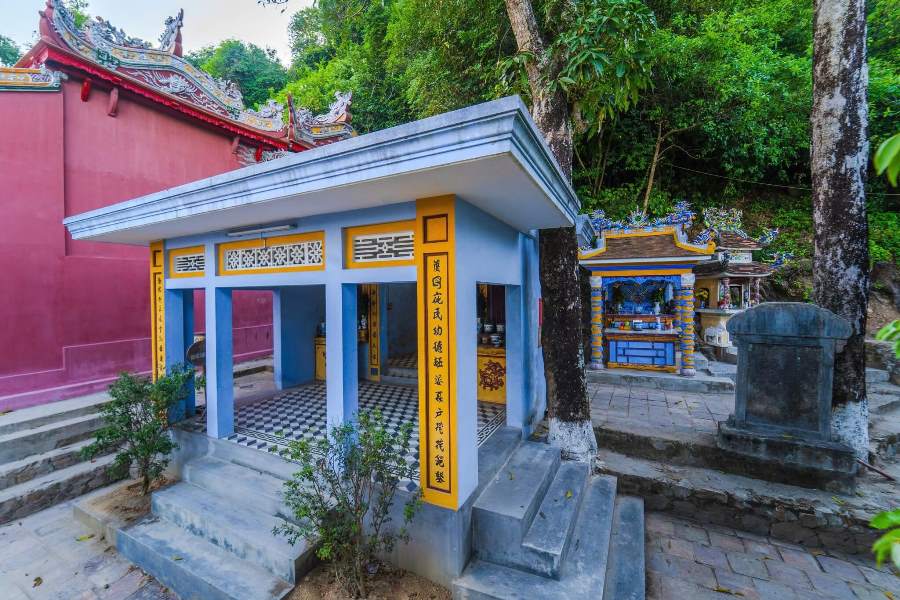
Visitors often come here to pray for good fortune, business success, safe travels, and good health. During special ceremonies and festivals, the temple becomes lively with traditional rituals and offerings. The peaceful atmosphere and strong spiritual energy make Hon Chen Temple a meaningful place for reflection and prayer.
Hue Nam Temple Feng Shui and Natural Setting
One of the most attractive features of Hon Chen Temple is its perfect feng shui location. The temple is backed by Ngoc Tran Mountain and faces the wide Perfume River.
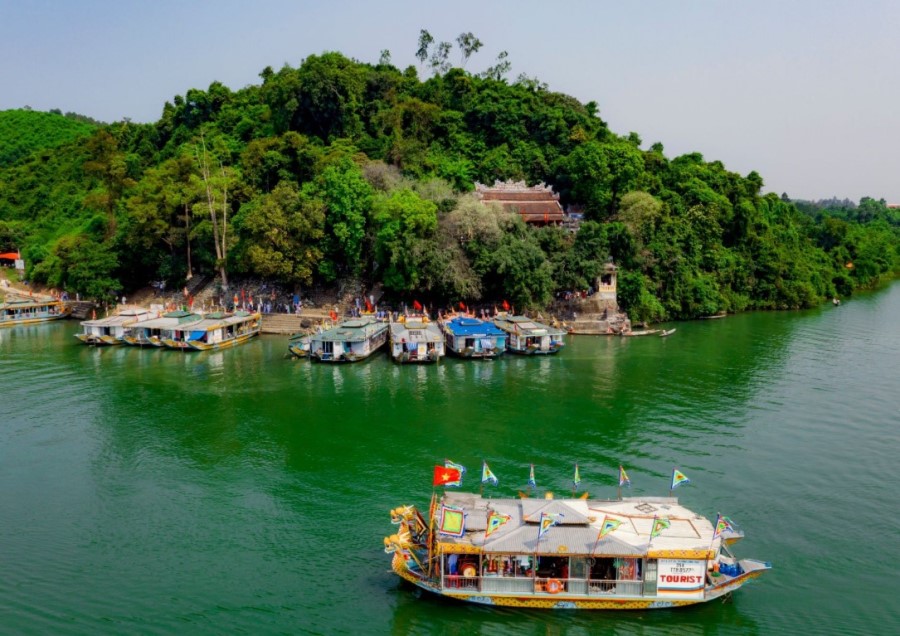
In Oriental philosophy, mountains represent stability and protection, while rivers symbolize wealth and life energy. This balance between mountain and water creates a harmonious environment believed to bring prosperity and positive spiritual power.
Surrounded by green forests and fresh air, the temple offers visitors a relaxing and refreshing experience.
Architecture of Hon Chen Temple
Hon Chen Temple showcases traditional Hue-style architecture combined with folk religious elements.
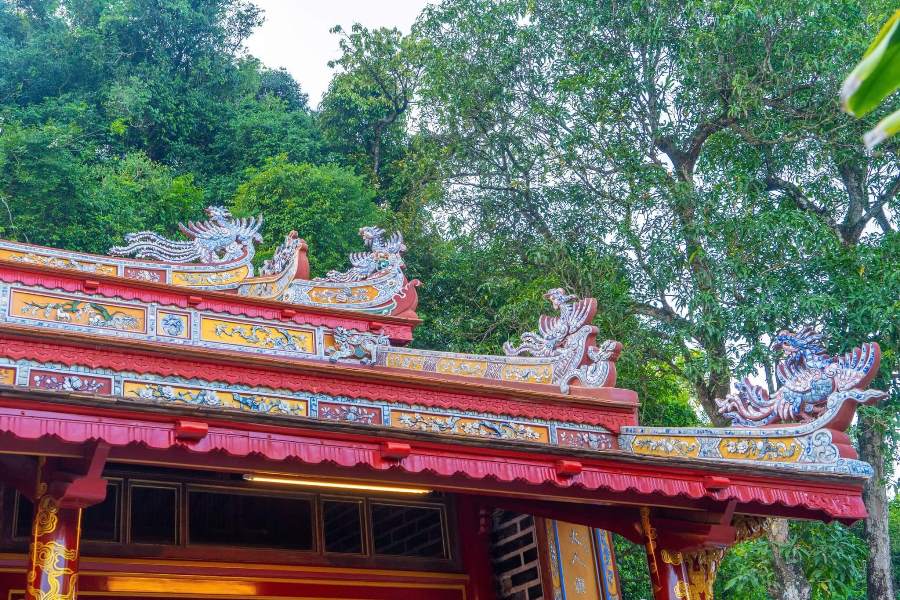
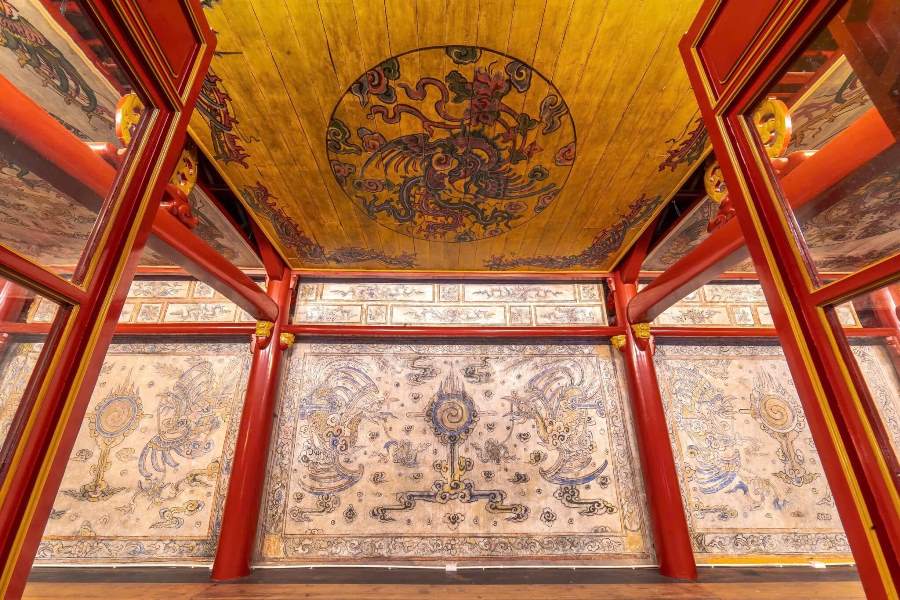
The main temple area includes a gate, courtyard, and several worship halls decorated with colorful patterns, dragons, and phoenixes. The roofs curve gently upward, a common feature in Vietnamese sacred buildings.
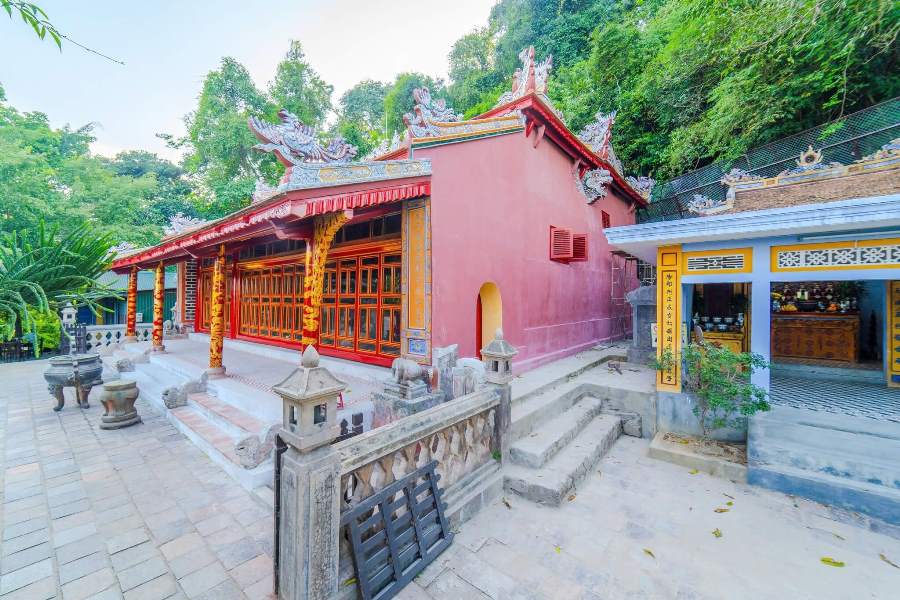
Inside, visitors can see beautifully carved wooden altars, statues of the Holy Mother, and many traditional offerings. Despite its modest size, the temple’s design feels warm, spiritual, and deeply connected to Hue’s cultural heritage.
What To See At Hon Chen Temple
When visiting Hon Chen Temple, you can explore:
- The main worship hall is dedicated to Thien Y A Na Holy Mother
- Smaller altars honoring other deities and spirits
- Stone steps leading up the mountain with scenic viewpoints
- Panoramic views of the Perfume River below
The peaceful surroundings make it a perfect spot for photography and quiet moments.
Hon Chen Temple Festival (Hue Nam Festival)
One of the most famous cultural events in Hue is the Hon Chen Temple Festival, also known as the Hue Nam Festival.
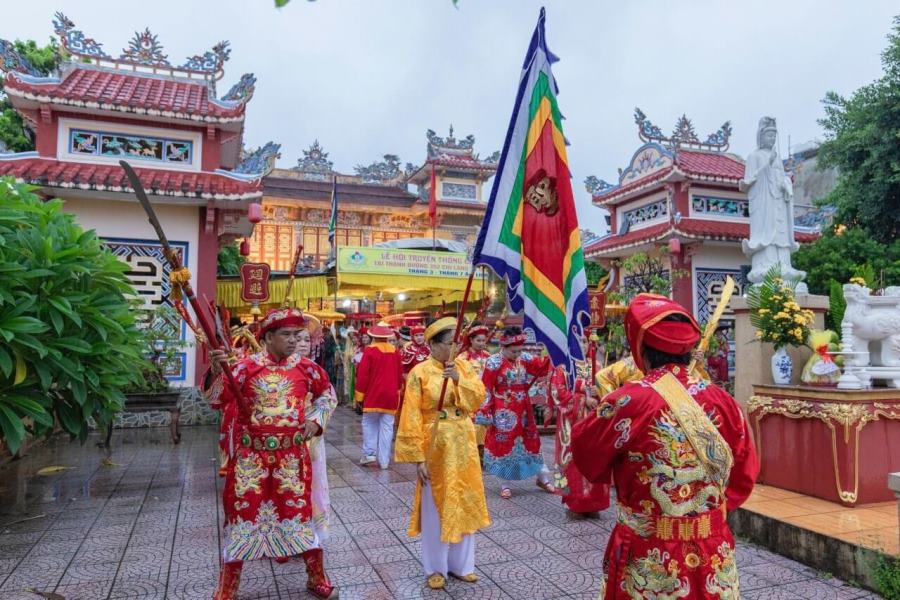
This festival usually takes place in the third and seventh lunar months. It features colorful rituals, traditional music, and a spectacular dragon boat procession on the Perfume River.
During the festival, worshippers dress in traditional costumes and perform sacred ceremonies to honor the Holy Mother. It is a unique chance to experience Hue’s spiritual traditions and local culture.
Best Way To Visit Hon Chen Temple
There are two popular ways to reach Hon Chen Temple:
By Dragon Boat on the Perfume River
Taking a boat trip is the most scenic option. Visitors can enjoy the river views while approaching the temple like ancient worshippers once did.
By Private Car or Motorbike
You can also travel by road and walk up the stone steps to the temple. This option is quicker and more flexible for combining other Hue attractions. Many travelers prefer private car services for comfort and convenience.
Hon Chen Temple Entrance Fee and Opening Hours
The latest entrance fee for Hon Chen Temple (Hue) for 2025–2026 is 50,000 VND per adult. Children under 12 years old (or shorter than 1.2 meters) can enter for free.
This ticket price applies to several heritage sites, including Hon Chen Temple, the Royal Antiquities Museum, and An Dinh Palace.
Ticket price: 50,000 VND per visit
Free entry: Children under 12 years old or under 1.2 meters tall
Note: During major festivals such as the Hon Chen Temple Festival (usually in the 3rd or 7th lunar month), the fee may change or be waived for pilgrims. However, the regular entrance ticket is generally still required for visitors.
Visitors are advised to bring ID to confirm age when purchasing tickets.
Dress Code and Visiting Regulations
As Hon Chen Temple is a sacred place, visitors should:
- Wear modest clothing covering shoulders and knees
- Speak quietly and behave respectfully
- Avoid touching sacred objects unless permitted
Following these simple rules helps preserve the peaceful atmosphere.
Nearby Attractions to Combine with Hon Chen Temple
You can easily combine your visit with other famous Hue attractions, such as:
Thien Mu Pagoda
Thien Mu Pagoda is one of the oldest and most famous religious landmarks in Hue City, located on Ha Khe Hill beside the Perfume River. It is known for its beautiful seven-story Phuoc Duyen Tower and peaceful surroundings. The pagoda is a popular place for visitors to enjoy scenic views and learn about Hue’s spiritual history.
A Perfume River boat cruise
A Perfume River boat cruise offers a peaceful way to explore Hue’s beautiful landscapes and cultural sites along the riverbanks. Visitors can relax on traditional dragon boats while enjoying fresh air and scenic views of pagodas, villages, and green hills. It is also a great opportunity to experience local life and learn more about Hue’s history and traditions.
Hue Imperial Citadel
The Hue Imperial Citadel is the historic heart of Hue City and a UNESCO World Heritage Site. It was the former royal palace of the Nguyen Dynasty, where emperors lived and ruled Vietnam for over 140 years. Today, visitors can explore its grand gates, ancient palaces, and peaceful courtyards that reflect Vietnam’s rich imperial history.
Tu Duc Tomb
Tu Duc Tomb is one of the most beautiful and peaceful royal tombs in Hue, built for Emperor Tu Duc during the Nguyen Dynasty. The tomb is set among pine forests, lakes, and traditional pavilions, creating a quiet and poetic atmosphere. It reflects both royal architecture and the emperor’s love for nature and poetry.
These nearby sites create a perfect cultural and historical itinerary.
Useful Travel Tips for Visiting Hon Chen Temple
- Visit in the morning for cooler weather and peaceful surroundings
- Bring comfortable shoes for climbing stone steps
- Travel by boat if you want a unique experience
- Check festival dates if you wish to see traditional ceremonies
Why Hon Chen Temple Is Worth Visiting in Hue
Hon Chen Temple is the only temple in Hue that holds such an important place in the spiritual life of local people. It is also unique for combining royal court rituals with folk beliefs, blending formal ceremonies with spirit worship, and mixing spiritual culture with popular traditions. The temple’s artistic decoration reached its peak in the late 19th century, and it reflects a rich combination of different religious beliefs.
This temple is not only a historical and religious site but also a beautiful scenic attraction and a unique cultural destination. Its sacred architecture was carefully placed within the poetic landscape of Hue’s mountains and rivers, creating a peaceful and charming setting. Today, the temple attracts thousands of visitors, especially during the festivals held in the third and seventh lunar months each year.
It is truly one of Hue’s hidden spiritual treasures worth discovering.