
Overview
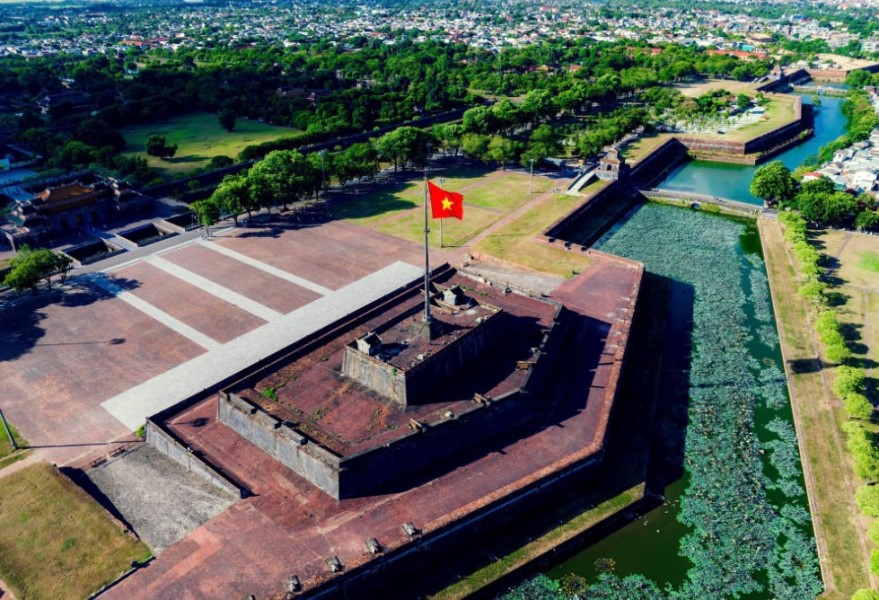
Hue Flag Tower (Kỳ Đài, often called Cột Cờ Huế) stands prominently in front of the Imperial Citadel (Hoàng thành Huế) as one of the most recognizable symbols of the Nguyễn Dynasty’s imperial complex.
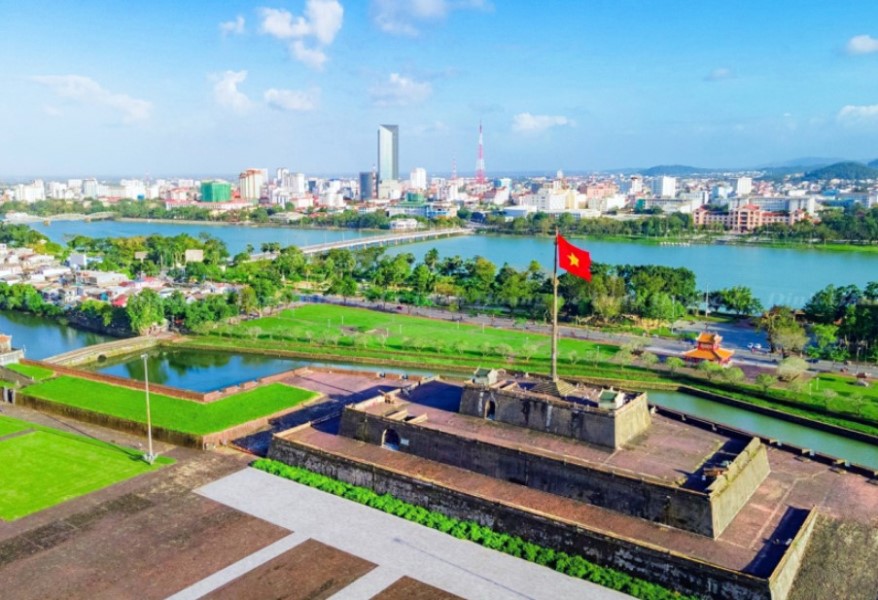
Originally built with both ceremonial and practical functions (signal, observation, and symbolic display of power), the flag tower has witnessed key moments in Vietnam’s modern history. It remains a focal point for visitors exploring the Citadel.
Its Location
Kỳ Đài sits on the southern (front) axis of the Imperial Citadel, directly facing the Ngọ Môn (Noon Gate) and the broad forecourt that leads into the Royal City.
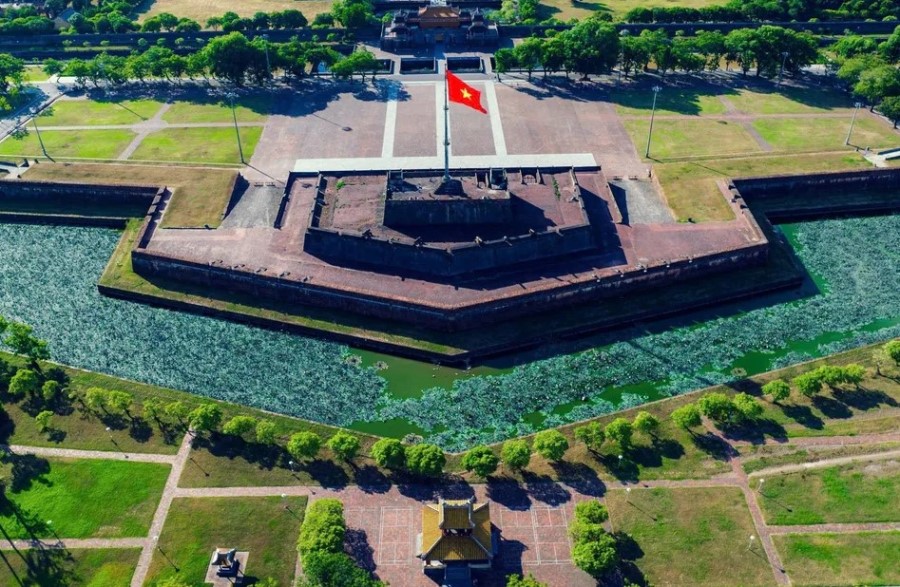
It occupies a central, elevated brick platform surrounded by the Citadel’s defensive walls and moats, a position chosen to make the flag visible across the city and along the Perfume River. The tower is inside the Hue Historic Citadel complex, in Thuan Hoa ward, Hue City.
Hue Flag Tower History
The original flag tower structure was constructed during the reign of Emperor Gia Long (year 6 of Gia Long’s era in 1807) at the same time the Hue Imperial Citadel itself was established.
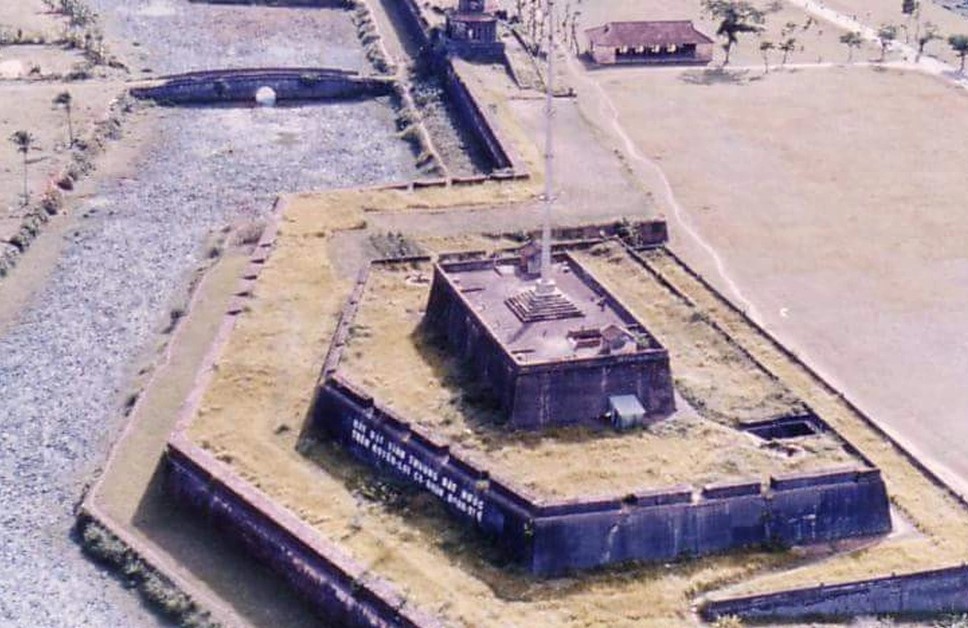
Under Emperor Minh Mang, the structure saw repairs and modifications (notably in 1829, 1831, and 1840). Over the centuries, the wooden mast was replaced and upgraded multiple times- timber masts gave way to metal and later reinforced concrete after storms and wartime damage.
Accounts record a tall wooden pole (approx. 26–32 m) originally, a cast-iron solution after a 1904 storm, destruction during conflicts in the mid-20th century, and subsequent rebuilding so that today’s mast reaches roughly 37m.
Beyond signalling and observation, Hue Flag Tower has been a witness to turning points in Vietnamese history. In August 1945, the flag of the Democratic Republic of Vietnam was raised there, symbolizing a historic change of authority in Hue. Throughout colonial and wartime periods, it endured damage and reconstruction.
Hue Flag Tower Architecture
Kỳ Đài’s architecture is straightforward but powerful and deliberately monumental:
Two-part composition: a multi-level brick platform base (the “đài cờ”) and the tall flagpole (the “cột cờ”) rising from it.
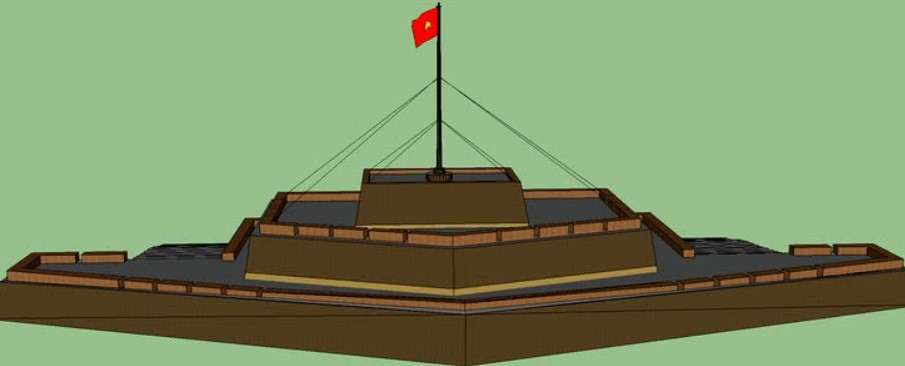
Three-tiered base: The brick base is formed by three rectangular truncated-pyramid tiers stacked vertically. Common architectural descriptions give the tier heights around 5.5 m (1st), roughly 6 m (2nd), and roughly 6–7 m (3rd), summing to roughly 17–18 m for the masonry podium.
Each level has walkways, arched connections, and decorative hollow-brick railings; the structure includes drainage systems and paved floors suited to its defensive and ceremonial role.
Flagpole/mast: Historically wooden and very tall, the mast was later replaced with iron and ultimately reinforced concrete following storm and war damage; modern records describe the mast height in the ballpark of 30–37 m. The flag flown today is the national Vietnamese flag, seen from far across the Citadel forecourt.
Military elements: Around the base, there were historically observation posts and several cannon emplacements (the “Nine Holy Cannons” and related artillery) that emphasize the tower’s link to military signaling and defense.
How is it nowadays
Nowadays, Kỳ Đài is a conserved, well-known landmark inside the Hue Historic Citadel. While you normally view it from the Citadel forecourt (and from the Ngo Mon Gate axis), the platform itself is managed as part of the UNESCO-listed Imperial City complex.
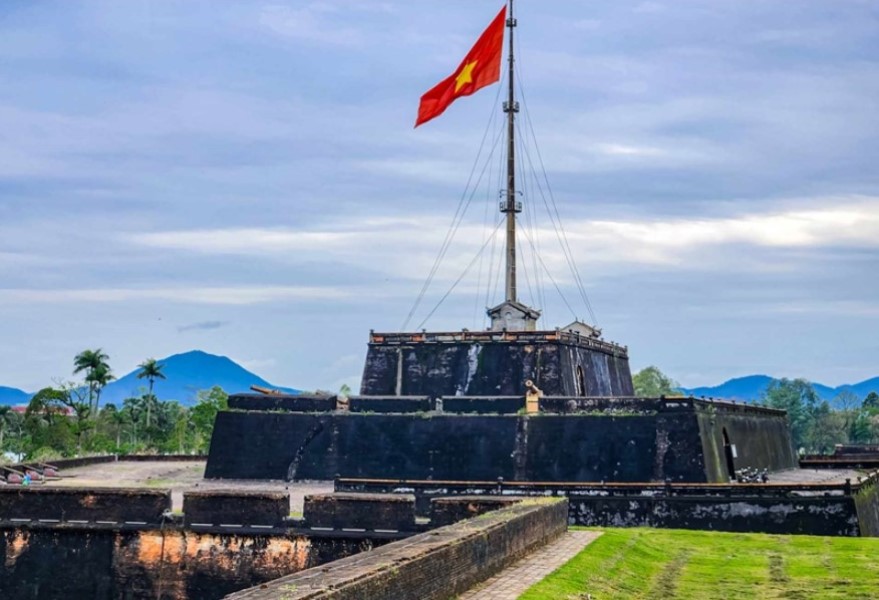
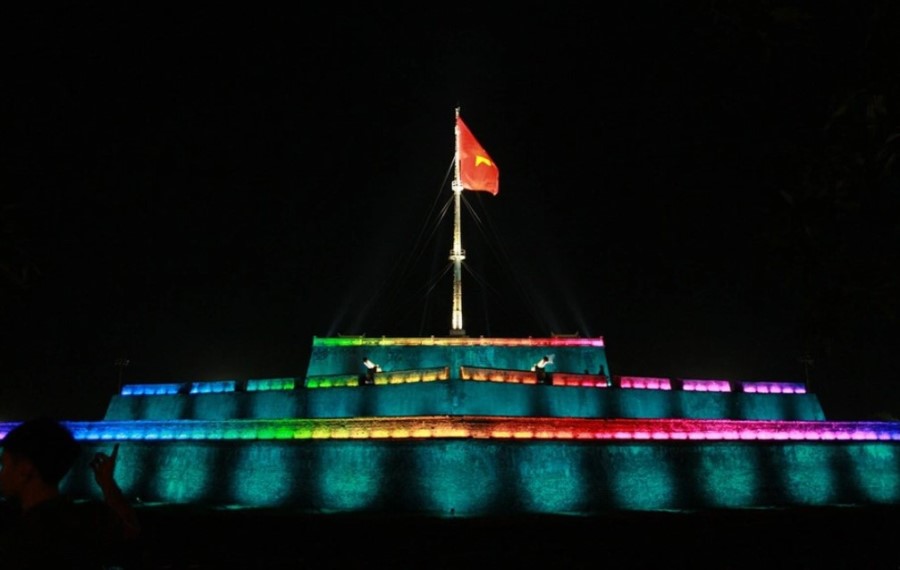
The site is often lit for festivals or special ceremonies (lighting projects in recent years have highlighted the tower at night), and it continues to function as a symbolic centerpiece for civic and cultural events in Hue.
Many visitors photograph the tower against the broad forecourt and lotus-filled moats; restoration efforts over recent decades have focused on preserving its masonry while keeping the site accessible to tourists.
The Best Way to Visit it
Practical tips for visiting Kỳ Đài and getting the most from the experience:
Hue Flag Tower Entrance ticket
The Flag Tower sits inside the Hue Imperial Citadel complex. If you only visit Hue Flag Tower and the Nine Holy Cannons, take photos in front of Ngo Mon Gate, you don’t have to buy the entrance ticket.
But normally, tourists always want to visit the complex of Hue Imperial City & Forbidden City’s attractions, such as Ngu Phung Palace, Thai Hoa Palace, The To Royal Temple, Truong Sanh Residence, Thieu Phuong Royal Garden, Hue Royal Theater, etc, which generally requires an entry ticket (200,000 VND/ Pax, roughly 9 USD/ Pax).
The Best Time to Visit Hue Flag Tower
Early morning (shortly after opening) or late afternoon gives softer light for photos and fewer crowds; evening visits are striking when the Citadel is illuminated on special festival nights.
How to get there
The tower is within walking distance from central Hue hotels; You should combine it with a walking tour of the Imperial Citadel, the Noon Gate (Ngọ Môn), and nearby temples.
Hue Guided walking tours with a local guide are the best way to enjoy the monuments and learn more about the Nguyen Dynasty Emperors, concubines, and eunuchs.
What to bring
You should wear comfortable shoes for walking on the clay/brick surfaces, do not forget the sun protection, bottled water, and a camera. Modest dress is advisable when visiting royal temples and shrines nearby.
The nearby attractions
Kỳ Đài is centrally located, so a visit naturally pairs with multiple significant sites inside and around the Citadel
Ngọ Môn (Noon Gate)
The main southern entrance to the Imperial Citadel is an architectural highlight immediately in front of the flag tower. (Great for photos of the whole axis.)
Royal City and Purple Forbidden City
Deeper inside the complex are Kien Trung Palace, Thai Hoa Palace, Truong Sanh, and Dien Tho Residences, which allow significant time if you plan to explore these zones.
Hue Royal Theatre and The To Royal Temple
These cultural sites nearby enrich an understanding of court rituals, music, and ancestor worship.
Perfume River & riverside strolls
A short walk or cyclo ride from the Citadel offers scenic river views, boat tours, and access to other Hue attractions (Thien Mu pagoda and An Hien garden).